Use the promo code to enjoy a 10% discount storewide.
Why More Athletes Are Wearing Red Glasses?

Quick Summary
- Athletes use red glasses to support evening recovery routines.
- Red lenses reduce bright, short-wavelength light from screens and lighting.
- They’re often worn after training, during travel, or before sleep.
- Red glasses work best as part of broader recovery habits.
- Everyday users can apply the same idea to evening routines.
The 2026 FIFA World Cup put elite football back under the brightest possible spotlight. But beyond the matches themselves, another part of athlete culture keeps getting more attention: the routines players use when they are off the pitch.
That is why red glasses look so interesting.
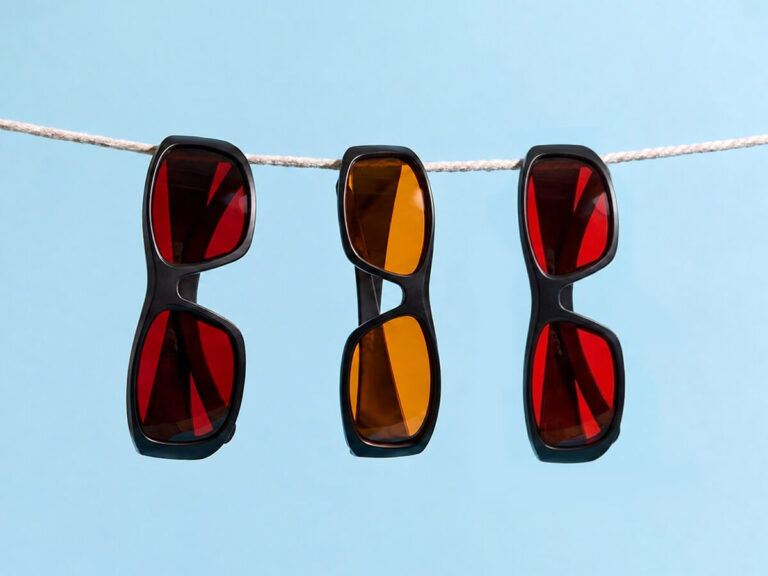
When you see a footballer wearing deep red glasses during travel, recovery, or screen-heavy downtime, it may look unusual at first. But for some athletes, red glasses are part of a bigger routine built around light, sleep, and recovery.
Athletes are not only training harder. Many of them are also paying closer attention to what happens after training: when they eat, when they sleep, what light they see in recovery windows, and how they help the body shift out of performance mode.
That is where red lens glasses come in.
The Curiosity: Why Red Glasses?

The reason red glasses catch attention is simple: they are visible.
You cannot see someone’s sleep schedule. You cannot see their recovery plan. You cannot see whether they dimmed the lights, avoided late caffeine, or kept a consistent bedtime.
But you can see red glasses.
For athletes, red glasses are often a practical way to reduce exposure to bright artificial light during recovery-focused parts of the day. Screens, hotel lighting, locker rooms, airports, buses, and late media can all keep the environment feeling more “daytime” than the body wants before rest.
Red lenses make that light feel warmer, darker, and less stimulating.
That is why the glasses show up around recovery and downtime rather than during training itself.
Where This Trend Came From

This topic became more visible because athletes started talking openly about their routines.
Erling Haaland has been reported as using blue-light-blocking glasses before bed as part of his sleep routine. In coverage of his Impaulsive podcast appearance, he described sleep as a priority and mentioned simple habits such as wearing glasses that block blue light and reducing signals in the bedroom.
Spanish footballer Marcos Llorente has shared an even more light-focused routine. In an RFEF feature, Llorente discusses getting natural light during the day, using red and infrared light after sunset, and wearing blue-light-filtering glasses indoors. Other Spanish sports outlets have also reported that he uses yellow lenses indoors during the day and red lenses after sunset, especially around screens, travel, and hotel environments.
That is the part people are curious about.
These athletes are not wearing red glasses because the glasses look normal. They are wearing them because they are trying to control the light environment around recovery.
Why Light Matters So Much to Athletes

Athletes live by timing.
Training has timing. Nutrition has timing. Recovery has timing. Sleep has timing too.
Light is one of the strongest signals the body uses to understand time of day. Bright light in the morning can help the body feel alert. Bright artificial light late in the day can do the opposite of what an athlete wants before rest.
This matters because many athletes do not have a normal schedule.
A late match may end when most people are already winding down. Travel can mean bright airports, buses, and hotel rooms. Post-game routines may involve phones, screens, treatment rooms, team meetings, or media. Even when the body is tired, the environment can still be telling the brain: stay awake.
Red glasses help create a stronger boundary between active time and recovery time.
They are a small, wearable signal: the high-stimulation part of the day is over.
What Red Lens Glasses Actually Do

Red lens glasses are designed to change the kind of light that reaches the eyes.
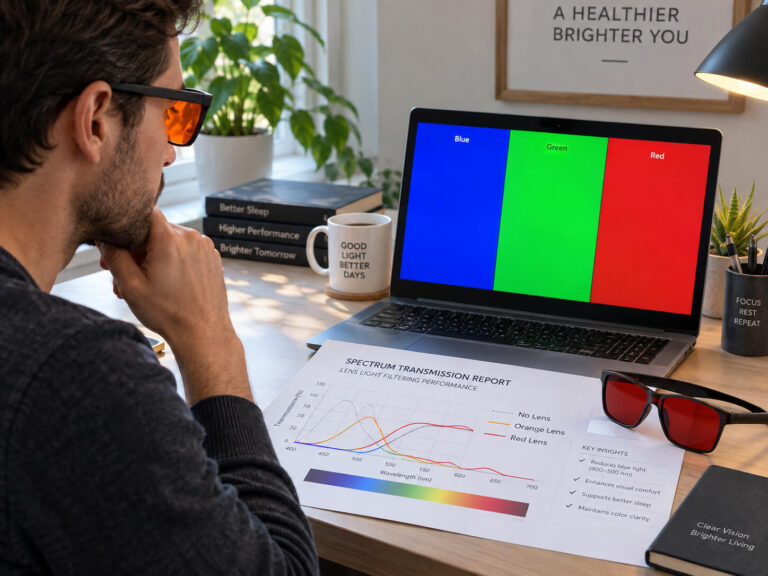
Instead of simply making everything slightly dimmer, red lenses strongly shift the visual environment toward warmer light. Many red lenses are used in evening or low-light routines because they reduce exposure to the shorter-wavelength light commonly associated with screens and bright indoor lighting.
This is different from ordinary glasses for screen use.
Yellow lenses are often designed for daytime screen comfort. Amber lenses can feel more flexible. Red lenses are usually stronger and more targeted for evening or low-light routines.
That difference matters.
Yellow or amber lenses may still feel natural enough for work, reading, or indoor use earlier in the day. Red glasses create a much deeper visual change. They are not trying to be invisible. They are trying to help the recovery environment feel visually quieter.
Why Athletes Use Red Glasses in Recovery Routines

For athletes, the purpose can be structured.
They may use red glasses as part of a full routine that includes morning sunlight, controlled evening lighting, consistent sleep timing, travel habits, and recovery planning. The glasses are one piece of a larger system.
That is why you may see athletes wear red lenses:
- after late training or matches
- on team travel
- in hotel rooms
- around phones or TVs during downtime
- during recovery routines
- before sleep
The goal is not to wear red glasses all day.
The goal is to make the recovery environment less bright, less blue-heavy, and more aligned with rest.
That is an important distinction. For athletes, red glasses are not random eyewear. They are a timing tool.
What It Feels Like to Wear Red Glasses

Red glasses make screens and indoor lights look warmer and darker.
White light no longer feels as sharp. Cool LED lighting feels less cold. Phone and laptop screens look more muted. The whole room can feel visually quieter.
That is exactly why people like them in recovery-focused routines.
It is also why they are not for every situation.
Strong red lenses are not ideal for driving, moving through dark outdoor spaces, or doing tasks where accurate color judgment matters. They are best used in controlled environments, such as at home, in a hotel room, or while winding down indoors.
For daytime work, yellow or amber lenses usually make more sense. For recovery-focused evening use, red lenses are the more targeted option.
What Athletes and Everyday Users Have in Common

The athlete angle works because it makes the product easy to understand.
Red glasses are not just “another pair of blue light glasses.” They have a clear role: light control during recovery-focused downtime.
People already know they should reduce screen time before rest. The hard part is doing it consistently. Red lens glasses make the habit easier because they create a physical cue. Once the glasses go on, the routine starts.
For athletes, that routine may be tied to travel, training, games, and recovery planning. For everyday users, the same idea can apply to work, screens, bright home lighting, and late-day overstimulation.
The core is the same: light matters when the body is trying to shift down.
The Takeaway
Athletes wear red glasses because recovery does not begin when the lights go out.
It begins earlier.
For some athletes, red glasses are part of how they manage that transition: from bright light to dimmer light, from stimulation to rest, from performance mode to recovery mode.
That is why the glasses look unusual but make sense.
They are not a fashion accident. They are a visible sign of a more intentional recovery routine.
And for everyday users, that is the useful lesson: if your downtime is full of screens, bright lights, and overstimulation, red lens glasses can help make the environment feel calmer and more intentional.
Disclaimer
This article is for educational purposes only and is not medical advice. Gloojo Night Ease™ Sleep Glasses are not intended to diagnose, treat, cure, or prevent insomnia, sleep disorders, circadian rhythm disorders, or any medical condition. If you have chronic sleep problems, take medication, are pregnant or nursing, or are considering sleep supplements, please speak with a qualified healthcare professional.
References
RFEF: Marcos Llorente: A Passion Burning Bright: Source
SABC Sport: Erling Haaland’s nighttime routine: Source
PubMed: Dim light, sleep tight, and wake up bright – sleep optimization in athletes by means of light regulation: Source
Wiley: Restricting short-wavelength light in the evening to improve sleep in recreational athletes: Source
- NIH/NHLBI: Healthy sleep habits: Source
- PubMed: Evening use of light-emitting eReaders negatively affects sleep, circadian timing, and next-morning alertness: Source