Use the promo code to enjoy a 10% discount storewide.
Concussion Glasses: Choosing a Tint for Light Sensitivity
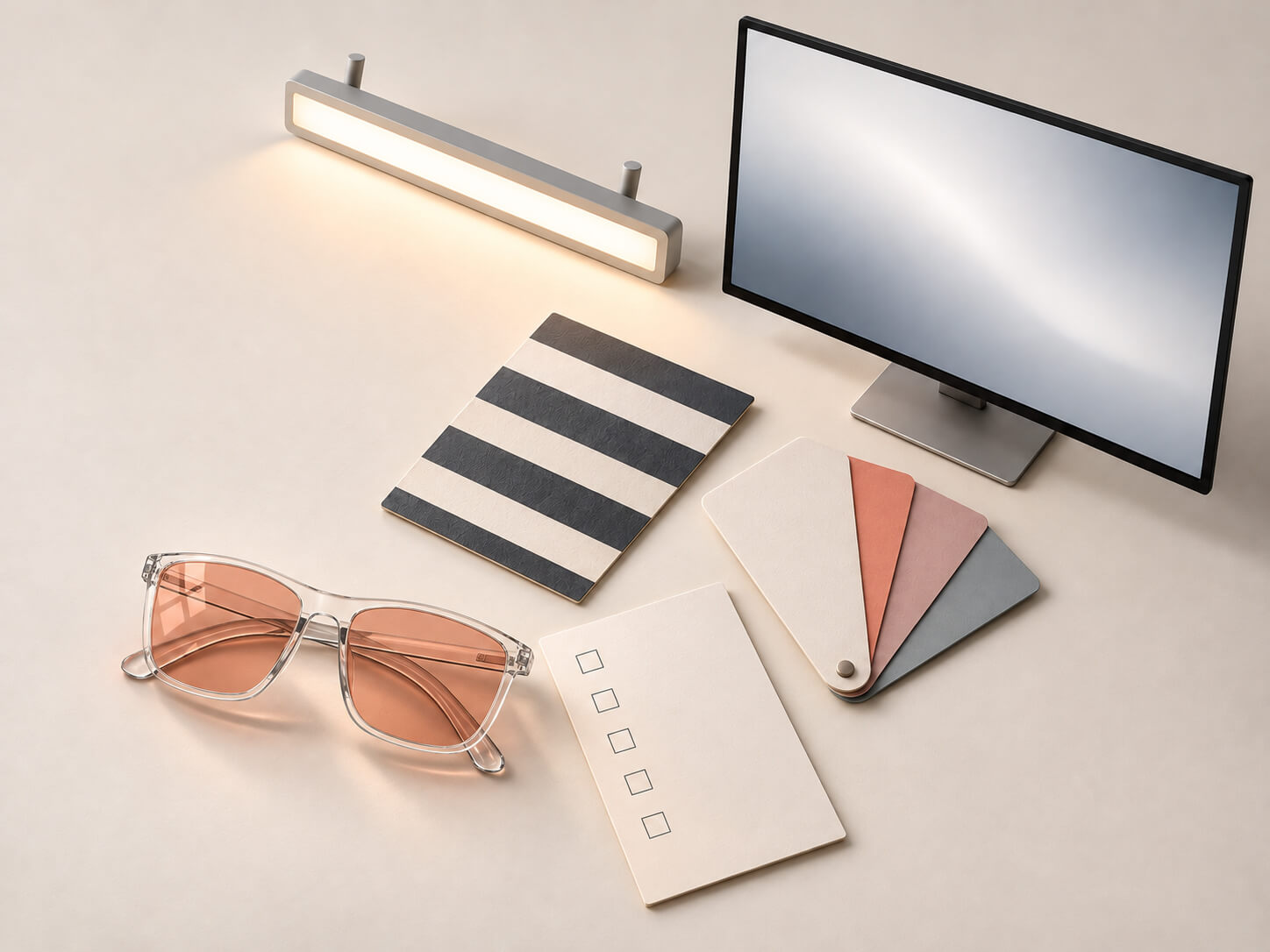
After a concussion, getting back to an ordinary room can come with an unexpected obstacle: the lights. You may be able to see the page or screen clearly, yet find the ceiling light uncomfortable enough to interrupt what you are doing.
Concussion glasses are usually tinted or light-filtering eyewear considered for that discomfort. Some filters have improved light tolerance in research involving people with traumatic brain injury. Choosing a useful pair means matching the tint to the indoor activity you want to resume, while keeping its use aligned with your recovery plan.
Why Can Ordinary Light Feel Uncomfortable After a Concussion?
Post-concussion light sensitivity, or photophobia, means that light can cause discomfort at levels that would ordinarily be tolerable. It can occur alongside post-traumatic headache or on its own, and can make ordinary indoor activities harder.
A clinical report and review of post-concussion light sensitivity describes connections between light-sensing pathways and pathways involved in pain. Discomfort is not determined only by the brightness of a bulb; how the nervous system processes that input matters too. Researchers have not established one explanation for every person’s post-concussion symptoms.
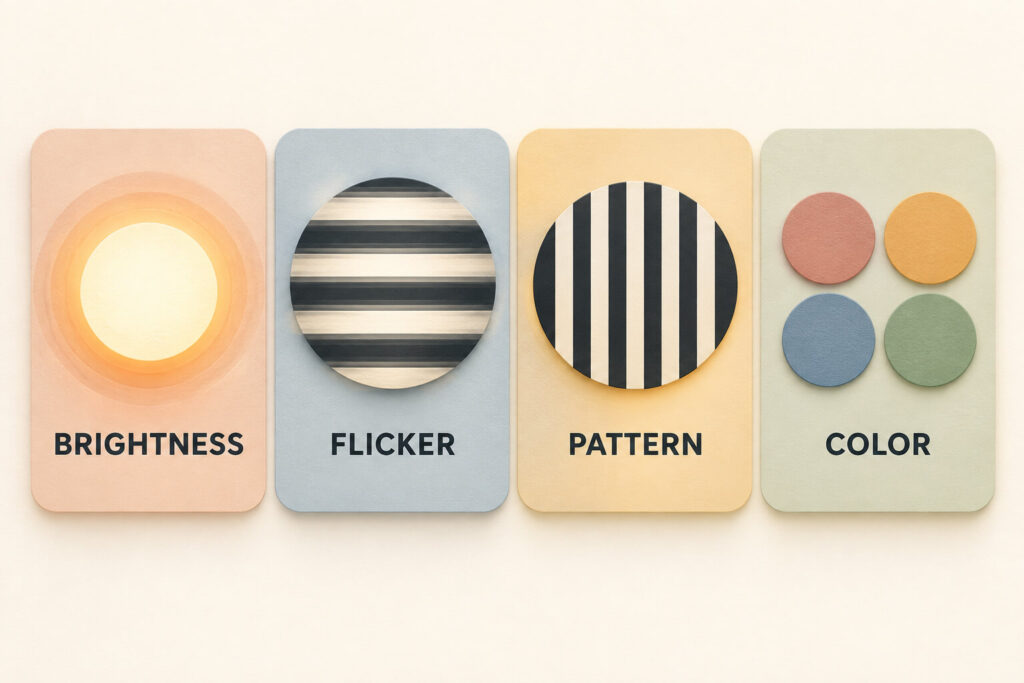
For choosing eyewear, start with a concrete description. Is reading manageable until the overhead lights come on? Does a bright window behind the monitor make the task harder? When discussing the setting, distinguish brightness, visible flicker, busy patterns, and color. These are observations to describe, not a checklist of problems that one tint will necessarily solve.
Can Tinted Glasses Help Post-Concussion Light Sensitivity?
Tinted lenses can make light easier to tolerate for some people after brain injury. Direct research offers a useful starting point for comparing filters.
A 2026 study of light-filtering lenses after traumatic brain injury compared 46 people with TBI and 46 without it. Researchers measured the light level participants could tolerate under no-lens, clear-lens, FL-41, and gray-filter conditions at two visits at least a month apart. Both FL-41 and gray filters increased measured light tolerance compared with the no-lens and clear-lens conditions.
That finding gives a practical reason to consider filters for post-injury light sensitivity. Its scope matters: it measured responses under test conditions in a TBI group, not faster concussion recovery or the results of a particular retail pair. It also gives no basis for assuming that a rose tint must suit everyone better than gray.
What About FL-41?
FL-41 is a rose-colored filter used for light sensitivity. The post-concussion report above describes a man whose severe light sensitivity interfered with work; he returned to work wearing prescribed FL-41 spectacles, with substantial improvement reported over follow-up. As one clinical case, it illustrates a possible use rather than predicting another person’s result.
Taken alongside the newer TBI study, this makes FL-41 a reasonable option to discuss and compare. The decision should still turn on the actual lens and the view through it: how comfortable the room feels, whether text stays readable, and whether the color change suits the activity.
Which Tint Makes Sense for Indoor Use?
For indoor glasses after concussion, choose around the task rather than the darkest-looking lens. A filter that makes the room more comfortable also needs to leave you enough usable vision for reading, talking with coworkers, or following a lesson.
Start by separating overall dimming from which wavelengths a lens filters.
Visible light transmission, often called VLT or Tv, describes how much measured visible light passes through the lens overall. Lower transmission means a darker view. A lens near 50% transmits roughly half the measured visible light; that is an optical measurement, not a percentage of symptom relief. Indoors, the useful balance is enough light reduction for comfort while keeping the page, screen, and room easy to see.
The filtering profile adds another dimension. FL-41 reduces selected blue and green wavelengths, so the reduction is not the same at every point in the spectrum. Its rose appearance reflects that changed balance of transmitted light. A gray tint offers a different color appearance, but the exact filtering still depends on the lens. Two pairs can have similar overall transmission yet different spectral profiles, so the tint name and darkness alone do not fully describe them.
Use those differences to narrow the choice:
| Option or feature | Why it matters | How to use it in your choice |
|---|---|---|
| Rose / FL-41-type tint | Selective filtering changes both the light reaching your eyes and the scene’s color balance. | Compare its actual filtering information and transmission; check the rose view against the documents, screens, and colors you need to use. |
| Gray tint | A more neutral-looking view may be preferable when you dislike a rose color cast. | Compare transmission as well as color appearance; gray does not automatically mean lighter, darker, or a particular filtering profile. |
| Dark sunglasses | Strong overall dimming affects the page and surrounding room as well as the bright source. | If the room becomes too dim for reading, compare a higher-transmission indoor option rather than selecting greater darkness. |
| Prescription or fit-over arrangement | Tint and vision correction meet different needs. | Choose an integrated prescription pair if you want one frame, or check fit-over dimensions if you want to keep using your current glasses. |
| Frame shape and coverage | Light can enter around the frame, while a poor fit can make the pair uncomfortable. | Check side coverage, bridge and temple fit, and clearance around prescription frames where relevant. |
For example, reading black text under an uncomfortable ceiling light calls for a balance between filtering and a legible page. Color-sensitive work adds a different requirement: whether you can distinguish the shades the task depends on. Those needs help narrow the options before a familiar-task comparison.
A “blue-light blocking” label supplies only part of this information. Look for the lens’s transmission and filtering profile, then judge the usable view—not the blocking percentage alone.
When Should You Wear Them, and What About Recovery?
Think in terms of a specific activity that has become difficult: reading under classroom lights, attending a meeting, or spending time at a desk. Discuss whether a tint could support that activity and how its use should change as your symptoms improve.
There is no well-established, universal number of hours to wear tinted glasses after concussion. A 2022 neuro-ophthalmology consensus statement identified uncertainty about long-term filter use and adaptation to light. The newer study’s light-tolerance findings do not settle that recovery question. Short-term comfort and long-term recovery are different outcomes; use a filter with a plan for reassessment rather than assuming the same pair is needed all day indefinitely.
The CDC’s guidance on returning to activity after concussion recommends easing back into regular activities after one or two days of rest, with activity reduced if symptoms worsen. Ask your clinician how eyewear, breaks, and lighting adjustments fit your return to work or study. If symptoms are not improving, persist beyond two to three weeks, or worsen as you resume activities, follow up.
If the head injury has not yet been assessed, arrange care before treating the problem as an eyewear-shopping decision. If reading stays difficult even when light feels tolerable, describe that to your clinician as well; light comfort is only one part of visual function.
Try a Tint During a Familiar Task
Within the activities your care plan allows, a short, familiar task can help you describe whether a lens is useful:
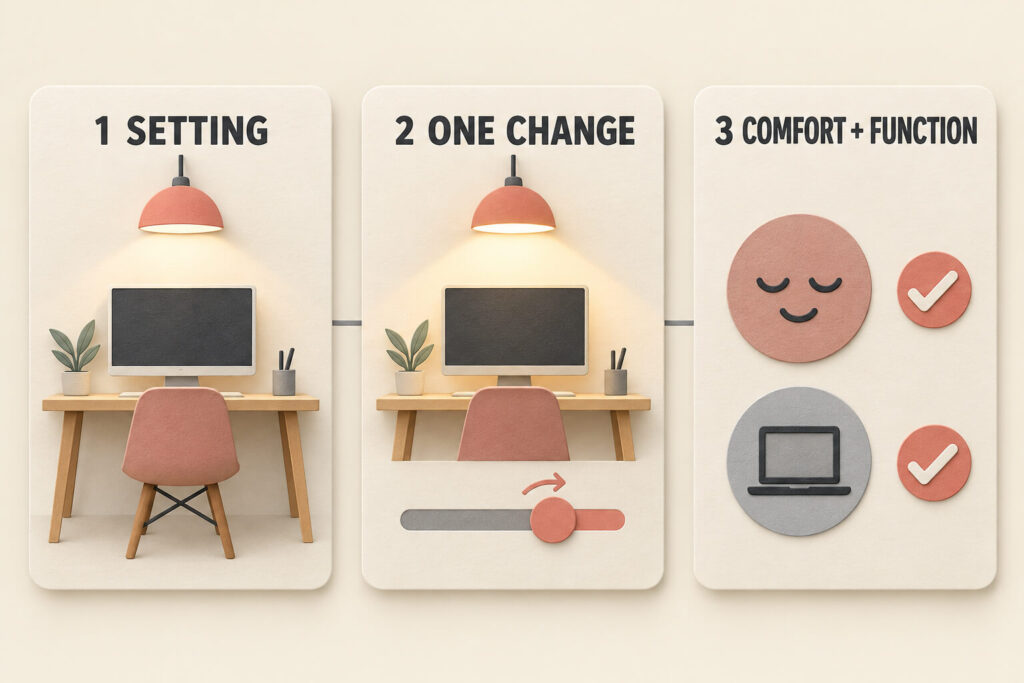
- Name the setting. For example, reading a printed page at your usual desk under the ceiling light. Keep your usual prescription correction.
- Change one thing. Compare a tint while keeping the room and task similar, or assess a lighting change separately. This makes the observation easier to interpret.
- Check comfort and function together. Can you tolerate the light more comfortably and still read clearly? Notice dimming, color shift, pressure, and any new difficulty.
Record the task, the change, and what you noticed. “The ceiling light was easier to tolerate, but the page became too dim” is useful feedback for the next choice. Stop if discomfort increases; finishing a comparison is not the goal.
Where Gloojo Rose Relief Fits
If overhead lighting makes it difficult to settle back into desk work or study, Gloojo Rose Relief offers a rose, FL-41-style tint designed for fluorescent and harsh indoor light.
Gloojo Rose Relief Prism Wayfarer shown as a representative rose-tint option.
Its reported visible light transmission is about 50%, with a warm rose color shift. That gives you a concrete starting point for an indoor comparison: moderate overall dimming alongside a changed color balance. Check the smaller text and color detail you normally work with, especially if a darker pair makes the page difficult to see.
Choose custom prescription if you want correction and tint in one pair. A fit-over lets you keep your existing prescription glasses; match its dimensions to your current frames. The Prism Wayfarer pictured here is one Rose Relief style, with fit-over models available as a separate frame choice.
The research discussed above concerns the filters tested in those studies, not clinical results for Rose Relief.
You can compare Rose Relief frames and configurations for the indoor setting and prescription arrangement you need.
Start With the Room You Want to Return To
A useful choice begins with a recognizable goal: read a page under the classroom lights, follow a meeting, or work at your desk more comfortably. Compare the filter, usable view, and fit against that goal, then bring the observation into your recovery follow-up.
The aim is a usable indoor view that supports the next activity in your recovery plan.
Disclaimer
This article is for educational purposes only and is not medical advice. Gloojo are not intended to diagnose, treat, cure, or prevent migraine, headaches, or any medical condition. If you have chronic migraine problems, take medication, are pregnant or nursing, or are considering migraine supplements, please speak with a qualified healthcare professional.