
Use the promo code to enjoy a 10% discount storewide.
Night Shift Wind-Down Routine: From Clock-Out to Daytime Rest
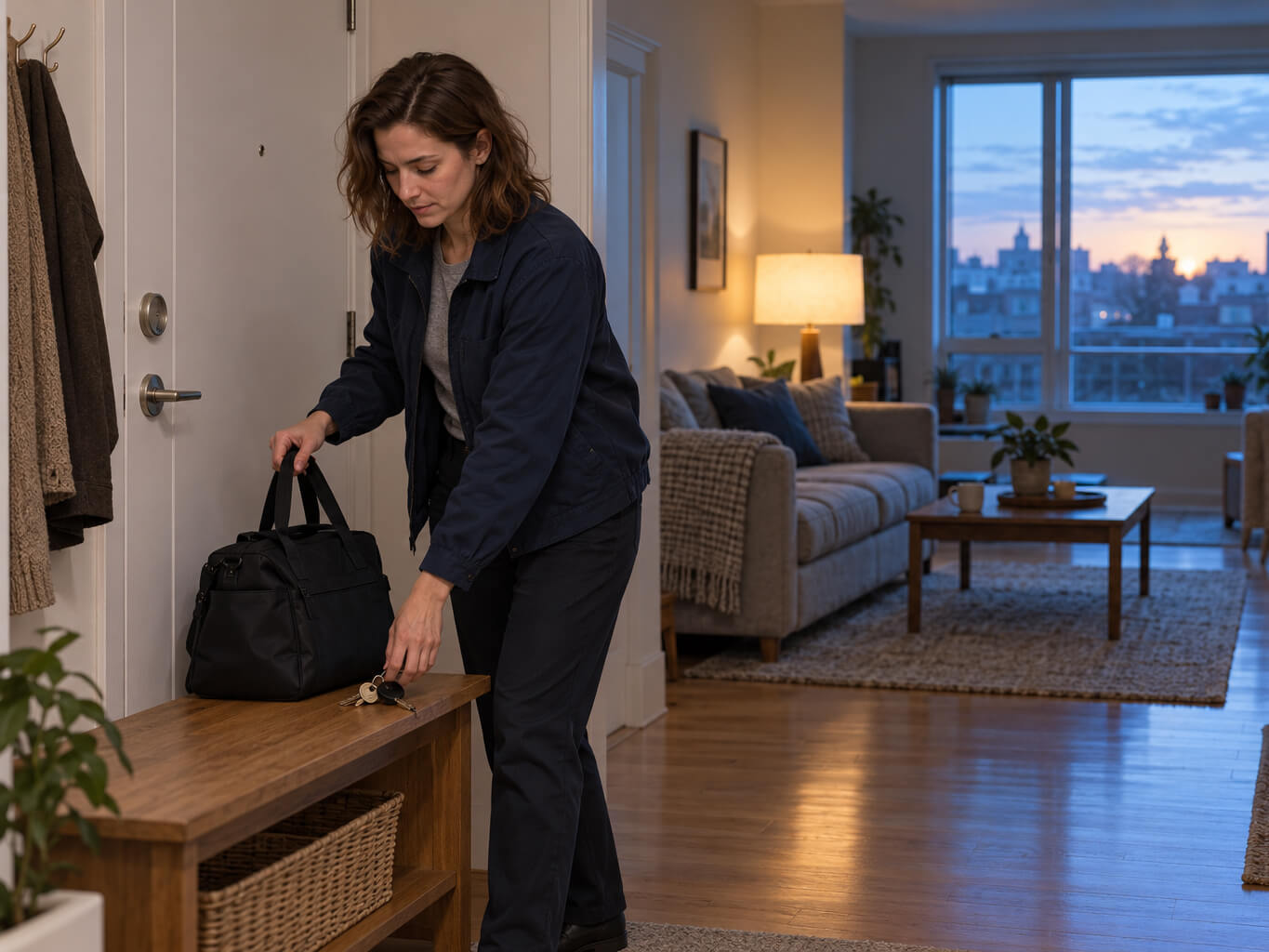
You finish the shift drained, get home, and discover that your mind has not clocked out with you. That mismatch is frustrating, but it does not mean you are failing at sleep. Finishing work is an abrupt change on the clock; becoming ready to rest is often a transition.
A useful transition window is the stretch between clock-out and your first real attempt to sleep. Instead of filling it with a perfect morning version of an evening routine, give it a simple order: mark the end of work, get home safely, finish what truly must be done, lower stimulation, and protect the place where you will rest.
That order matters more than a rigid timetable. Your routine might be brief one day and much longer another because of a commute, breakfast, caregiving, medication, or household responsibilities. The goal is not to copy somebody else’s schedule. It is to make your next step easier to recognize, even when you are tired.
Why you can be exhausted and still feel switched on
Physical fatigue and immediate sleep readiness are not the same thing. The body’s accumulating drive for sleep and its circadian timing work together, but they are distinct systems. The sleep-wake cycle explanation from the National Heart, Lung, and Blood Institute also describes how light-dark cues and caffeine can affect that timing and sense of readiness.
After a night shift, your body may be carrying substantial sleep pressure while daylight, a recent caffeinated drink, work stress, an active commute, or unfinished decisions keep parts of you alert. There does not have to be one culprit. Shift work, schedule disruption, light, noise, stimulants, device use, stress, and worry are all listed among possible contributors to sleep difficulty, and several can overlap.
This is why “I can’t sleep after night shift” is not always solved by trying harder. A better starting point is to reduce the number of transitions your brain has to make at once.
1. Clock out with a small, repeatable boundary
Start your post night shift routine before you leave work. Use one brief action that means, “The shift is over.” It could be changing shoes, washing your hands, putting your badge away, or writing down the one work thought you are afraid you will forget.
Keep the marker short. It is not a journaling assignment or another performance task. Its job is to stop work from following you home as an open loop.
Then make a quick essentials check:
- What must happen before rest? Think of medication, food, pet care, a handoff, or another time-sensitive responsibility.
- What can wait until after rest? Messages, laundry, errands, and household improvements often feel urgent when they are merely visible.
- What affects the trip home? If you are too sleepy to drive safely, that question comes before every wind-down tactic.
This gives the routine a realistic shape before fatigue turns every decision into a fresh negotiation.
2. Make the commute a safety zone, not a sleep intervention
The commute is not the place to imitate bedtime. Your first job is to remain able to see, move, and make decisions safely.
Sleep deficiency can affect alertness, judgment, and reaction time, and daytime sleepiness and microsleep are safety concerns. If you feel too drowsy to drive, do not rely on a playlist, cold air, or willpower to make the trip safe. Pause and use the safer option available to you, such as a ride, public transportation, a workplace fatigue procedure, or a safe place to wait.
If you can travel safely, keep the commute predictable rather than stimulating. Set navigation before moving. Choose familiar, low-demand audio or quiet instead of work calls, upsetting news, or content that invites you to keep scrolling after arrival. Do not reduce light in any way that compromises visibility or road safety.
Think of the commute as a bridge. It can be calmer than the shift without pretending you are already in bed.
3. Finish necessary tasks before you lower stimulation
Once home, do the activities that require movement, attention, or clear vision first. Eat something if that is part of your plan. Shower, take care of a pet, prepare the room, set an alarm, and complete any essential caregiving or medication routine.
Try to keep this pass narrow. A useful test is: Would postponing this until after rest create a real problem? If not, move it out of the transition window.
This “essentials first” rule prevents a common snag. If you dim everything, settle down, and then remember that you still need to take out the dog, pack food, or find something for later, you have to restart the household and mental activity you just reduced.
You do not need to move slowly or make the house silent yet. You only need to avoid turning one necessary task into five optional ones.

4. Lower stimulation only after the essentials are done
When driving is over and the necessary movement and tasks are complete, make the environment less demanding in a few deliberate ways:
- Light: Use only the light you need to move comfortably and complete quiet activities. Reduce unnecessary bright overhead lighting when it is practical.
- Content: Put messages, news, games, and work apps behind a deliberate choice rather than opening them automatically.
- Conversation: Let housemates know whether you have energy for a quick check-in or need to postpone a complicated discussion.
- Tasks: Choose activities with a clear stopping point. A familiar shower, simple meal, or a few pages of an easy book usually creates less momentum than starting a project.
For someone who wants an optional layer of bedtime light control, Night Ease is designed to help reduce disruptive evening light exposure and support a bedtime routine. Consider it only once you are home, no longer driving, finished with essential movement and tasks, and able to remain settled; it is not a sleep treatment or a promise that sleep will follow. It is optional, and your sequence should still work on a day when you do not use it.
5. Protect the daytime rest attempt
Daytime sleep after night shift often needs more protection from the outside world than nighttime sleep does. You cannot force sleep, but you can make the rest window less easy to interrupt.
General healthy sleep guidance recommends a quiet, cool, dark sleep environment. Adapt those ideas to your actual home:
- Block or reduce the daylight that reaches your sleep space with curtains or an eye mask.
- Reduce unpredictable sound with earplugs, a fan, or steady background noise if those options are comfortable and safe for you.
- Silence nonessential notifications while keeping any alarm or emergency contact you truly need.
- Give other people a concrete boundary: “I am resting until _; please wake me only for _” is clearer than “Try not to bother me.”
- Prepare the room before you settle so you are not getting back up to adjust light, temperature, or sound.
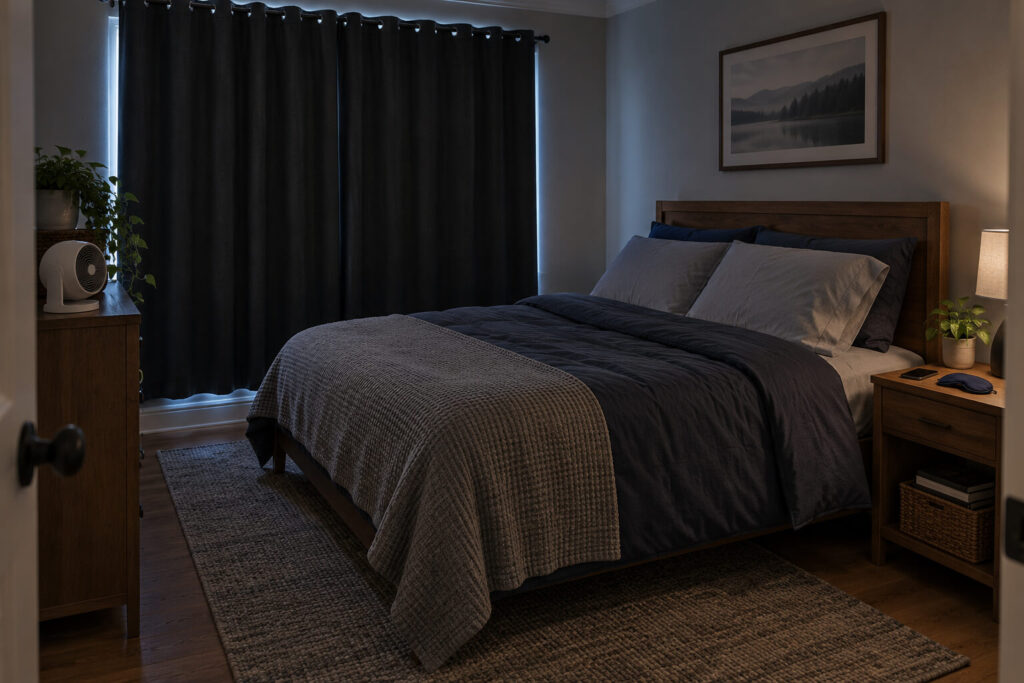
These are supports, not guarantees. A protected room can remove obstacles, but it cannot promise sleep on command. That distinction matters when you are learning how to sleep during the day after a night shift without turning every difficult rest attempt into a verdict on the whole routine.
Choose a minimum viable routine or a fuller one
The best night shift sleep routine is one you can still recognize on a difficult day. Build two versions instead of expecting the same setup every time.
Minimum viable version
Use this when time, space, or household control is limited:
- Put work away with one clock-out marker.
- Get home safely.
- Complete only the essential before-rest tasks.
- Silence nonessential alerts and lower one major source of stimulation.
- Make the sleep space as dark and quiet as you reasonably can.
This is enough to create a sequence. It does not have to feel luxurious or perfectly calm.
Fuller version
Use this when you have more control:
- Do the same five anchors above.
- Prepare food and the rest space in advance when possible.
- Add one quiet activity with a clear endpoint.
- Set a household boundary for your rest window.
- Track one observation—not a score—such as whether work messages, caffeine timing, light, or unfinished chores tend to keep the transition active.
The fuller version should not become a longer checklist that delays rest. Optional refinements earn their place only if they make winding down after a night shift easier.
An adaptable example, not a prescribed schedule
Imagine that your commute and essential home tasks change from day to day. Instead of assigning every step a fixed hour, connect each action to the one before it:
- When the shift ends: put away work items and name the one essential task waiting at home.
- During the trip: prioritize safe travel and avoid adding work or high-intensity content.
- On arrival: complete food, hygiene, caregiving, medication, and room setup that cannot wait.
- When essentials are finished: lower light and digital, social, and task intensity.
- When the room is ready: begin the protected rest attempt.
This sequence can survive traffic, a late handoff, or a noisy morning because the anchors stay in order even when the clock changes.
When the problem needs more than a routine adjustment
Talk with a healthcare professional if sleep difficulty is persistent, severe, or regularly affects your ability to work, commute, or function safely. Bring a simple record of your shifts, rest attempts, caffeine timing, and the situations in which you feel dangerously sleepy. That gives the conversation more useful context without requiring you to diagnose yourself.
For your next shift, test one boundary rather than rebuilding your entire morning: decide in advance which tasks are truly necessary before rest. Once those are done, let that decision become the point where your environment gets quieter, dimmer, and less demanding.
Disclaimer
This article is for educational purposes only and is not medical advice. Gloojo Night Ease™ Sleep Glasses are not intended to diagnose, treat, cure, or prevent insomnia, sleep disorders, circadian rhythm disorders, or any medical condition. If you have chronic sleep problems, take medication, are pregnant or nursing, or are considering sleep supplements, please speak with a qualified healthcare professional.