Use the promo code to enjoy a 10% discount storewide.
What Are Concussion Glasses? A Guide to Post-Concussion Light Sensitivity
Quick Summary
- Concussion glasses: Tinted lenses for light sensitivity.
- Photophobia: A possible symptom after concussion.
- Research: Some short-term comfort benefits; limited clinical evidence.
- Lens choice: Rose and gray filters have different tradeoffs.
After a concussion, everyday light can suddenly feel overwhelming. A phone screen may seem painfully bright, overhead LEDs may cause discomfort, and reading or computer work may become difficult.
That experience leads some people to search for concussion glasses. The term generally refers to tinted or wavelength-filtering eyewear used to manage light sensitivity after a concussion. It is a descriptive search term, not one standardized medical lens or a treatment for brain injury.
Why Can a Concussion Cause Light Sensitivity?
A concussion is a type of mild traumatic brain injury (TBI). According to the CDC, symptoms can include headaches, visual problems, and sensitivity to light or noise.
Light sensitivity is called photophobia. It does not necessarily mean fear of light; it means that ordinary illumination can feel uncomfortable or aggravate symptoms.
A 2021 systematic review estimated that photophobia affected about 30% of people one week after traumatic brain injury. The rate generally declined over subsequent months, although symptoms persisted for some. This research covers TBI more broadly, not concussion alone.
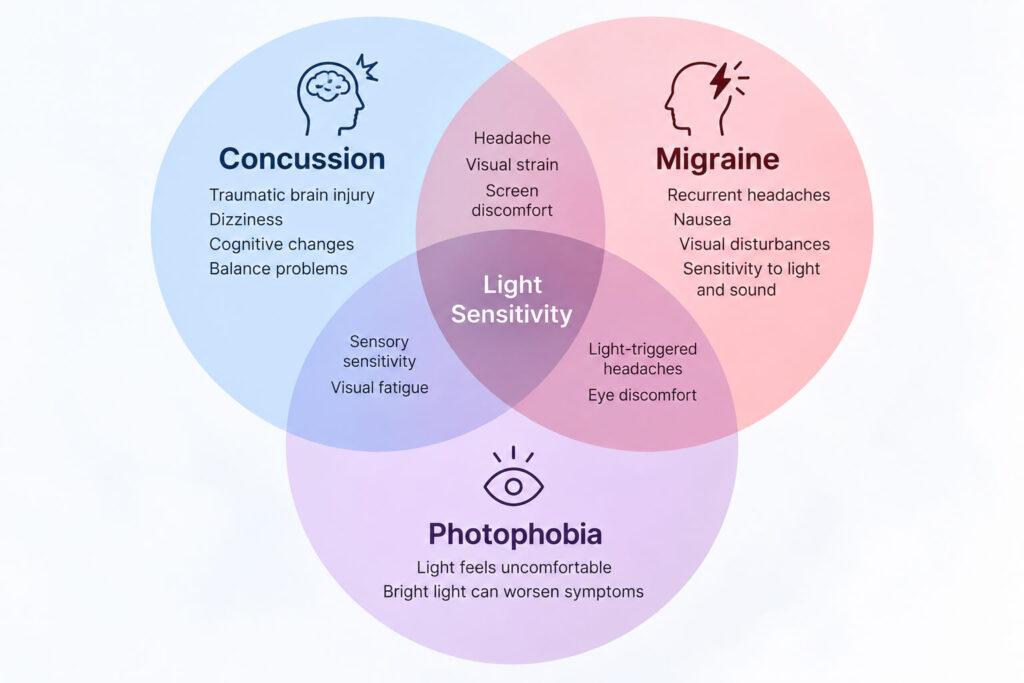
Why Do Concussion Glasses and Migraine Glasses Overlap?
Concussion and migraine are different conditions, but they may involve similar visual symptoms. Post-traumatic headaches can also resemble migraine and include sensitivity to light, as discussed in a review of headache and photosensitivity after concussion.
That overlap helps explain why searches for concussion glasses often lead to FL-41-style lenses, migraine glasses, and other tinted eyewear.
Shared symptoms do not mean shared treatment. Migraine-oriented lenses do not treat the concussion itself. Some people may find a suitable tint more comfortable in particular environments while following an individualized recovery plan.

What Does Research Say About Tinted Lenses After Concussion?
The evidence is limited, and not everyone benefits from the same tint.
A 2022 review identified seven relevant studies of colored filters after traumatic brain injury. Some participants reported improved comfort with precision tints or FL-41 lenses, but the authors called for better research.
In a 2017 study, 51 post-concussion patients were assessed. Of the 39 who reported photophobia, 33 (85%) said at least one colored lens reduced their discomfort. Preferred colors differed, and these were self-reported responses rather than proof of a universal treatment.
A 2026 cohort study tested 46 people with traumatic brain injury and 46 controls. Both FL-41 and gray filters improved measured light-tolerance thresholds during testing compared with unfiltered conditions. The study did not establish long-term benefits, faster concussion recovery, or effectiveness of any Gloojo product.
The takeaway: Tinted eyewear may make some lighting situations more tolerable. It has not been shown to heal a concussion or speed brain recovery.
Rose Relief™ and Gray Relief: Two Approaches to Light Filtering
Gloojo offers two different lens options for people considering tinted eyewear for everyday light sensitivity. Neither has been clinically tested as a concussion treatment.
| Rose Relief™ | Gray Relief | |
|---|---|---|
| Filtering approach | Rose-tinted, FL-41-inspired filtering | Dual-notch filtering with a green-light window |
| Color experience | Noticeable rose tint | Near-neutral gray with some warmth |
| Everyday tradeoff | Warmer, more visibly tinted view | More familiar colors, but still visibly darkens the view |
| Options | Prescription and non-prescription options | Non-prescription and fit-over options |
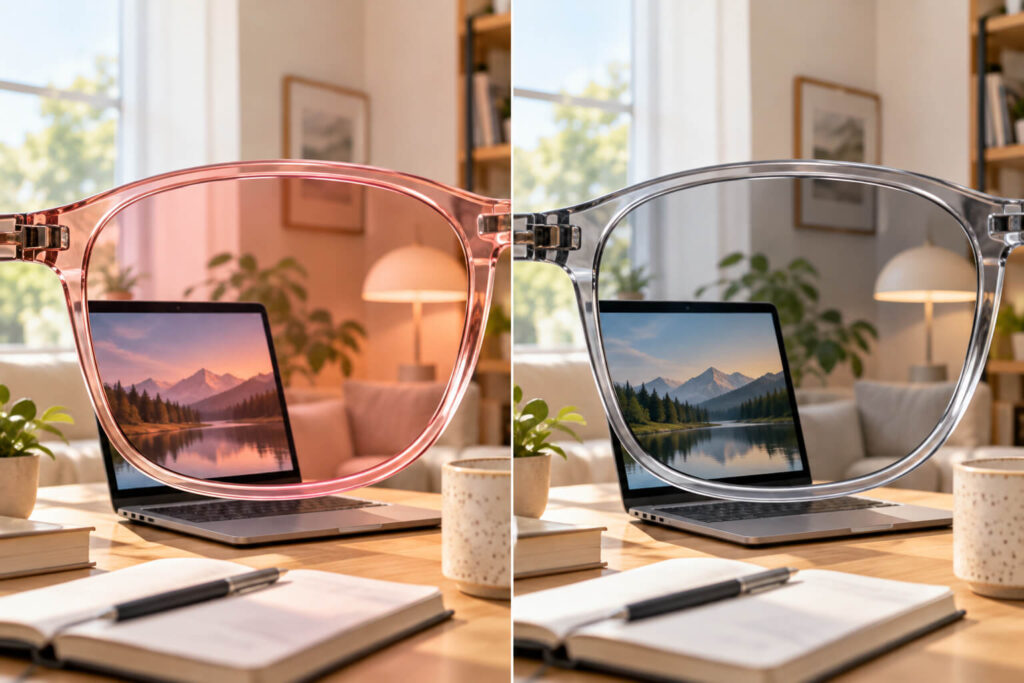
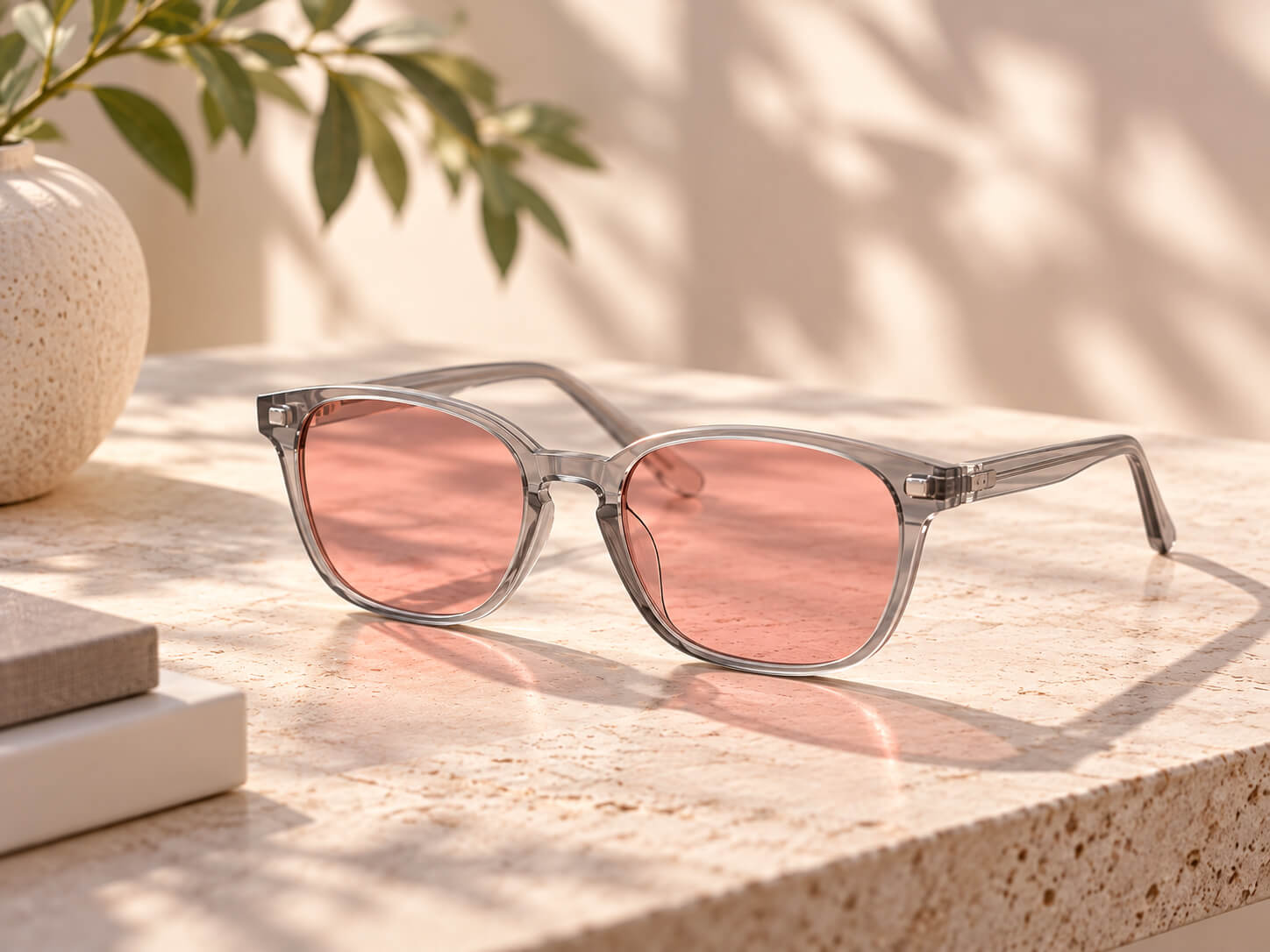
Rose Relief™ may appeal to someone who is specifically exploring rose-tinted or FL-41-style eyewear. The term FL-41-inspired describes the general filtering approach; it does not establish that Gloojo’s lens is identical to the filters used in clinical studies.
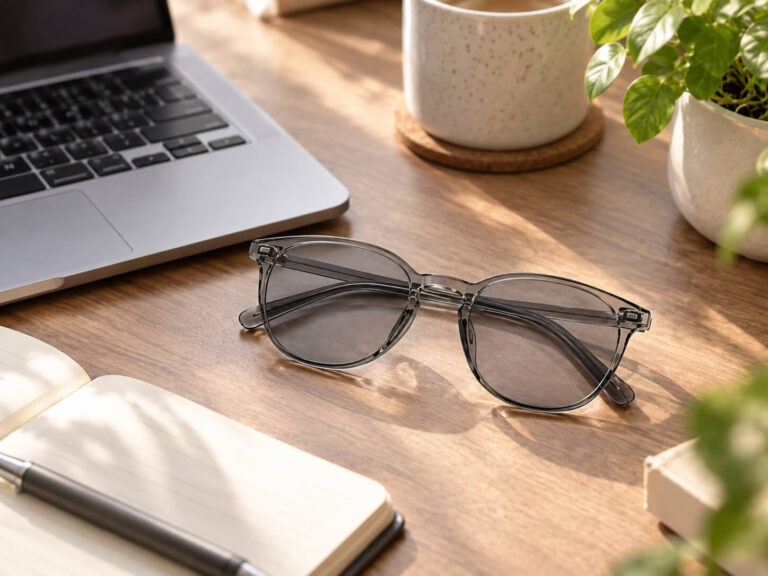
Gray Relief uses a measured dual-notch transmission profile, with a relatively higher-transmission region in the green portion of the spectrum. Its near-neutral appearance may appeal to people who prefer less obvious rose coloration. It still alters brightness and some colors.
For a look at independent optical measurements, see Optimize Your Biology’s tests of Gloojo Rose Relief and Gloojo Gray Relief. These describe lens transmission, not clinical outcomes after concussion.
How to Choose a Tint Safely
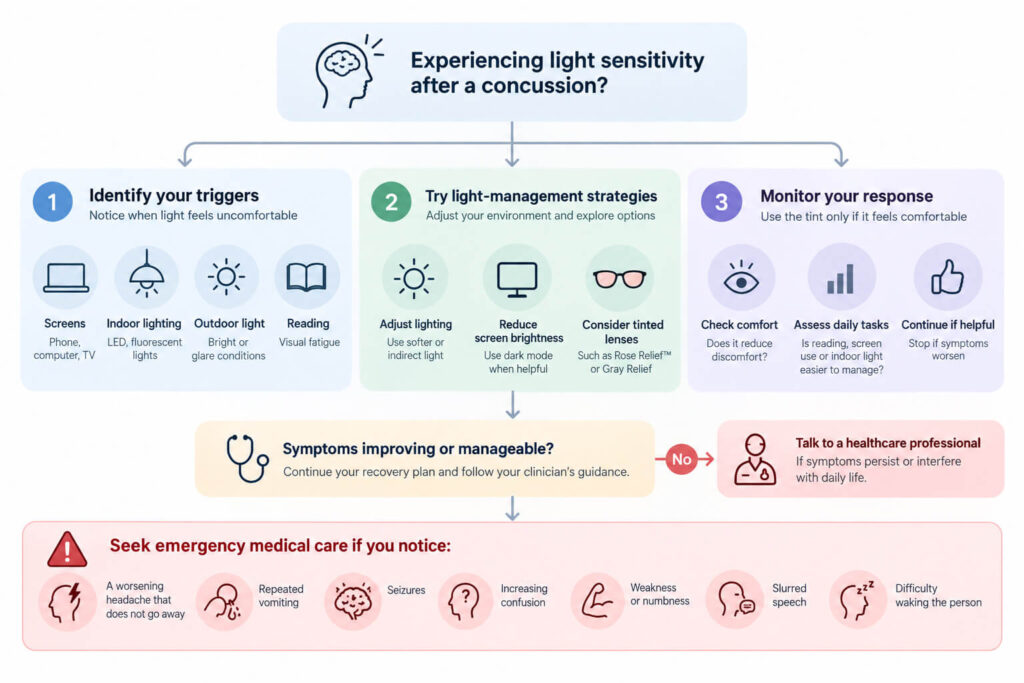
Start with the activities and lighting conditions that cause discomfort, not just the color of the lens.
Try a tint only if it feels comfortable and fits your clinician’s guidance.
Consider how the lens changes contrast, brightness, and color perception.
Do not use a dark or color-altering tint for driving or tasks where safe visibility matters.
Stop using a lens if it makes symptoms or visual function worse.
If symptoms persist, ask an appropriate healthcare professional about individualized assessment.
Tinted glasses are one possible environmental adjustment. They should not replace evaluation, appropriate rehabilitation, or a gradual return to daily activities guided by symptoms and medical advice.

When to Seek Medical Care
A suspected concussion deserves proper assessment. Do not use tinted glasses to postpone medical care.
The CDC advises emergency evaluation for danger signs after a head injury, including a worsening headache that does not go away, repeated vomiting, seizures, increasing confusion, weakness, slurred speech, or difficulty waking the person.
For ongoing light sensitivity, describe to your clinician which lights are uncomfortable, when symptoms occur, and whether reading or screen use makes them worse. Other visual or headache-related problems may need to be assessed as well.
A Light-Management Option, Not a Recovery Claim
“Concussion glasses” describes an understandable need: making everyday light more tolerable after a head injury. The available research supports careful, individualized consideration of tinted lenses, but not claims that glasses treat concussion or accelerate recovery.
If your healthcare professional agrees that tinted lenses are appropriate, you can explore Rose Relief™ and Gray Relief based on their filtering profiles, color experience, and daily-use limitations.
Disclaimer
Gloojo lenses are light-management products. They are not intended to diagnose, treat, cure, or prevent concussion, post-concussion syndrome, migraine, or other medical conditions.