Use the promo code to enjoy a 10% discount storewide.
Menopause Sleep Problems: An Evening Screen-and-Light Routine to Test
If you’re dealing with menopause sleep problems, you can try changing the light around you in the evening—both room lighting and screens—without treating it as the answer to every difficult night. Keep the experiment small enough to fit your life, notice how nights vary, and keep medical decisions with your clinician. A light routine is an adjustable part of your environment, not a treatment for menopause or a substitute for care.
Sleep during menopause is rarely just about screens
Perimenopause sleep problems may show up as trouble falling asleep, waking in the night, or both. Hot flashes and night sweats, mood changes, and the demands of work or caregiving can overlap. The National Institute on Aging’s menopause sleep guidance describes several of these contributors and recommends speaking with a doctor when sleep trouble continues. The Menopause Society’s overview of symptoms likewise notes that sleep disturbances vary and that some people need more than lifestyle changes.
If you’ve already discussed hormone therapy (HT) or tried a prescribed sleep medicine and are still awake at night, it doesn’t mean you failed at a bedtime habit. Nor does waking up at night during menopause, even at a familiar hour, identify one cause. This article focuses on a change you can make to your surroundings while leaving the wider sleep picture—and treatment decisions—open.
Where evening light fits, and where it doesn't
Light and darkness help cue the body’s circadian clock, which influences when sleepiness arrives. The NIH explanation of circadian rhythms describes light as a major timing signal. That is a reason to pay attention to evening light and sleep, not proof that your phone caused a particular night of wakefulness or that dimming a room will resolve menopause-related symptoms.
The overhead lights and bright lamp in a room count too; a screen is not the entire light environment. What you’re doing on a screen, whether you need it for work or caregiving, and what else happened that day can matter to your evening. If night sweats wake you after you have fallen asleep, changing a display won’t address the sweats themselves. Think of light as one adjustable cue, not a verdict on your habits.
For those curious about how much light different tinted lenses actually transmit, the independently measured blue-blocker database from Optimize Your Biology offers comparisons based on spectral measurements. These results describe lens filtering performance, rather than clinical outcomes for menopause-related sleep problems.
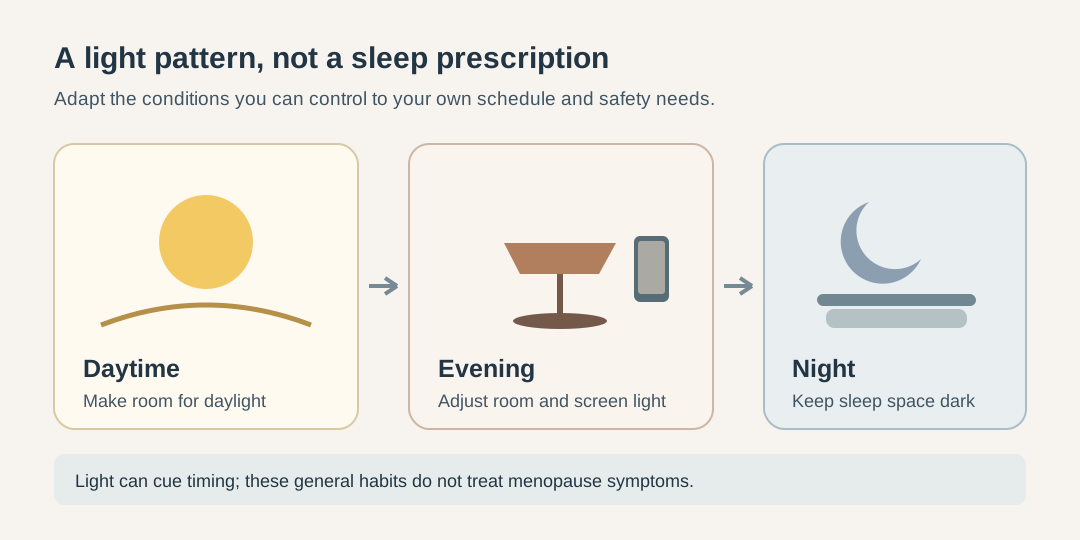
Build a routine you can actually test
There is no universal time at which screens must be put away. Try one or two of these options in the part of the evening when you’re winding down, rather than rebuilding the whole night at once:
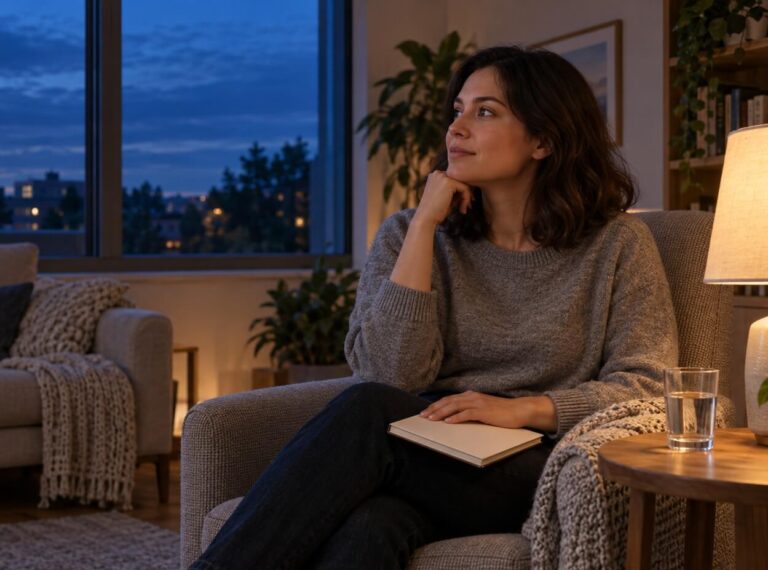
Make the room less bright where practical. Turn off an unnecessary overhead light or choose a gentler lamp for a quiet task. Keep enough light to move around safely, read comfortably, and care for others.
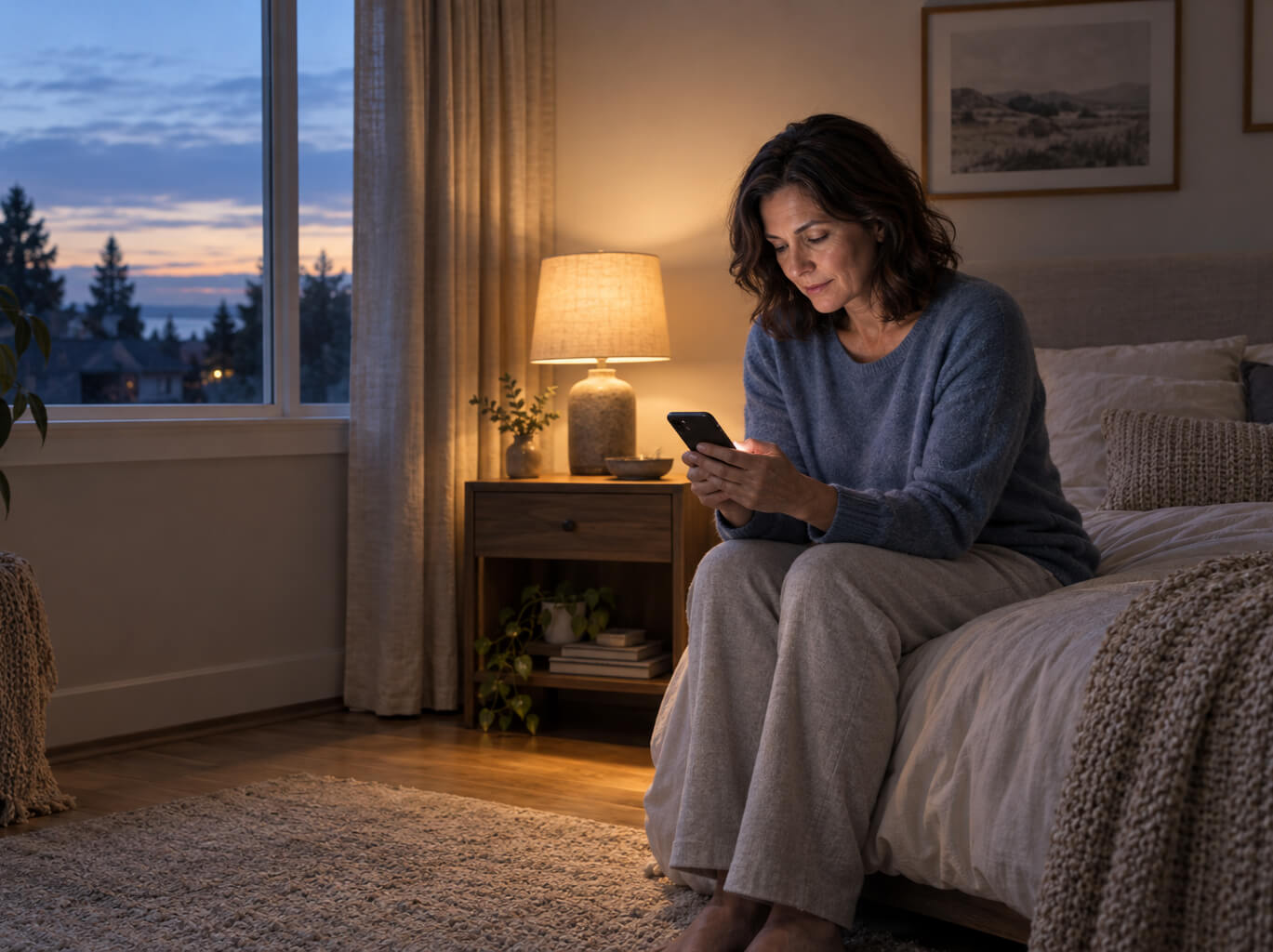
Make necessary screen use less intense. Lower display brightness to a comfortable, readable level and use a less glaring setting if you prefer it. If a task can be done without a lit screen—listening instead of watching, for instance—you might try that sometimes. A late work shift or a family message need not become a moral test.
If screens and overhead lighting are unavoidable in your evening, another optional adjustment is to try tinted blue-light-blocking glasses which can change the light reaching your eyes.
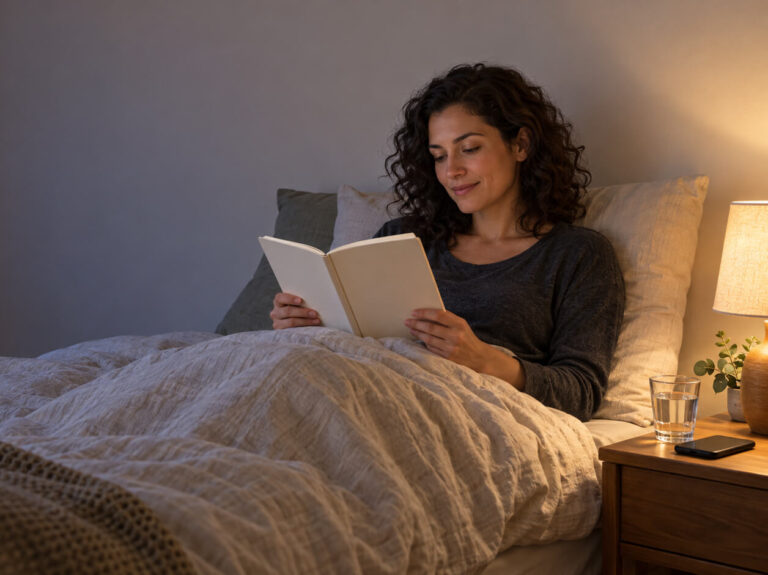
Set up the sleep space. Reduce light entering the bedroom if possible, while keeping safe access to the bathroom or anything you need during a night waking. A comfortable room temperature may matter especially if night sweats are part of your nights.
Keep a workable rhythm across the day. Aim for reasonably consistent sleep and wake times when your circumstances allow, and make room for daylight during the day. These are parts of a broader light-and-sleep pattern, not requirements to follow perfectly.
The NIA’s menopause-specific guidance includes a regular sleep schedule, a comfortable sleeping space, and attention to light from television, computers, and phones. Those are general habits to adapt, not evidence that a particular screen setting treats menopause insomnia. If a change makes the evening harder or less safe, choose a different one.
Track patterns without calling them proof
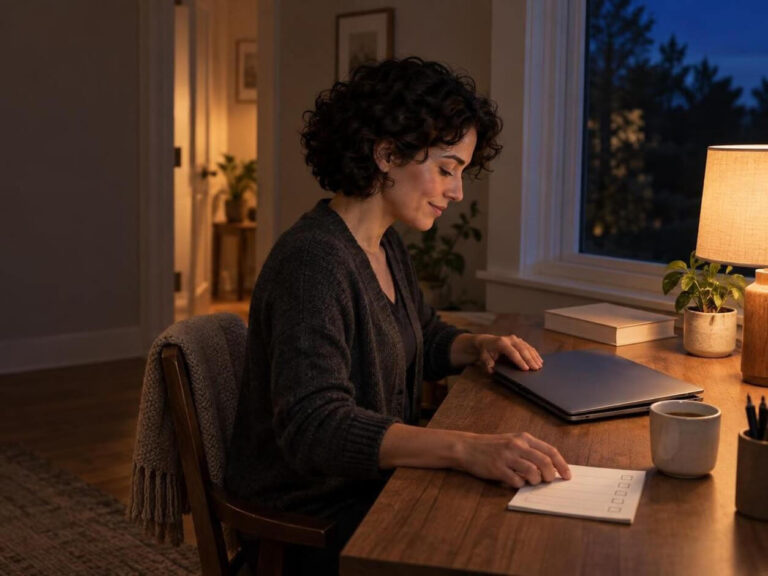
For a short stretch that feels manageable, note the one or two conditions you changed and a few features of each night. A brief record might include:
what you changed about room light or screen use, and roughly when;
whether falling asleep felt difficult, and whether you woke in the night;
how you functioned the next day;
hot flashes or night sweats, if present;
unusual schedule demands, caffeine or alcohol, and any medication changes made with your clinician.
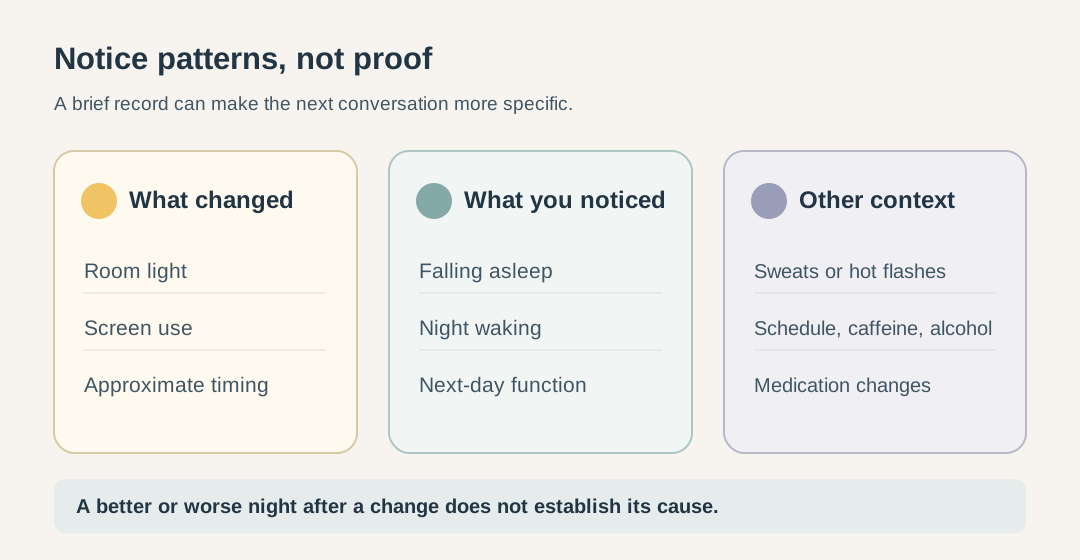
You do not need to calculate a score or hold every other part of life constant. A better or worse night after a change does not establish that the light change caused it: symptoms and circumstances can shift together. The record is a way to notice questions worth discussing, not to diagnose yourself. If logging sleep increases worry, a few plain notes—or none—may be more helpful than a detailed tracker.
Keep medical care in the picture
Persistent sleep difficulty, daytime impairment, or symptoms that continue despite changes to your routine deserve a conversation with a qualified clinician. That is also the place to raise concerns about HT, a prescribed sleep medicine that does not seem to be helping, or a possible adverse effect. Treatment choices can depend on your history; the Menopause Society’s hormone therapy guidance emphasizes weighing individual benefits and risks with a healthcare professional. Don’t start, stop, substitute, or change the dose or timing of HT or a prescription sleep medicine because of this light experiment; contact the prescribing clinician about changes or concerns.
If symptoms feel immediately dangerous or you suspect a serious medication reaction, seek urgent evaluation through local emergency services instead of waiting to see whether an evening routine helps. For ongoing concerns that are not urgent, bring your short pattern record to your clinician. Tonight’s useful step may be as small as changing one light you can control—and leaving the rest of the care plan intact.
Disclaimer
This article is for educational purposes only and is not medical advice. Gloojo Night Ease™ Sleep Glasses are not intended to diagnose, treat, cure, or prevent insomnia, sleep disorders, circadian rhythm disorders, or any medical condition. If you have chronic sleep problems, take medication, are pregnant or nursing, or are considering sleep supplements, please speak with a qualified healthcare professional.