Use the promo code to enjoy a 10% discount storewide.
How to Sleep Better After a Night Shift: A Practical Guide
Quick Summary
- Protect your first sleep window after work.
- Cut caffeine several hours before bedtime.
- Make your bedroom dark, quiet, and cool.
- Reduce light exposure as your shift ends.
- Use a planned nap if your main sleep is short.
- Prioritize sleep for recovery, focus, and safety.
To sleep better after a night shift, protect the first hours after work. Use caffeine early in your shift, not near the end. Go to bed soon after you get home. Keep your room dark, cool, and quiet. A planned nap before work may also help. Most of all, treat daytime sleep as essential recovery time, not as empty space for chores.
Why is it so hard to sleep after a night shift?
The sun is coming up when your shift ends. Traffic is getting heavier. Coffee shops are opening. Most people are starting their day.
You are trying to end yours.
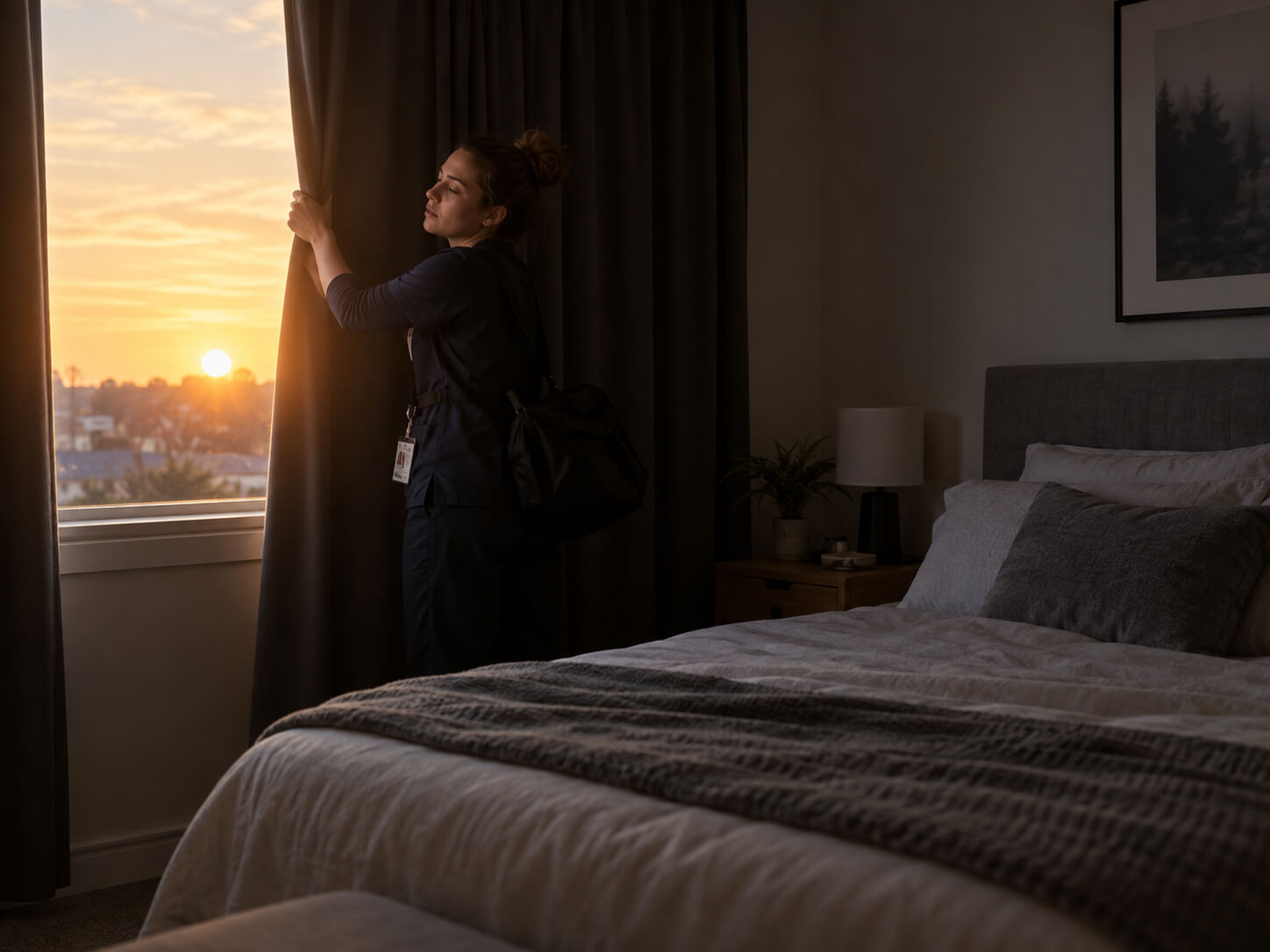
This timing creates a real biological challenge. The body uses a circadian rhythm to guide sleep and alertness. Light in the morning sends a strong daytime signal to the brain. Noise, heat, family activity, and errands can make daytime sleep even harder.
Night workers often get less sleep than day workers. Their sleep may also be more fragmented. The National Institute for Occupational Safety and Health notes that night-shift workers usually get shorter and lower-quality sleep.
This is not a failure of willpower. Your work schedule is asking your body to sleep at a time when it is built to be awake.
How much sleep do night-shift workers need?
Most adults need at least seven hours of sleep in each 24-hour period. Some people need more. The exact amount varies by person.
Night workers often have trouble getting all of that sleep in one period. A long main sleep may work for some people. Others may use a main sleep after work and a nap before the next shift.
The goal is not to copy someone else’s schedule. The goal is to create enough protected time for sleep. Your commute, health, family duties, and shift pattern all matter.
Try to judge your routine by how you function. Do you wake feeling reasonably rested? Can you stay alert at work? Are you fighting sleep during the drive home? These questions may be more useful than chasing one perfect schedule.
Should you go to bed right after a night shift?
For many night workers, the answer is yes.
It can be tempting to use the morning for grocery shopping, laundry, or appointments. The stores may be quiet. Your family may be awake. You may want to enjoy a little personal time.
But the first hours after work may be your best chance to sleep. NIOSH advises night workers to go to bed soon after arriving home. Waiting too long gives morning light and daytime activity more time to increase alertness.
Prepare before your shift when possible. Put clean sleep clothes by the bed. Set the thermostat. Pack the next night’s meal. Use grocery delivery or curbside pickup. Move nonurgent appointments to later in the day.
When you get home, follow a short routine. Have a light snack if you are hungry. Take a warm shower. Brush your teeth. Close the curtains. Silence your phone. Then go to bed.
The routine does not need to be complicated. It needs to be repeatable.
How should you manage light after a night shift?
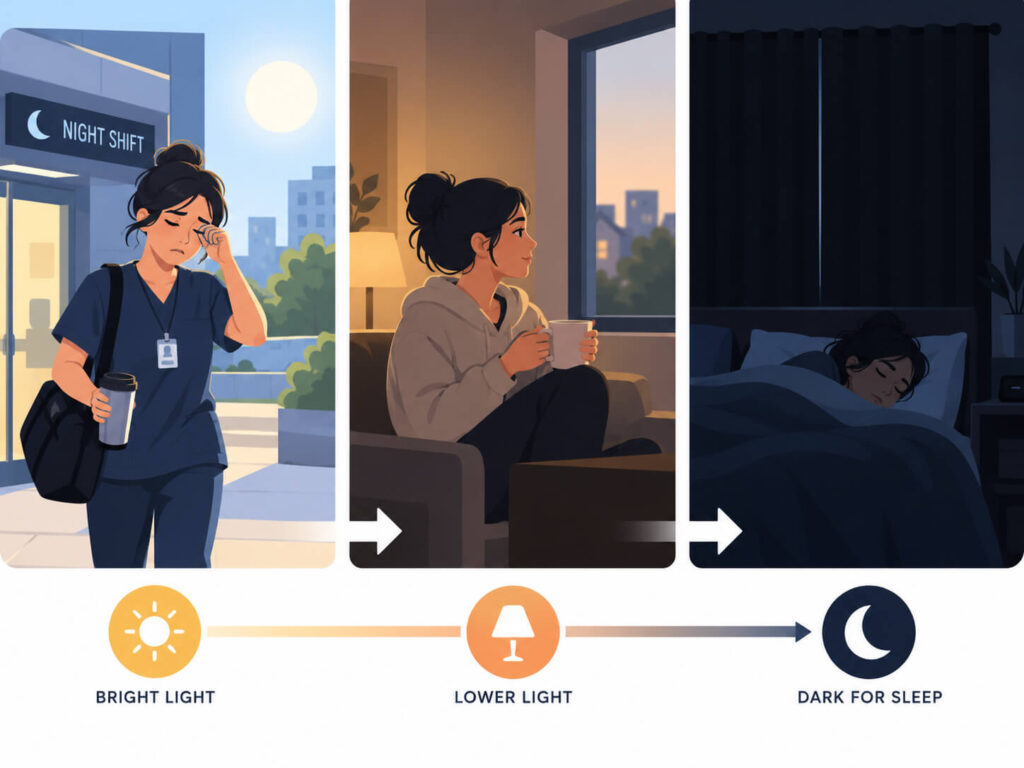
Light helps set the body’s internal clock. Bright light during work can support alertness. Bright light close to bedtime can make sleep harder.
Use a well-lit work area during the first part of your shift when possible. As the shift ends, start lowering light exposure. Once you are home, use dim indoor lighting. Avoid standing in a bright kitchen or bathroom for a long time.
Do not let light control make the drive home less safe. You still need a clear view of the road. If you are very sleepy, the main issue is not morning light. The main issue is driving safety.
The CDC explains that fatigue affects attention, reaction time, and judgment. If you cannot keep your eyes open, do not push through the drive. Ask for a ride, use public transportation, call a rideshare service, or stop in a safe place.
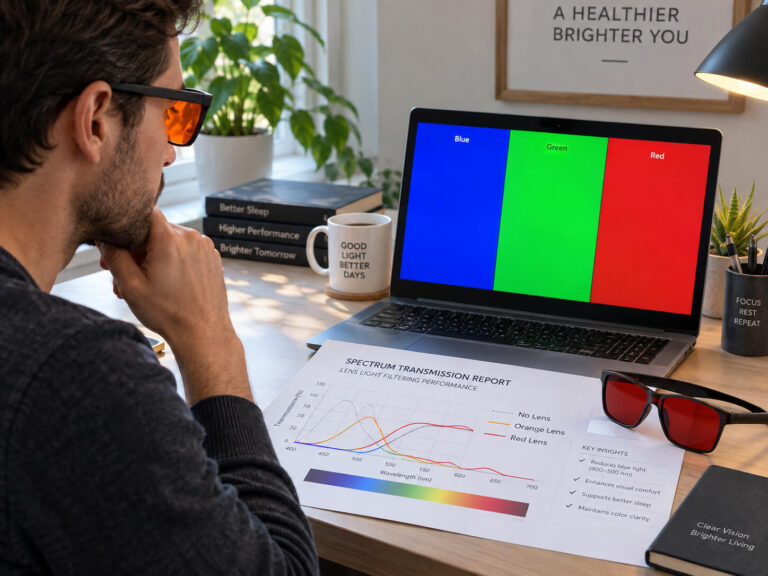
Some workers also use tinted glasses to reduce bright indoor light during their wind-down period. If you want to see what different lens tints do to incoming light, Gloojo has published a spectral test of red and orange sleep glasses. Glasses are only an optional part of light management. They do not replace a dark bedroom, enough sleep time, or a safe plan for getting home.
What is the best bedroom setup for daytime sleep?
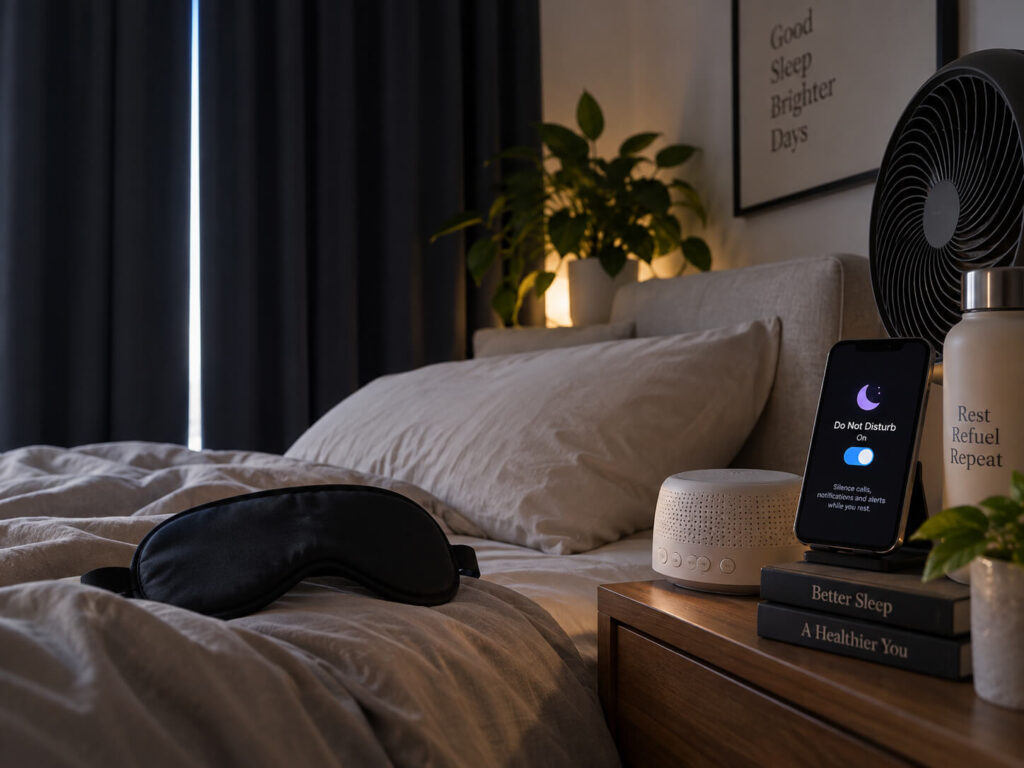
Daytime bedrooms often need extra protection from light and noise.
Blackout curtains can block sunlight. An eye mask can cover light that still reaches the bed. Cover bright alarm clocks, charging lights, and gaps around the door.
Keep the room cool and comfortable. Use earplugs if they are safe and comfortable for you. A fan or white-noise machine can reduce sounds from traffic, lawn equipment, deliveries, and neighbors.
Put your phone on Do Not Disturb. Allow calls only from people who may need to reach you in an emergency. Turn off delivery alerts and group-chat notifications.
Ask the people in your home to protect your sleep hours. Be specific. Saying, “I sleep from 9 a.m. to 3 p.m.” is clearer than saying, “I need to sleep during the day.” A note on the door may help remind children or roommates.
The CDC’s sleep environment guidance recommends a room that is dark, quiet, cool, and comfortable.
When should you stop drinking caffeine on a night shift?
Caffeine can be useful during the first part of a shift. It can also stay in the body for hours.
Coffee near the end of your shift may still affect you when you get into bed. The National Heart, Lung, and Blood Institute suggests that shift workers limit caffeine to the first part of the shift.
Try moving your last coffee several hours before your planned bedtime. You may need a longer gap if you are sensitive to caffeine.
Check the labels on energy drinks and pre-workout products. Some contain much more caffeine than a normal cup of coffee. Tea, soda, chocolate, and some medicines may also contain caffeine.
What should you eat before sleeping after a night shift?
A heavy meal can feel uncomfortable when you lie down. Spicy food may also disturb sleep for some people. Alcohol may make you feel sleepy at first, but it can lead to more broken sleep later.
If you are hungry after work, choose a small meal or snack that is easy to digest. This could be oatmeal with milk, yogurt and fruit, toast with an egg, or another food that works for your body and health needs.
Try to eat larger meals earlier in your waking period. Bring simple meals and snacks to work. This may reduce the urge to eat a very large breakfast before bed.
Drink enough water during your shift. Reduce large amounts of fluid close to bedtime if bathroom trips often wake you.
Can naps help night-shift workers?
Yes, a planned nap may help some workers increase total sleep and improve alertness.
A short nap before work may reduce sleepiness. A longer nap may help before the first night shift in a series. The best timing depends on your main sleep period and work schedule.
Naps are not a full replacement for regular sleep. They work best as part of a larger plan.
Give yourself time to wake fully after a nap. Some people feel groggy for a while. Do not drive or begin safety-sensitive work until you feel alert.
If your workplace allows rest breaks or planned naps, follow its safety rules. Employers can also help by providing enough recovery time and reasonable schedules. The Occupational Safety and Health Administration notes that fatigue prevention is a shared responsibility between workers and employers.
Should you keep the same sleep schedule on days off?
Consistency can make sleep easier. Full consistency is not always realistic.
You may want time with your family. You may have medical appointments, school events, or weekend plans. Completely switching between night and day schedules can be difficult, but staying on a full night schedule may also isolate you from daily life.
One option is to keep part of your sleep period stable. For example, you may keep a four-hour “anchor” sleep block at a similar time each day. The rest of your sleep can change around work and family needs.
This approach will not fit everyone. Notice how your body responds. If possible, avoid changing your sleep and wake times by many hours after every shift.
Do not treat one disrupted day as a failure. Return to your routine when you can.
What if your shifts rotate between days and nights?
Rotating schedules can be harder than steady night shifts. The body has little time to adjust before the schedule changes again.
If you have some control over your hours, ask for fewer rapid changes. The NHLBI recommends limiting shift changes when possible.
Look at the full week before planning sleep. Mark your shifts, commute time, family duties, meals, and sleep windows. Protect sleep before adding optional tasks.
Managers also affect worker sleep. Better staffing, rest breaks, and enough time between shifts can reduce fatigue. A worker cannot fix a harmful schedule with blackout curtains alone.
Can melatonin or sleep aids help after a night shift?
Some night workers consider melatonin or over-the-counter sleep aids. These products are not right for everyone.
Research on melatonin for shift workers has produced mixed results. Timing can matter, and products may vary. Melatonin may also interact with medicines or health conditions.
The National Center for Complementary and Integrative Health provides a detailed review of melatonin benefits, limits, and safety concerns. It notes that long-term safety is not well established.
Talk with a doctor or pharmacist before using a sleep product regularly. Do not mix sleep aids with alcohol. Do not take a product before driving home.
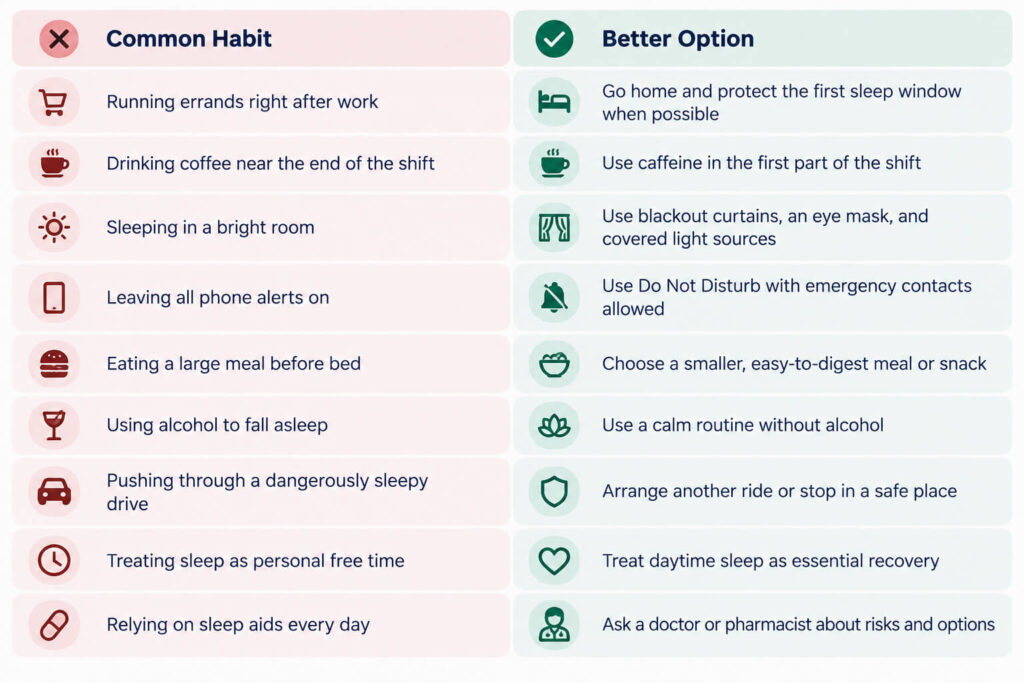
Common night-shift sleep habits vs. better options
What could a practical night-shift sleep routine look like?
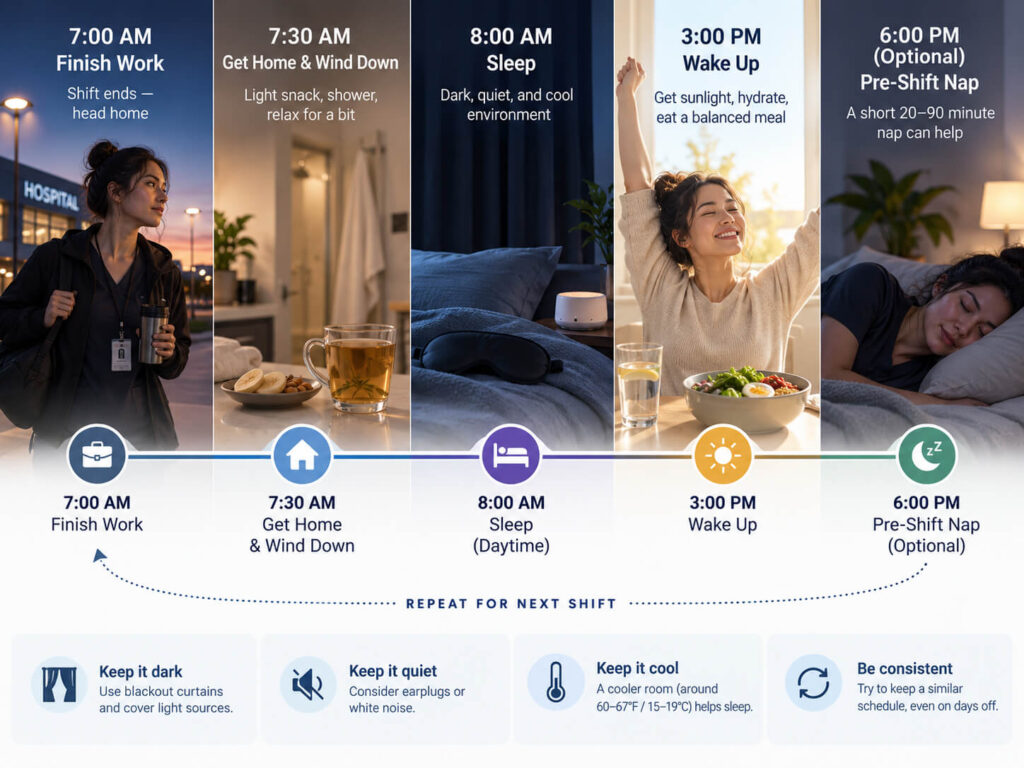
There is no perfect routine. The following example is for someone who works from 11 p.m. to 7 a.m. Adjust it to your commute and needs.
7:00 a.m. — Finish work. Stop caffeine well before this point. Lower unnecessary light when it is safe to do so.
7:15 a.m. — Travel home safely. Do not drive if you are struggling to stay awake.
8:00 a.m. — Start a short wind-down. Eat a light snack if needed. Take a shower. Keep the house quiet and dim.
8:30 a.m. — Go to bed. Use blackout curtains, white noise, and Do Not Disturb.
3:30 p.m. — Wake up. Get some light. Eat a regular meal. Move your body if you feel able.
8:30 p.m. — Take an optional planned nap. A nap may help if your main sleep was short.
10:00 p.m. — Prepare for work. Eat, hydrate, and pack what you need for the shift.
Use this only as a starting point. Your best routine may look different.
When should you talk with a healthcare professional?
Occasional poor sleep can happen. Ongoing sleep problems deserve attention.
Talk with a healthcare professional if you often cannot sleep during the day. Seek help if you wake many times or never feel rested. You should also get help if sleepiness affects your driving, work, or daily life.
Loud snoring, gasping, or pauses in breathing may point to another sleep problem. Frequent headaches after waking may also be worth discussing with a clinician.
The NHS guide to insomnia explains when sleep problems may need medical support. A sleep diary can make the conversation easier. Record your shifts, sleep periods, naps, caffeine use, and daytime sleepiness.
Do not ignore near misses on the road or at work. The CDC warns that driver fatigue can affect safe driving. Make a backup travel plan before you need it.
What is the best way to sleep better after a night shift?
Start with the parts of your routine that have the greatest effect.
Go home soon after work. Stop caffeine earlier. Make the bedroom dark and quiet. Protect enough time for sleep. Use a planned nap if it helps. Ask the people around you to respect your sleep window.
Then notice what changes.
Some days will still be difficult. A delivery may wake you. Your schedule may change. Family duties may interrupt your rest. This does not mean your plan has failed.
Learning how to sleep better after a night shift takes time. It also requires support. Daytime sleep is not wasted time. It is essential recovery for your health, your work, and your safety.
Disclaimer
This article provides general health information. It does not replace medical advice, diagnosis, or treatment from a qualified healthcare professional.