
Yes—indoor migraine glasses can make bright or harsh light more tolerable for some people with migraine-related light sensitivity. Their practical value is in making an ordinary activity, such as reading a message, sitting through a meeting, or shopping under ceiling lights, more comfortable.
The useful distinction is between dimming everything and choosing how the lens filters light. For an indoor pair, you want enough filtering to ease the light that bothers you while keeping the room, screen, and people around you easy to see. That balance depends on the filter, the lighting, and your own response.
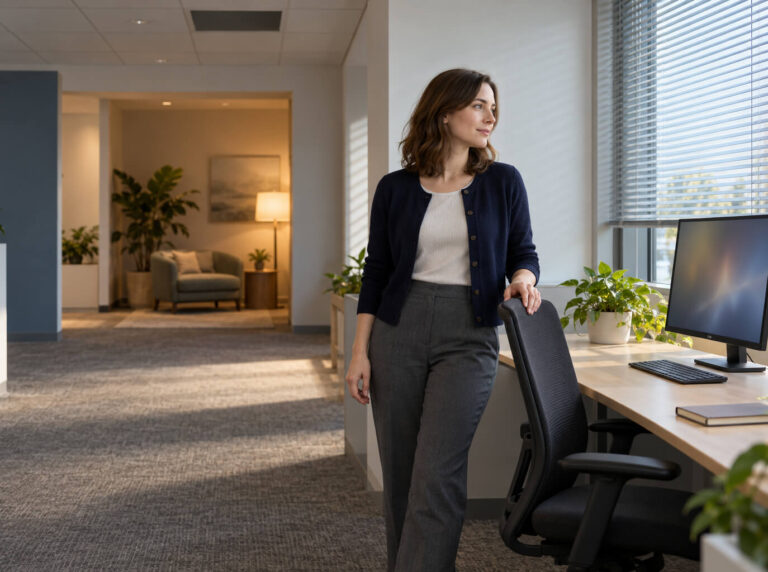
Start with the place where you need help. A pair for a brightly lit office may need a different balance of tint, color, and prescription support from one you use to read at home.
Why indoor light can feel so difficult with migraine
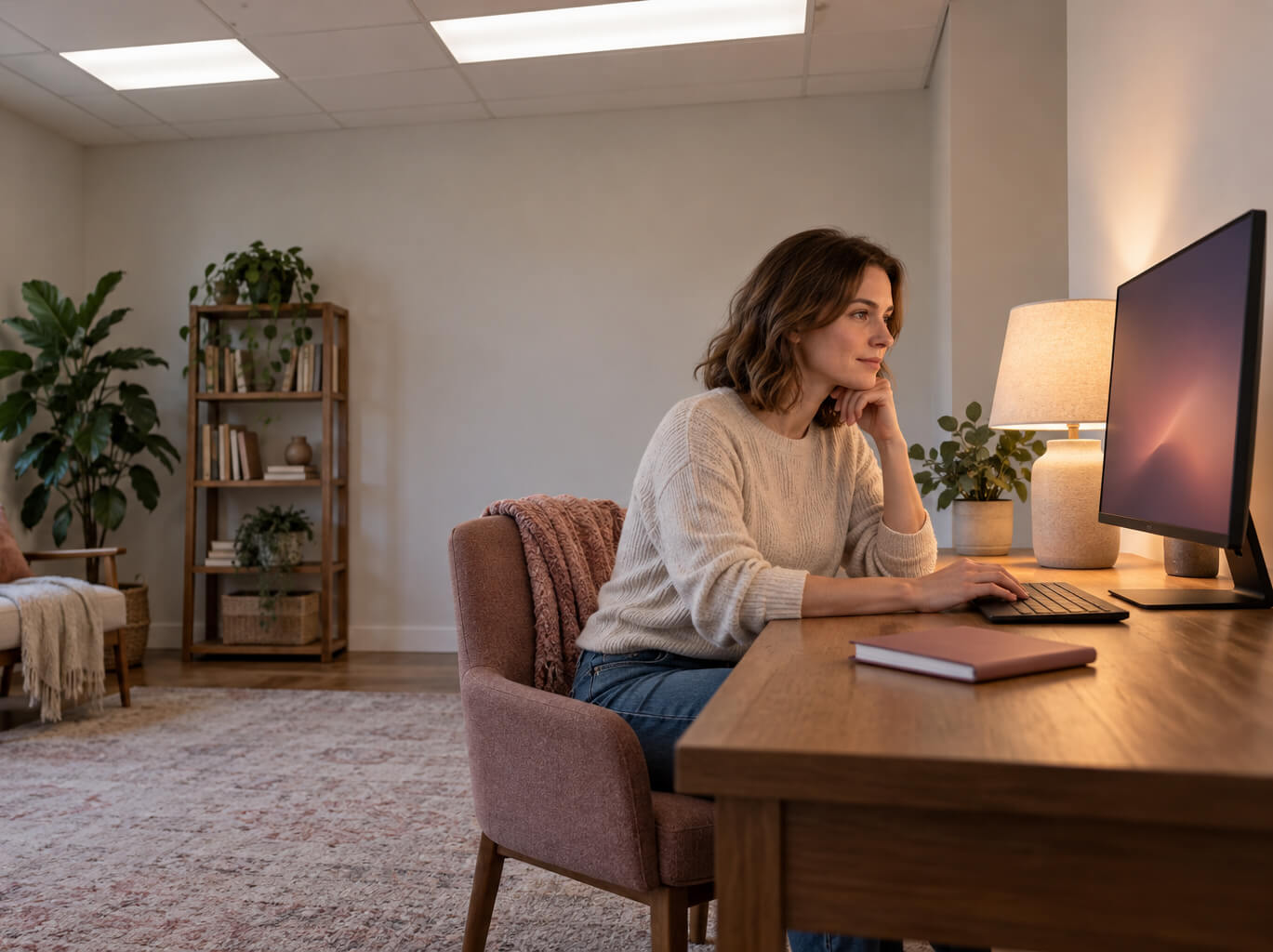
A room can look normally lit to everyone else and still feel painfully bright to you. This light sensitivity is called photophobia. The American Migraine Foundation explains that both natural and artificial light can worsen migraine discomfort, which helps explain why ceiling lights, a nearby window, or a screen can become difficult even indoors.
Brightness is only one part of the experience. Some people also find flicker, strong patterns, or particular color combinations uncomfortable. A review of migraine-related visual sensitivity describes these as overlapping forms of visual discomfort.
That makes a specific description more useful than simply saying “light bothers me.” Is it the overhead light while you read a document? Reflections on a monitor? A bright screen in an otherwise dim room? Naming the setting helps you choose both a lens and any simple changes to the environment around it.
What indoor migraine glasses change
Tinted lenses alter the light reaching your eyes in two related ways: they reduce the overall amount of light transmitted, and colored filters change the mix of wavelengths that passes through.
Overall transmission affects how bright the view remains. A darker lens lets less visible light through. Indoors, the useful result is a comfortable view with enough detail to read, recognize faces, and move around the room. Choosing the darkest available lens can make those tasks harder.
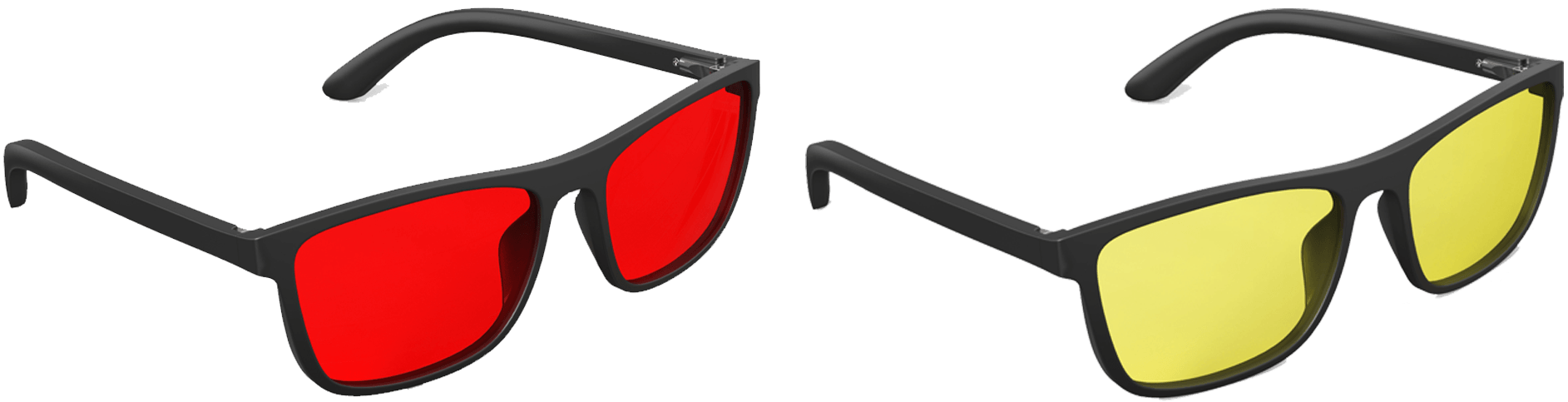
Spectral filtering affects which parts of the light are reduced more strongly. This is why two lenses that look similarly dark can create different viewing experiences. Lens color offers a visual clue, while the filter specifications describe its behavior more precisely.
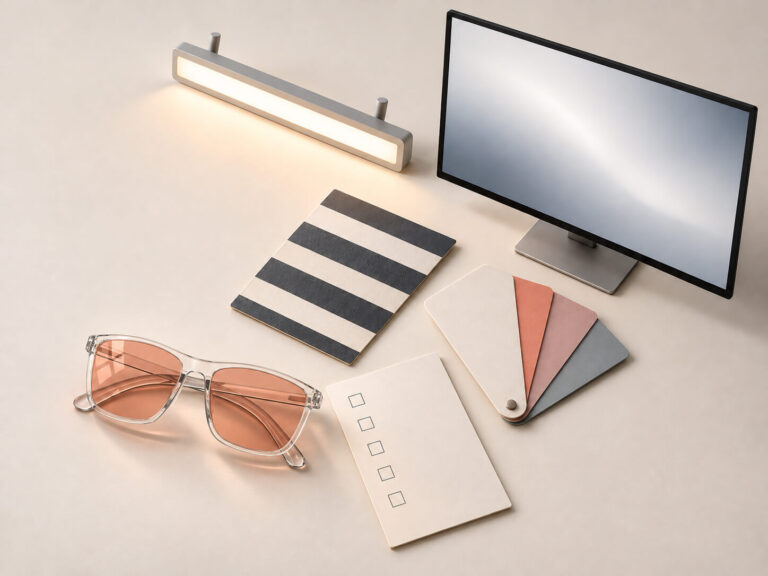
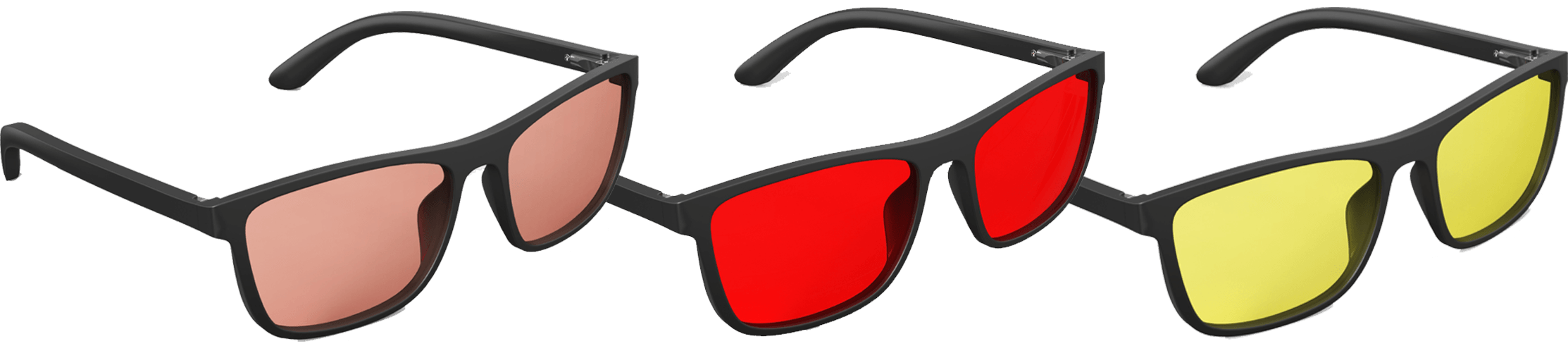
FL-41 is a rose-colored tint discussed in photophobia research and commonly encountered when shopping for migraine glasses. The clinical review Shedding Light on Photophobia discusses FL-41 and other tints used for light sensitivity. When comparing pairs, look at the manufacturer’s filter information and intended setting as well as the color: rose-looking lenses can have different transmission profiles.
The practical question is therefore more specific than “Are these migraine glasses?” Ask what the lens filters, how much light remains, and whether that combination suits the indoor task you have in mind.
How to choose glasses for indoor light sensitivity
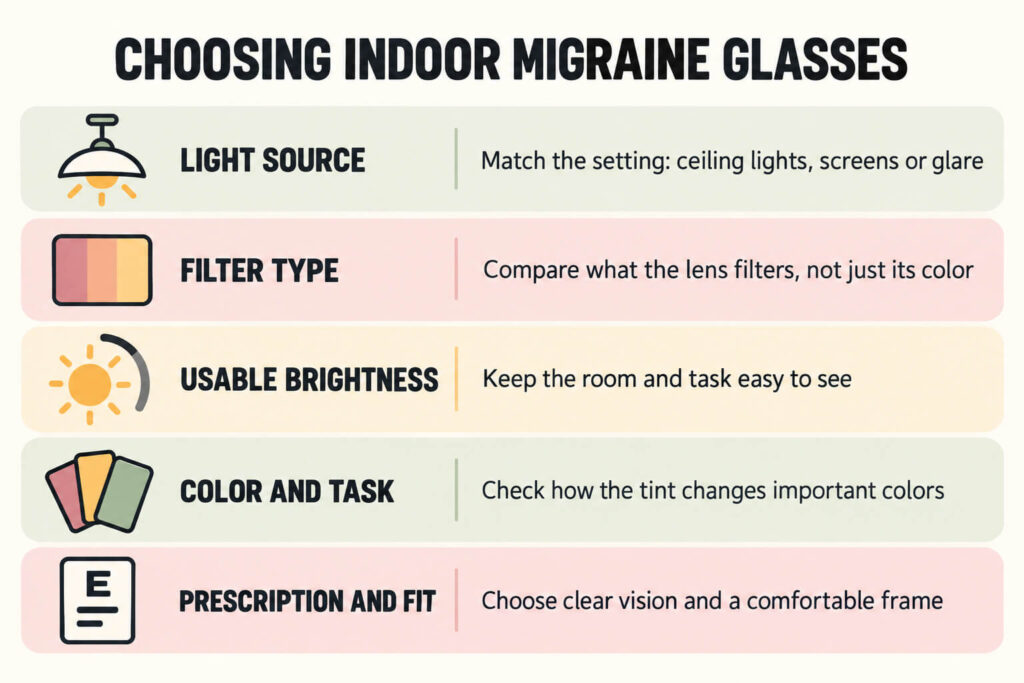
Match the lens to the light you actually face
For fluorescent or harsh ceiling lights, look for eyewear intended for indoor light sensitivity. For screen use, think about the whole scene: the screen, overhead lighting, window reflections, and contrast between the display and the room.
A tint filters the light passing through the lens; repositioning a screen or changing a troublesome lamp addresses the source. These choices can work together. For example, if a ceiling panel reflects directly in your monitor, moving the screen may reduce that reflection while a suitable tint makes the remaining room light easier to tolerate.
This also gives you a better comparison when choosing a pair. An office-light problem is different from wanting a darker view beside a sunny window, even if both happen indoors.
Compare filter information, not just a color name
Terms such as “rose tint,” “FL-41,” and “blue-light filtering” appear frequently in product descriptions. Read the information beneath the label: the intended use, available transmission data, and which wavelengths the filter reduces.
A review of tinted spectacle lenses describes how their effects vary with the filter and the situation. For a buyer, that makes the actual lens specification more useful than assuming every pair with a similar tint will feel the same.
If you are comparing an everyday screen lens with an indoor light-sensitivity tint, compare their stated purposes and filtering profiles. A blue-light percentage on its own gives only part of the picture; the overall brightness and color of the view matter too.
Keep enough brightness for the task
Visible-light transmission, often abbreviated VLT or Tv, describes how much visible light passes through a lens. A higher percentage means more light gets through. It is useful for comparing darkness, especially when you want an indoor pair rather than a very dark outdoor view.
Think about the dimmer places within your normal routine as well as the brightest one. A tint that feels comfortable beneath office ceiling lights still needs to leave a printed page or the items on your desk clear enough to see. Compare how the view works for those tasks, rather than selecting darkness in isolation.
Check color changes against your work
A rose tint gives the view a rose or warm cast. That may fit comfortably into reading, routine computer work, or a meeting. It deserves closer attention when your task involves matching paint, editing photographs, or making other precise color judgments.
Look at the things you genuinely use: a white document, colored chart labels, your phone, or materials on your desk. This tells you more about the trade-off than looking through a lens at an empty wall. The question is whether the changed view is comfortable and useful for your activity.
Choose prescription support and a comfortable frame
If you wear prescription glasses, consider whether you want the tint and correction combined in one pair or a fit-over worn over your existing glasses. Custom prescription lenses provide the convenience of a single frame. A fit-over lets you keep using your current prescription pair underneath.
With a fit-over, check the combined fit at the bridge and temples, whether the frames press against each other, and whether your view stays clear. With either format, a comfortable frame matters when you want to concentrate on a task rather than keep adjusting the glasses.
Where Gloojo Rose Relief fits
For someone whose main difficulty is fluorescent or harsh indoor light, Gloojo’s Rose Relief rose tint is a relevant option. It is designed for light-sensitivity comfort and may help reduce light-related discomfort associated with migraine.
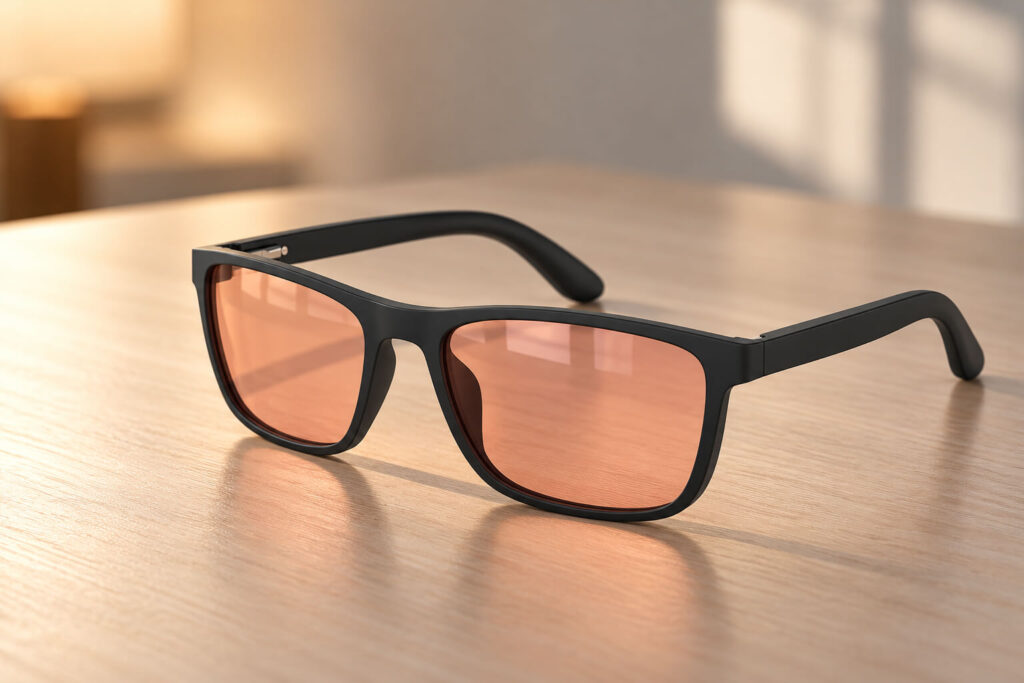
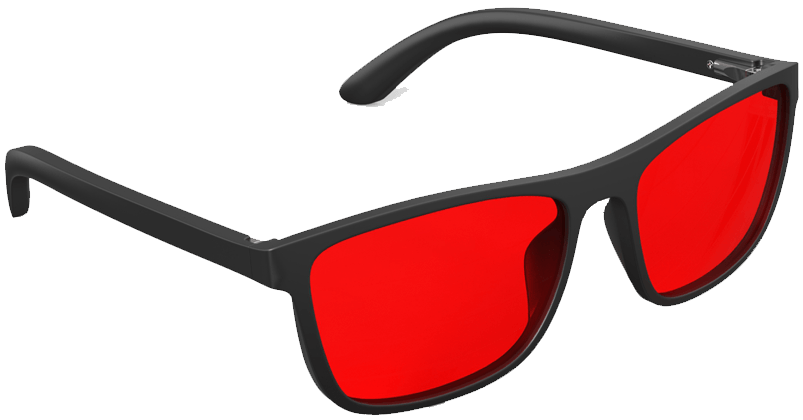
Gloojo Prism Wayfarer 168 black frame with rose tint.
The rose tint has reported ANSI visible-light transmission of 50.54%, giving you a concrete brightness specification to compare alongside its warm color cast. It supports custom prescription lenses and is also available in a fit-over format, so the choice can follow how you already manage your vision.
For example, if you need clear prescription vision at a brightly lit desk, a custom rose-tinted pair combines those needs in one frame. If you prefer to keep your existing glasses, a fit-over offers another way to add the tint. You can explore the Gloojo Rose Relief options for indoor light sensitivity with your preferred format and everyday setting in mind.
Use a new pair in a way that tells you something useful
Choose a familiar task for your first use: reading at your desk, checking messages in a bright room, or sitting in a meeting space. Notice both comfort and function. Is the light easier to tolerate? Can you still read clearly? Does the color shift work for the task? Does the frame remain comfortable?
Keep the comparison simple. If you change the lens, room lighting, screen brightness, and activity all at once, it becomes difficult to tell which change helped. Start in a manageable setting and use what you notice to decide when the glasses are most useful. If they make the view harder to see or increase discomfort, take them off and reconsider the tint or setting.
There is no need to turn this into a test of how much stimulation you can endure. During a difficult migraine period, you may still prefer a quieter room or a break from a demanding task. The glasses are useful when they help an activity fit more comfortably into your day.
If your light sensitivity is new, severe, persistent, or different from your usual pattern, an eye-care or healthcare professional can help identify what is causing it and what support fits.
Are indoor migraine glasses worth trying?
They can be worth trying when light sensitivity is making an identifiable indoor activity difficult. The strongest starting point is a clear match: the light source that bothers you, a filter intended for that setting, enough remaining brightness, an acceptable color shift, and the prescription and frame format you need.
The aim is a useful everyday difference—reading a document under ceiling lights, following a conversation in a bright room, or checking a screen more comfortably. Choose around that activity, and you will have a much clearer basis for deciding which pair belongs in your routine.
Disclaimer
This article is for educational purposes only and is not medical advice. Gloojo are not intended to diagnose, treat, cure, or prevent migraine, headaches, or any medical condition. If you have chronic migraine problems, take medication, are pregnant or nursing, or are considering migraine supplements, please speak with a qualified healthcare professional.