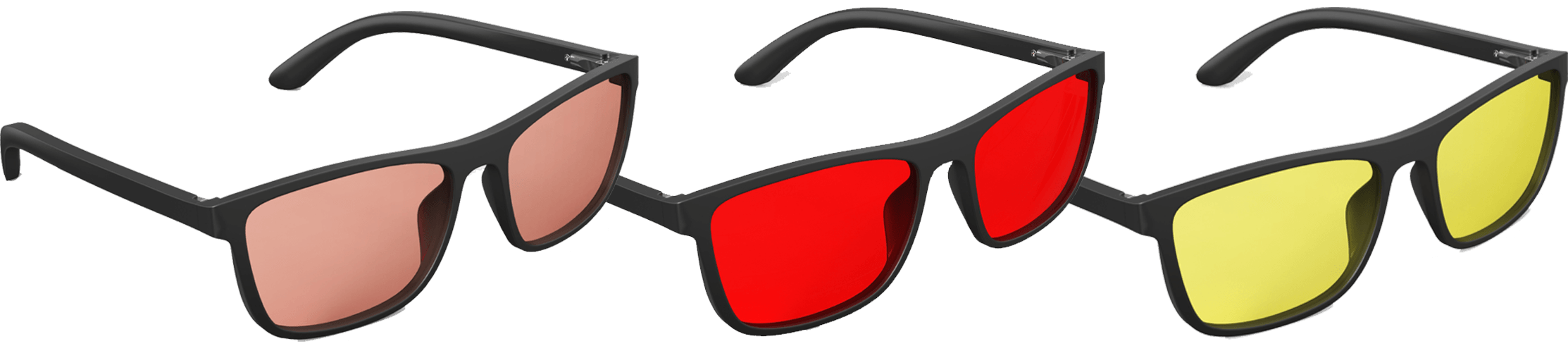


Your prescription tells a lens how to focus. It does not decide how a bright office, a fluorescent store, or a late-night screen should feel.
There is no single best pair of indoor prescription glasses for everyone. The right pair should match the task, the room, and the time of day. Start with the moment when indoor light feels hardest.
What makes a good pair of indoor prescription glasses?
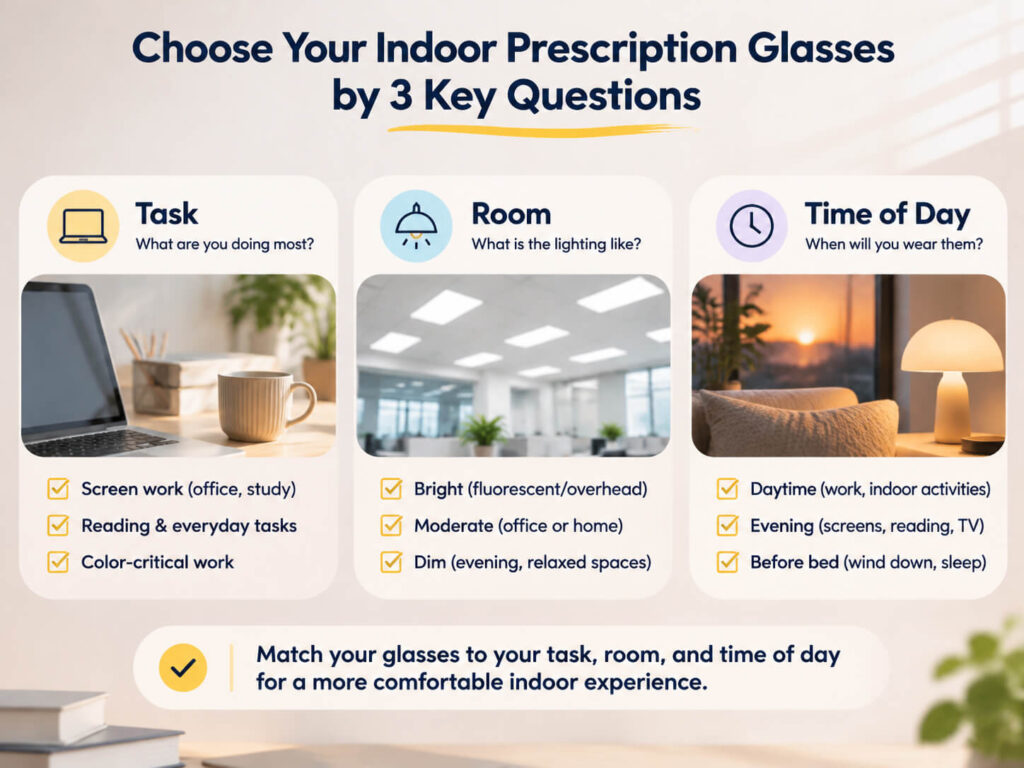
Before choosing a frame, answer five questions:
Is your prescription current and unexpired?
Do you need single vision or progressive lenses?
Where will you wear the glasses most often?
How much color change are you comfortable with?
Does your work require accurate color?
Every visible tint changes color perception. That can be useful, but it is still a tradeoff. Use a neutral view for final color-critical checks. For email, reading, spreadsheets, and evening screens, you may prefer a more comfortable tint.
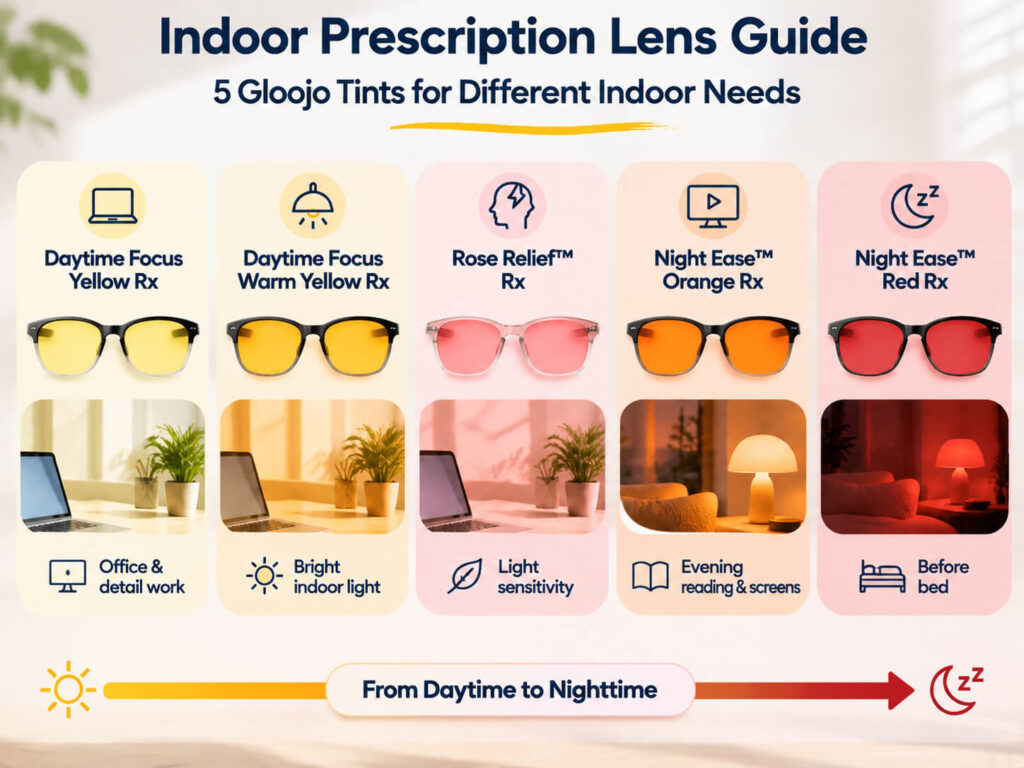
Quick comparison: which indoor tint fits your day?
| Indoor situation | Gloojo recommendation | How the view changes | Prescription support |
|---|---|---|---|
| Office work and detailed screens | Daytime Focus Yellow Rx | Bright view with a gentle yellow shift | Single vision and progressive |
| Bright offices and overhead lighting | Daytime Focus Warm Yellow Rx | Softer view with a more visible warm shift | Single vision and progressive |
| Migraine-related light-sensitive days | Rose Relief™ Rx | Noticeable rose-warm tint | Single vision and progressive |
| Reading and screens earlier in the evening | Night Ease™ Orange Rx | Strong orange shift with more visible light than Red | Single vision and progressive |
| The final indoor hours before bed | Night Ease™ Red Rx | Deep red view and the strongest color change in this list | Single vision and progressive |
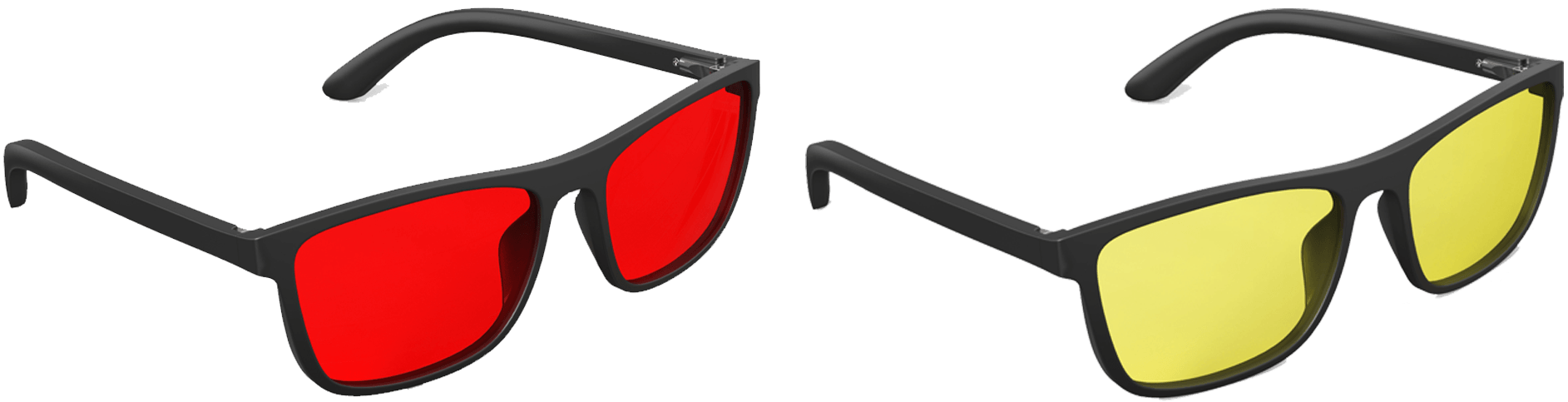
1. Best overall for daytime indoor work: Daytime Focus Yellow Rx
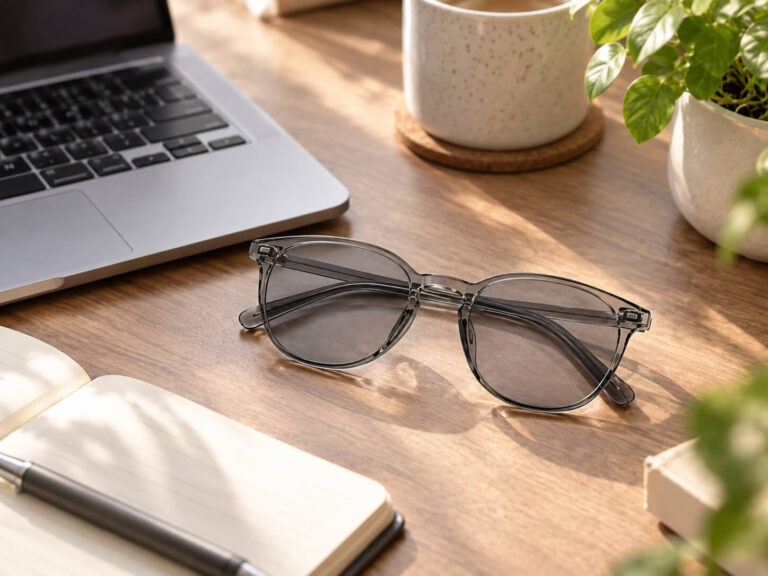
Daytime Focus Yellow prescription glasses are the easiest starting point for a screen-filled day. They keep the room bright while adding a gentle yellow tone. They suit email, coding, reading, spreadsheets, classes, and video calls.
Choose Yellow if: you want a visible daytime tint without making the room feel too subdued.
Know before buying: white backgrounds and cool colors will look warmer than they do through a clear lens.
2. Best for bright offices: Daytime Focus Warm Yellow Rx
Daytime Focus Warm Yellow has lower light transmission and a stronger warm appearance. It can make overhead lighting, white walls, and high-contrast rooms look softer.
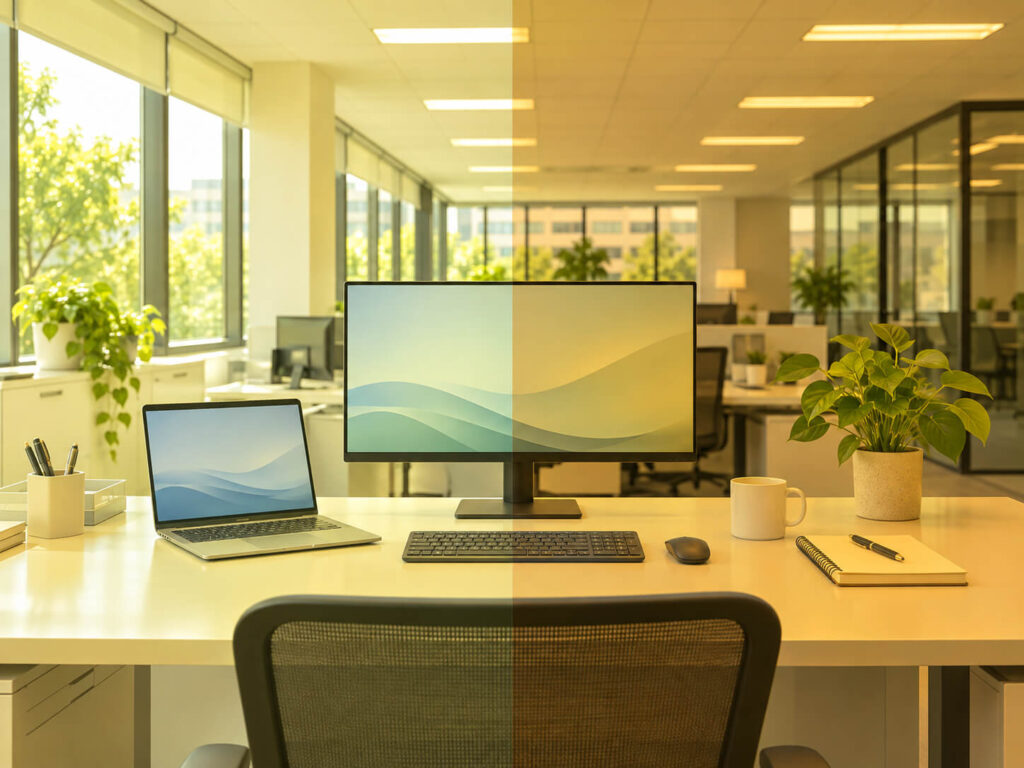
Choose Warm Yellow if: ceiling lights or a visually busy office feel more intense than the screen alone.
Know before buying: the color shift is more noticeable. Remove the glasses when exact color matters.
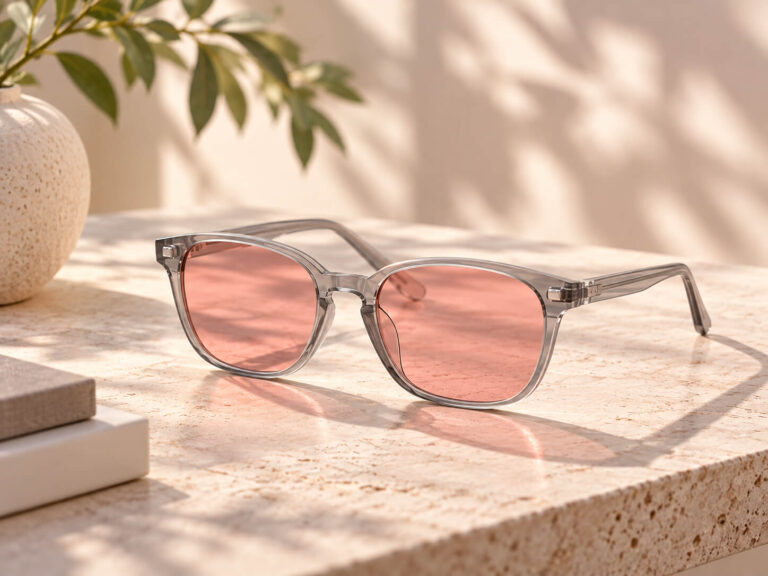
3. Best rose tint for light-sensitive indoor days: Rose Relief™ Rx
Prism Rose Relief™ Rx combines vision correction with Gloojo’s familiar rose tint. It is designed for bright artificial light and migraine-related light sensitivity.

Choose Rose Relief if: you already prefer a rose-tinted view for screens, fluorescent lighting, or other bright indoor settings.
Know before buying: this is a light-management option. It is not a treatment for migraine or another medical condition.
4. Best for earlier evening use: Night Ease™ Orange Rx
Prism Night Ease™ Orange Rx is the lighter Night Ease choice for reading, TV, laptop use, or household tasks. It creates a strong warm shift but keeps more visible light than Red.
Choose Orange if: you still need to read, move around the house, or use screens before bed.
Know before buying: Orange is not a daytime office tint. Do not use it for driving or color-critical work.
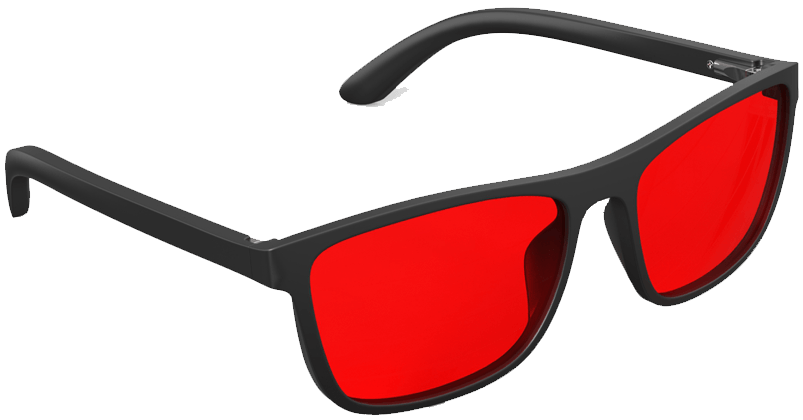
5. Best for a deeper nighttime view: Night Ease™ Red Rx
Vista Night Ease™ Red Rx is intended for the final indoor hours of the day. The deep red tint creates the largest color change in this guide.
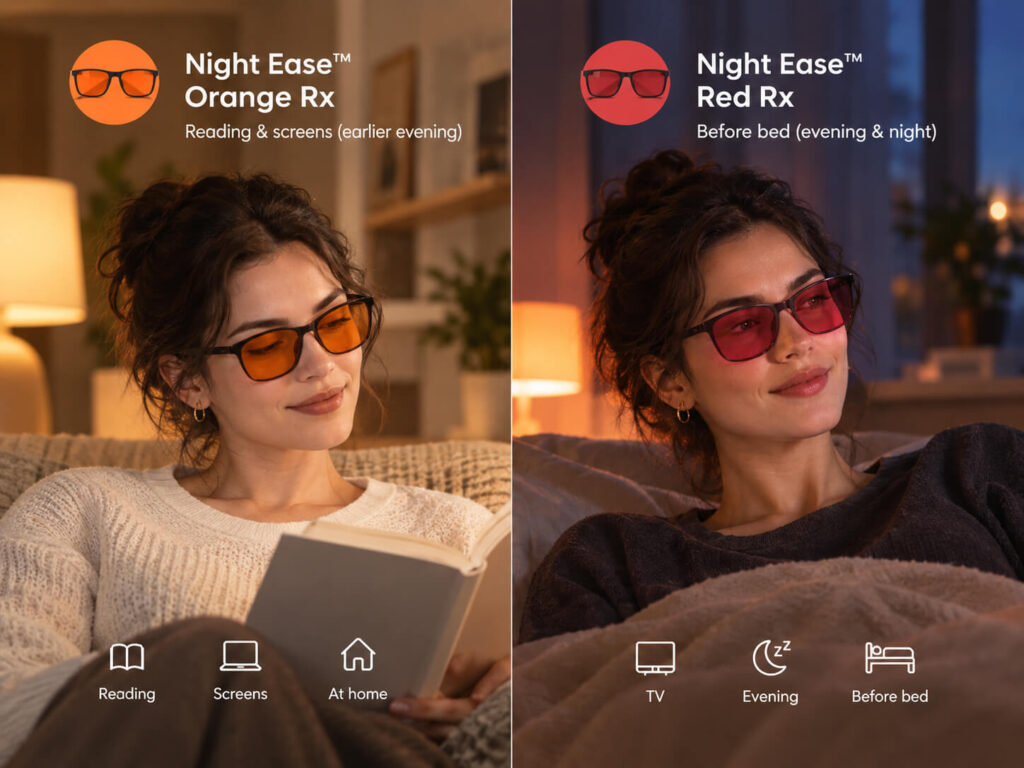
Choose Red if: you want prescription vision during a dedicated nighttime wind-down routine.
Know before buying: Red is not an all-day lens. It is not suitable for driving, safety tasks, or any situation that depends on accurate color recognition.
Single vision or progressive?
Gloojo’s listed indoor prescription frames support two common choices:
Single vision: one correction zone for distance, computer, or reading, based on your prescription.
Progressive: distance, intermediate, and near correction in one lens.
Current product pages show standard 1.50 and thinner 1.60 options. The right index depends on your prescription, frame, and desired thickness. The Gloojo tinted prescription order guide explains the steps. You will also need a valid prescription and pupil distance.
Already own prescription glasses? Consider a fitover
A fitover is not a custom prescription lens. It is a tinted frame worn over the glasses you already own.
Gloojo fitovers include Warm Yellow, Rose Relief™, Gray Relief, Orange, and Red. Measure your current frame first. It must fit fully inside the fitover.
Check these details before ordering
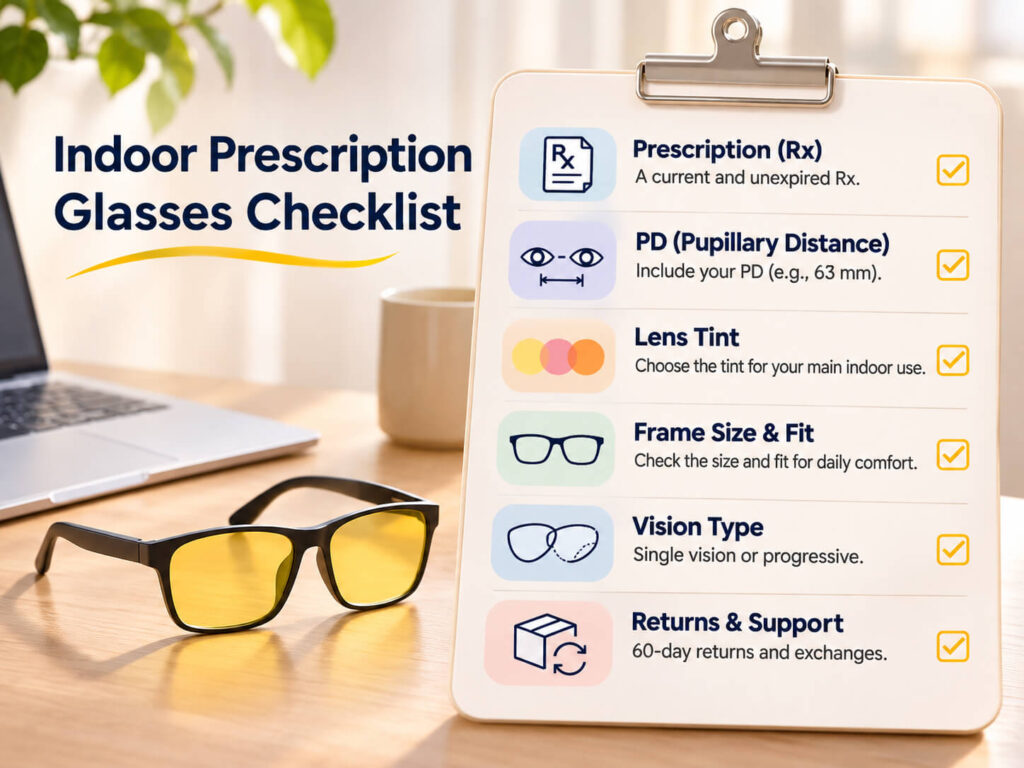
Confirm that your prescription is current.
Provide an accurate pupil distance.
Choose single vision or progressive.
Review the tint’s color shift.
Compare your current frame measurements with the new frame.
Check the expected production time.
Read the current custom-lens return rules.
Prescription lenses are made to order. Gloojo’s current policy says custom prescription lenses are not returnable unless they arrive damaged, defective, or incorrect. Production also adds about five to seven business days before shipping. Review the current shipping and return policy before ordering.
Choose the lens for the room you actually live in
Do not choose indoor prescription glasses by frame shape alone. Choose the visual environment you want the lens to create.
Start with your hardest indoor moment. Then choose the lightest tint that fits that moment, your tasks, and the amount of color change you accept.
Explore Gloojo’s indoor prescription collection and build a pair around the way you work, relax, and wind down.
Disclaimer
Gloojo tinted prescription glasses are light-management products. They do not diagnose, treat, cure, or prevent migraine, eye disease, digital eye strain, or sleep disorders.