Use the promo code to enjoy a 10% discount storewide.
Trying Too Hard to Fall Asleep? Why Effort Can Backfire
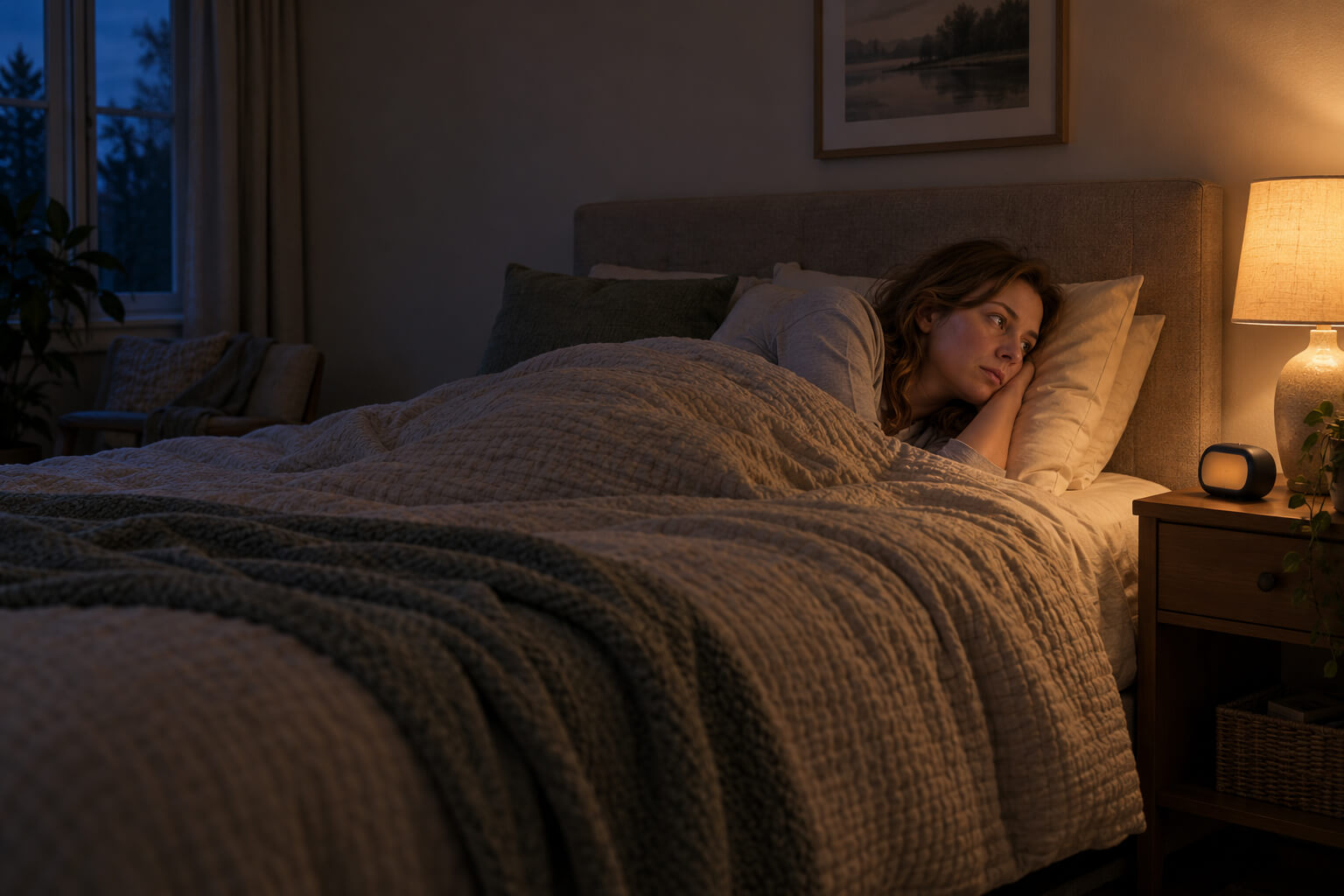
You go to bed early because tomorrow matters. Then you check the time, test whether you feel sleepy, and calculate how many hours remain. Sleep begins to feel less like a natural process and more like an exam you are failing in real time.
Trying harder can keep you awake because sleep is not controlled by intention alone. Sleep pressure, your body clock, and your level of arousal all influence whether sleep comes easily. Monitoring and forcing the process can raise tension, so the effort meant to help may become one more source of wakefulness.
That does not mean the problem is “all in your head,” and it does not mean you caused it. It means tiredness and readiness for sleep are related, but they are not identical.
Tired, sleepy, and ready for sleep are not quite the same
You can feel worn out after a demanding day without having the heavy-eyed pull of sleepiness. You can also feel sleepy while worry keeps your mind engaged. Being ready to sleep reflects several inputs lining up well enough—not a single feeling you can summon on command.
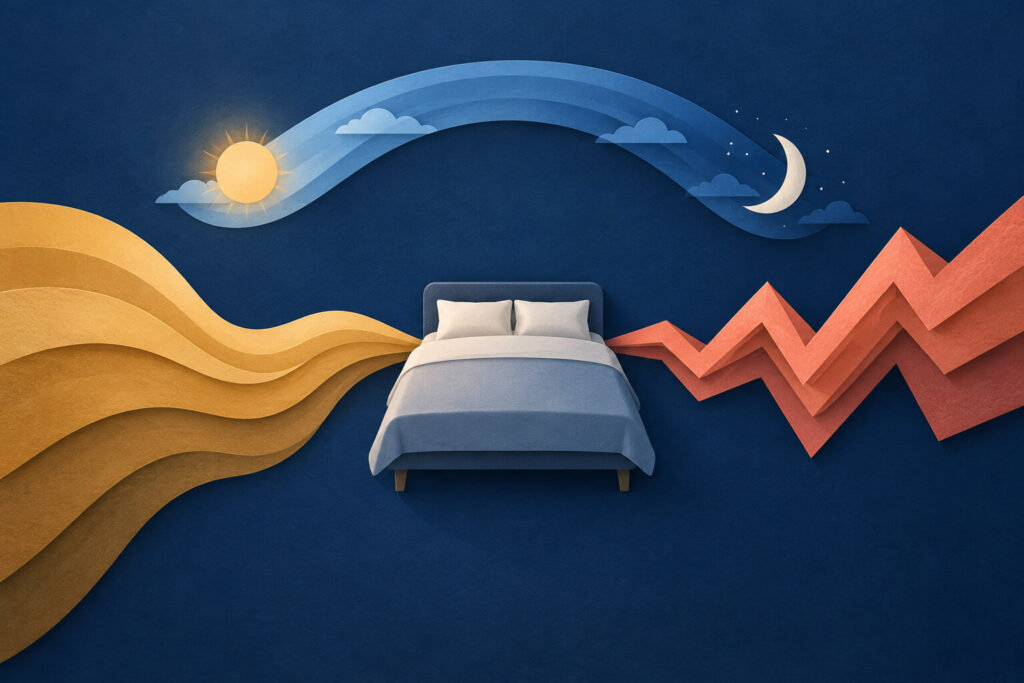
Three inputs are especially useful for making sense of the mismatch:
Sleep pressure is the drive to sleep that generally builds the longer you are awake. It is one reason sleep may come more readily after a full day than several hours before your usual bedtime.
Circadian timing is the body-clock influence that helps organize periods of wakefulness and sleep across roughly 24 hours. It responds to patterns and environmental signals, including light and darkness.
Arousal is the degree to which your mind and body remain alert. Anticipation, frustration, problem-solving, and worry about sleep can keep arousal elevated even when you feel exhausted.
The NHLBI explanation of the sleep-wake cycle describes sleep pressure and circadian timing as distinct, interacting influences. They are helpful lenses, not a way to diagnose the cause of one difficult night.
Why can an earlier bedtime lead to more time awake—or an early morning?
Going to bed earlier creates more opportunity for sleep, but it does not automatically create more sleep pressure or move circadian timing earlier that same evening. If the new bedtime arrives before your usual window of sleepiness, you may spend longer awake and become increasingly aware that sleep is not happening.
If you went to bed early and woke up early, the sequence alone does not reveal a disorder or a single cause. You may simply have shifted more of your time in bed into an earlier part of the night. Timing, prior sleep, stress, environment, and many other factors can also matter.
So the useful question is not “Was going to bed early wrong?” It is “Did I ask sleep to begin before the conditions that usually support it had come together?” That reframing leaves room for variation without turning bedtime into another calculation.
Why is it hard to sleep before an important day?
A flight, exam, presentation, medical appointment, or big event gives sleep a job: make tomorrow go well. The understandable wish for a good night can create urgency. Each check—Am I sleepy yet? How long have I been awake? How bad will tomorrow be?—brings attention back to the problem.
Stress and worry about sleep are among the possible contributors described in the NHLBI overview of factors that can disrupt sleep. This does not mean everyone who cannot sleep before an important day has anxiety or insomnia. It means anticipation and clock-watching can sometimes keep the alerting system engaged.
The difficult irony is that sleep does not respond well to being audited. You can create favorable conditions, but you cannot verify your way into unconsciousness.
When monitoring turns sleep into a performance test
Sleep effort often hides inside sensible intentions: following every rule, waiting for the “right” sensation, checking a tracker, or judging whether a wind-down routine worked. Any one of these may feel neutral. The loop becomes unhelpful when each step is treated as a pass-or-fail signal.
Then a normal fluctuation can become evidence that the night is going badly. That interpretation raises the stakes, which can increase alertness, which gives you more to monitor. Perfection is especially demanding because even drifting off “too slowly” can feel like failure.
A lower-pressure goal is not to make sleep happen. It is to stop turning wakefulness into an emergency and make room for rest while sleep arrives in its own time.
What can you do tonight without adding another rigid routine?
Think in terms of options, not a protocol. Choose the least effortful response that fits your circumstances.
If possible, keep your wake time reasonably steady rather than repeatedly redesigning the whole schedule around one rough night. “Reasonably” matters: work, caregiving, illness, and safety may require flexibility.
Let the wind-down be a transition, not a test. A familiar book, quiet audio, gentle stretching, or another calm activity can lower stimulation without becoming a technique you must execute perfectly. You do not need to keep checking whether it is working.
If lying awake in bed is making you frustrated, consider moving to a comfortable place for a quiet, non-sleep-focused activity, then return when sleepiness feels more apparent. There is no need to obey a stopwatch. This is a gentle way to interrupt the bed-plus-frustration pattern, not a rule for every awakening.

Keep the evening environment supportive but proportionate. Light is one cue among many, not the villain behind every difficult night. Dimming bright room lights or using device settings may be enough. If you have already decided that eyewear fits your routine, the Gloojo Night Ease sleep collection is designed to help reduce disruptive evening light exposure and support a bedtime routine. It is an optional environmental tool, not a treatment for sleep difficulty or a promise that you will sleep.
Most importantly, do not make these choices a new scorecard. You can pick one or two, skip what does not fit, and allow the night to be imperfect.
When is trouble sleeping more than an occasional bad night?
An isolated difficult night—especially before an important day—is not the same as a chronic sleep condition. The NHLBI overview of insomnia distinguishes short-term and chronic patterns and describes how sleep difficulty can affect daytime functioning. Consider speaking with a healthcare professional when trouble falling or staying asleep persists, meaningfully affects daytime functioning, causes severe distress, or raises safety concerns. A clinician can look beyond one habit and consider other health, schedule, or medication factors.
For adults with chronic insomnia, cognitive behavioral therapy for insomnia (CBT-I) is an evidence-based, clinician-supported treatment described in the American Academy of Sleep Medicine clinical guideline. That does not turn occasional wakefulness into a diagnosis, and it is not the same as giving yourself a stricter list of sleep-hygiene rules.
An imperfect night does not need a perfect solution
When tomorrow matters, wanting to control sleep is human. But you do not have to solve the entire night while lying in bed. Sleep pressure, circadian timing, and arousal may not align perfectly on demand. Your job is smaller: reduce the sense of emergency, choose a calm next step, and leave room for sleep rather than chasing it.
Disclaimer
This article is for educational purposes only and is not medical advice. Gloojo Night Ease™ Sleep Glasses are not intended to diagnose, treat, cure, or prevent insomnia, sleep disorders, circadian rhythm disorders, or any medical condition. If you have chronic sleep problems, take medication, are pregnant or nursing, or are considering sleep supplements, please speak with a qualified healthcare professional.