Use the promo code to enjoy a 10% discount storewide.
How to Sleep Better Without Medication: Can Blue Light Glasses Help?
Quick Summary
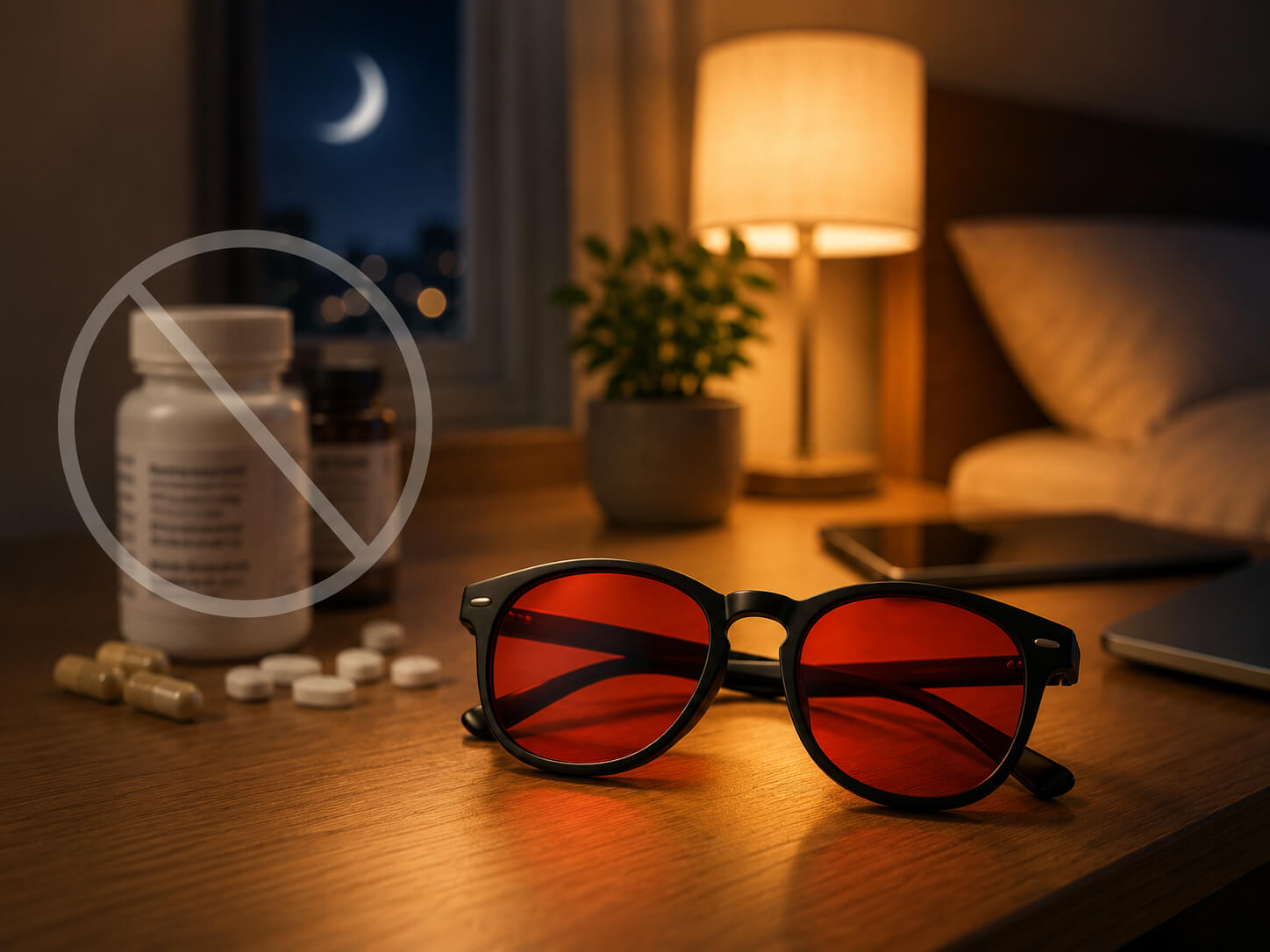
- Better sleep does not always require a pill.
- Evening light can keep your brain alert.
- Melatonin may not be ideal for long-term nightly use.
- Blue light glasses are ingredient-free.
- No hormones. No herbs. No dosage.
- Night Ease™ is best for wind-down before bed.
You are tired.
You want to sleep earlier.
You know what you are supposed to do: put the phone down, dim the lights, stop scrolling, go to bed.
But real nights are rarely that clean.
Maybe work runs late. Maybe your brain finally gets quiet time after everyone else is asleep. Maybe your phone becomes the only thing that feels easy after a long day.
So you keep using screens.
Then bedtime comes, but your body and brain are not on the same page.
Your body says, “I’m tired.”
Your brain says, “Actually, we’re still awake.”
That is usually when people start looking for sleep support. Some try melatonin. Some try magnesium, GABA, jujube seed, ashwagandha, or herbal sleep blends. Others want something simpler: a way to support sleep without medication, hormones, or active ingredients.
That is where blue light glasses can make sense.
Not as a sleep cure.
As a physical way to manage evening light.
Why People Are Looking for Drug-Free Sleep Support
Many people are becoming more careful about what they take at night.
It is not that every sleep supplement is bad. It is that people want to feel confident about what they are putting into their body, especially if they plan to use it often.
Melatonin is a good example.
The National Center for Complementary and Integrative Health explains that melatonin is a hormone your brain produces in response to darkness. It helps with circadian rhythm and sleep timing. But the same source also notes that long-term safety information for melatonin supplements is limited, and some products may not contain exactly what the label says.
That is enough to make many people pause.
They may not want a nightly hormone supplement. They may not want to worry about dose timing. They may not want to wonder whether a “natural” ingredient is right for their body.
Blue light glasses are different.
You do not swallow them.
You do not absorb them.
You do not metabolize them.
You simply wear them.
Blue Light Glasses Work From the Outside
Think of evening light like sound.
During the day, bright blue-rich light can be useful. It tells your brain, “Stay awake. Stay alert. Keep going.”
At night, that same signal can feel like background noise that never turns off.
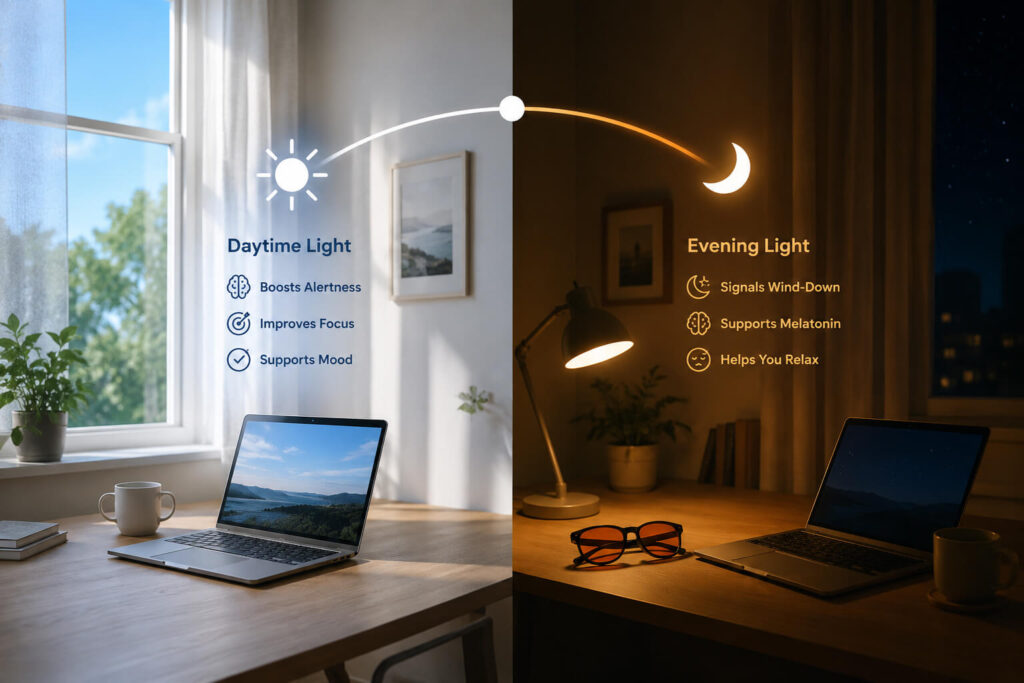
Harvard Health explains that blue wavelengths are especially disruptive at night because they can affect circadian rhythm and melatonin secretion. Harvard also recommends avoiding bright screens two to three hours before bed when possible.
But “avoid screens before bed” is easier to say than to live.
Most people still use phones, laptops, TVs, or bright room lights at night.
Blue light glasses give you a more realistic middle ground.
They help reduce exposure to selected evening light without asking you to completely redesign your life.
It is like putting your night on a dimmer switch.
Blue Light Glasses vs Melatonin
This is not about saying blue light glasses are better than melatonin for everyone.
They are different tools.
Melatonin works by adding a hormone supplement to your routine.
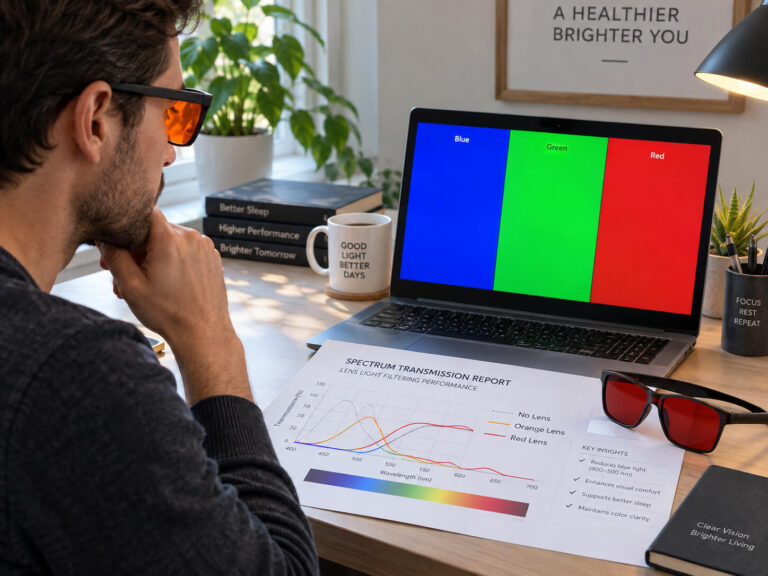
Blue light glasses work by changing the light that reaches your eyes.
That difference matters if your main concern is gentle, drug-free sleep support.
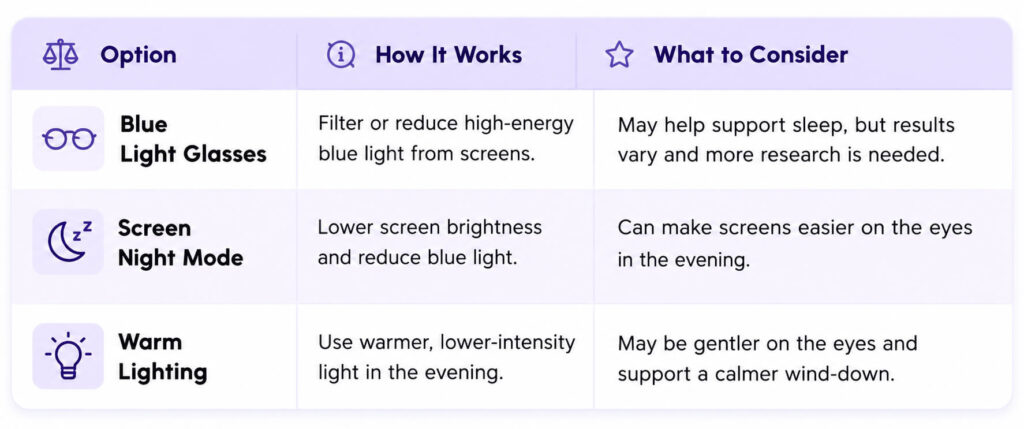
Blue light glasses do not sedate you.
They do not force sleep.
They simply help make evening light feel less stimulating.
For many people, that is the appeal.
The Real Problem: Your Night Still Looks Like Day
Your body uses light as a signal.
Bright light says daytime.
Dimmer, warmer light says evening.
But modern homes often confuse that signal.
A phone screen at 11 p.m. A bright bathroom light. A laptop in bed. LED bulbs in every room. Your eyes may be seeing “daytime” even when your schedule says “sleep.”
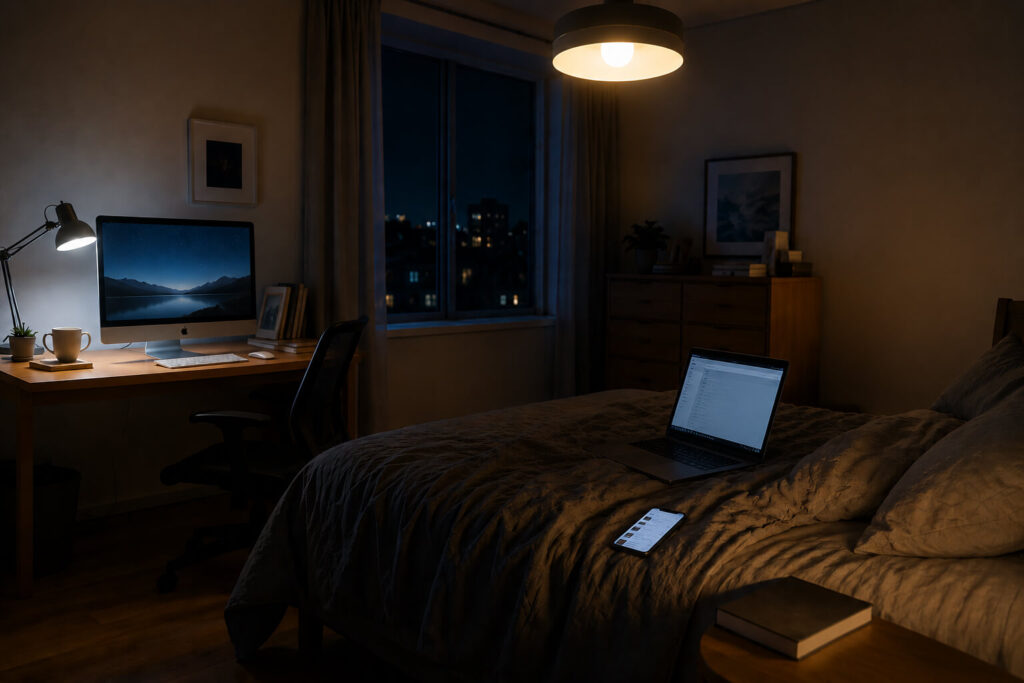
That is why bedtime can feel so frustrating.
You are tired, but not settled.
You are lying down, but not winding down.
You want rest, but your environment is still nudging your brain to stay alert.
Blue light glasses help change that signal.
They create a clear visual cue: the day is ending.
Why Choose Gloojo Night Ease™ Sleep Glasses
Night Ease™ are designed for evening light management and bedtime routines.
They help reduce exposure to stimulating evening light from screens, room lighting, and artificial light sources before bed.
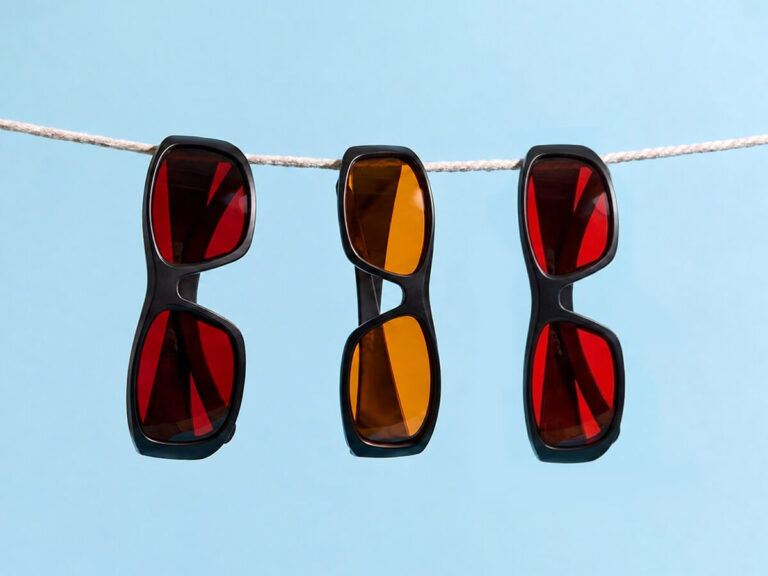
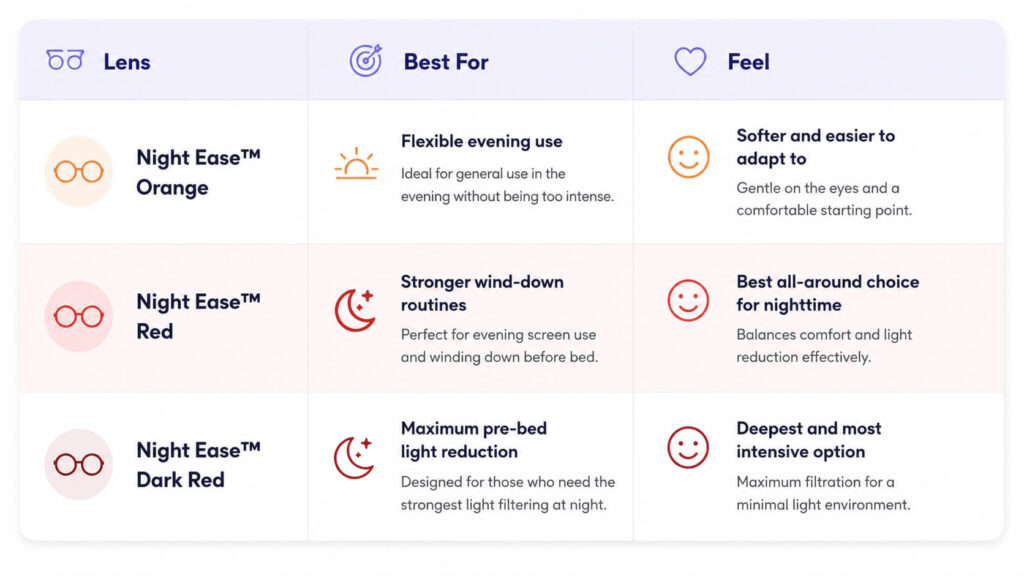
Gloojo offers three Night Ease™ tint options:
A Gentle Routine You Can Actually Repeat
The best sleep routine is not the most perfect one.
It is the one you can do again tomorrow.
That is why a physical tool can be so helpful.
You do not have to count drops. You do not have to remember a dose. You do not have to wonder whether you took something too late.
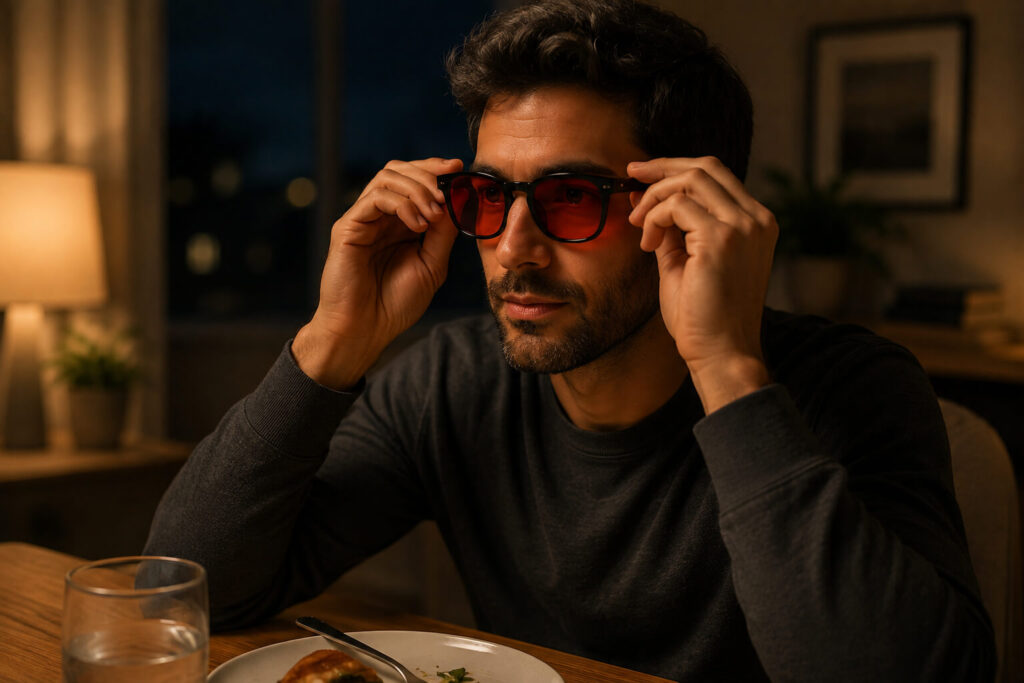
You just put the glasses on.
After dinner.
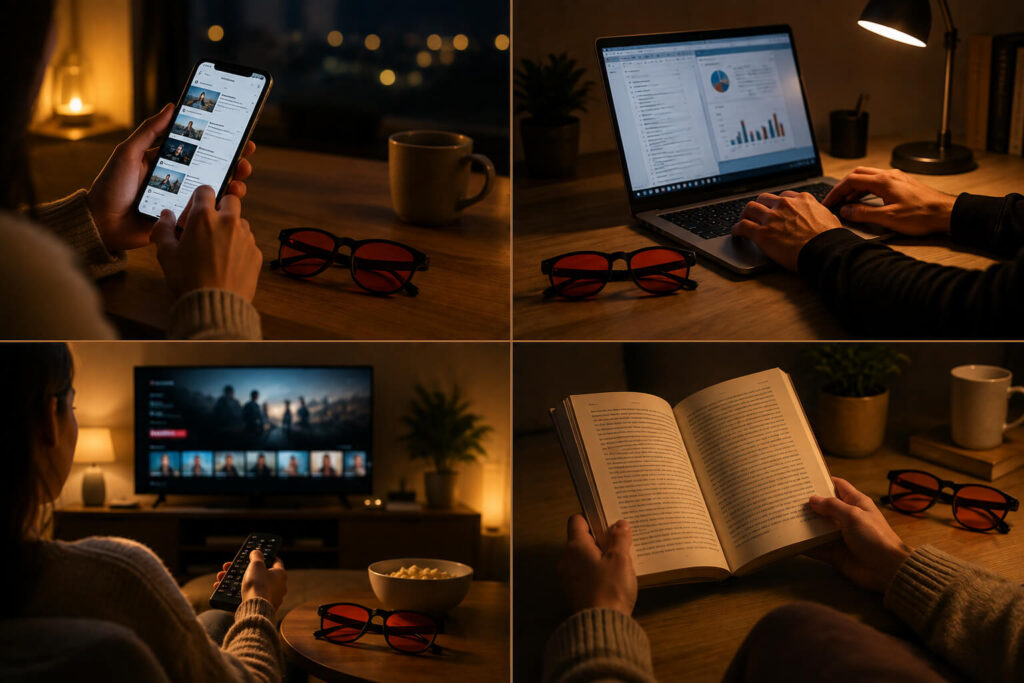
During evening screen time.
While watching TV.
While getting ready for bed.
Over time, that simple action can become a cue. Your brain starts to understand: this is the softer part of the day.
That small shift can make bedtime feel less like a fight.
When to Wear Blue Light Glasses at Night
A simple routine is best.
Try wearing Night Ease™ Sleep Glasses 1-2 hours before bed, especially while using screens or sitting under bright indoor lighting.
They may be useful during:
- evening phone use
- TV or laptop time
- late work sessions
- reading under artificial light
- bedtime routines
- bright indoor lighting after sunset
Do not wear red or dark red sleep glasses while driving. These lenses are designed for evening routines, not road use.
Who May Like This Approach
Blue light glasses may be a good fit if you:
- want sleep support without medication
- feel cautious about melatonin
- prefer ingredient-free tools
- use screens at night
- want a calmer evening routine
- dislike complicated sleep stacks
- want something repeatable
- want to support your body’s natural light-dark rhythm
They are especially useful for people who know they will not perfectly avoid screens every night.
Because real routines need room for real life.
Final Recommendation
If you want to sleep better without medication, start with your light environment.
Blue light glasses are not a cure for insomnia. They do not guarantee better sleep. They do not replace medical advice.
But they can help make nighttime light feel softer and less stimulating.
If you want the pre-bed light reduction, choose Night Ease™ now.
Disclaimer
This article is for educational purposes only and is not medical advice. Gloojo Night Ease™ Sleep Glasses are not intended to diagnose, treat, cure, or prevent insomnia, sleep disorders, circadian rhythm disorders, or any medical condition. If you have chronic sleep problems, take medication, are pregnant or nursing, or are considering sleep supplements, please speak with a qualified healthcare professional.
References
National Center for Complementary and Integrative Health. “Melatonin: What You Need To Know.” Source
Harvard Health Publishing. “Blue light has a dark side.” Source
Johns Hopkins Medicine. “Natural Sleep Aids: Home Remedies to Help You Sleep.” Source
Johns Hopkins Medicine. “Seven Ways to Get a Healthier Night’s Sleep.” Source