Use the promo code to enjoy a 10% discount storewide.
Gloojo Rose vs. Gray Tint: Which Is Better for Migraine Light Sensitivity?
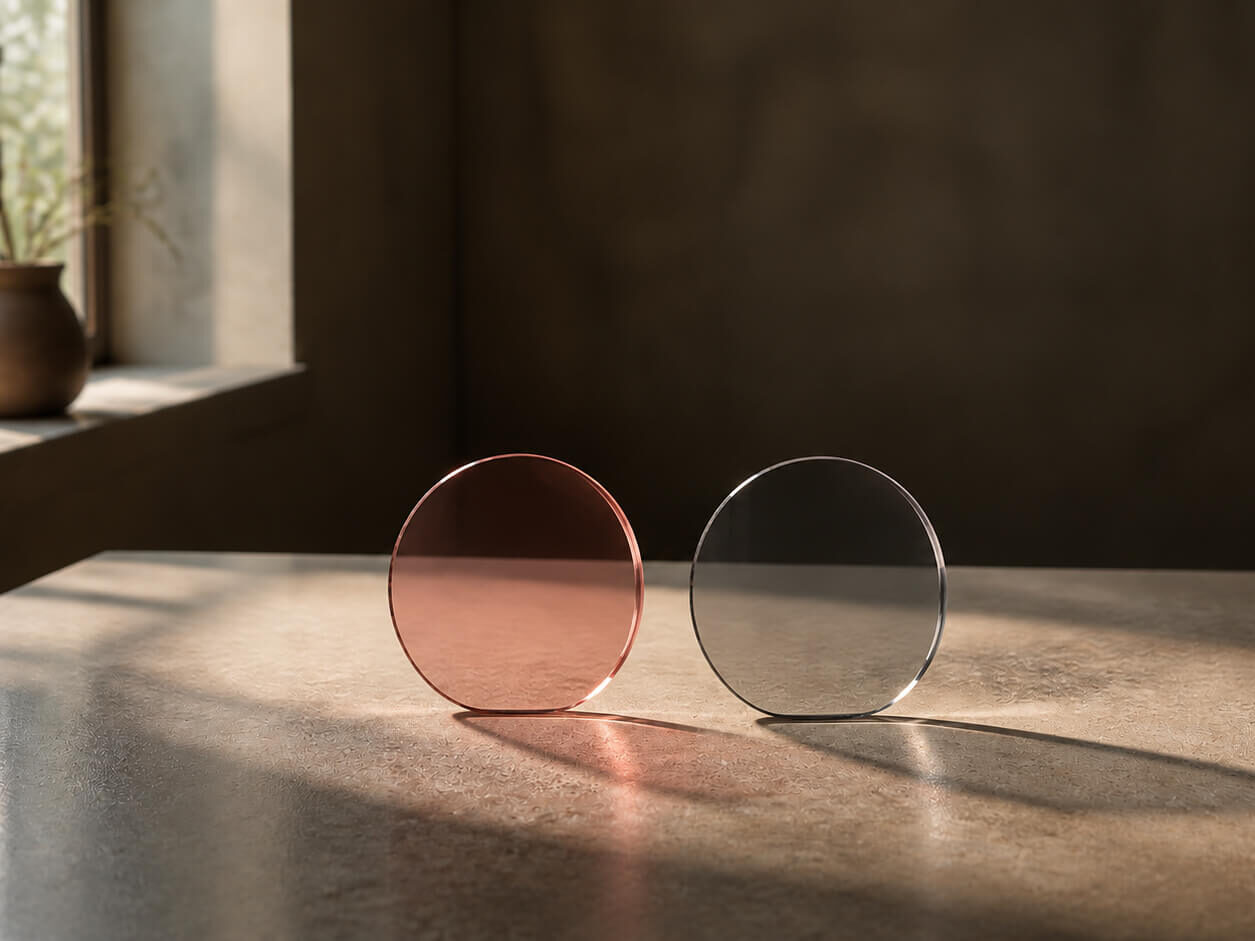
If you’ve already decided that tinted lenses might help with your light sensitivity, the next question is usually which tint. Gloojo offers two options in its light-sensitivity line — a rose tint and a gray tint — and they’re designed for different situations. Neither is universally “better.” The right choice depends on where you experience the most discomfort, what your day looks like, and how much you care about how the lenses look.
Here’s how to think about it.
What's Actually Different About Them
Both the Gloojo rose tint and gray tint are designed for light-sensitivity comfort. Both block UV light completely. But they filter visible light in noticeably different ways.
The rose tint has a visible transmittance of about 50% (ANSI Z80.3:2018). It absorbs roughly 68% of blue light and maintains moderate transmission across much of the visible spectrum while shifting color perception toward warmer, rosier tones. Its spectrum rises toward longer wavelengths — meaning it lets more red and yellow light through relative to blue and green. This filtering profile is in the tradition of FL-41 — a specifically studied spectral filter that has been discussed in clinical literature for light sensitivity. The Gloojo rose tint is positioned as a classic rose / FL-41-style option, though it’s not identical to the FL-41 filter used in published research.
The gray tint has a lower visible transmittance of about 38%. It absorbs roughly 63% of blue light, but its filtering pattern is more selective than a simple neutral gray — it has a notable dip around the 480–500 nm range and a strong dip near 580 nm. The result is a lens that appears more neutral and subdued while still targeting certain wavelengths more aggressively than others.
In plain terms: the rose tint is lighter and warmer-looking; the gray tint is darker and more color-neutral. But the difference isn’t just cosmetic — their filtering patterns target different parts of the spectrum, which may matter depending on your sensitivity.

If You Spend Most of Your Day Under Fluorescent or Harsh Indoor Light
This is where the Gloojo rose tint tends to be the stronger fit. Rose tints have been studied in the context of indoor light sensitivity, including fluorescent environments, and the clinical literature discusses them as a supportive approach for people who find harsh indoor lighting uncomfortable.
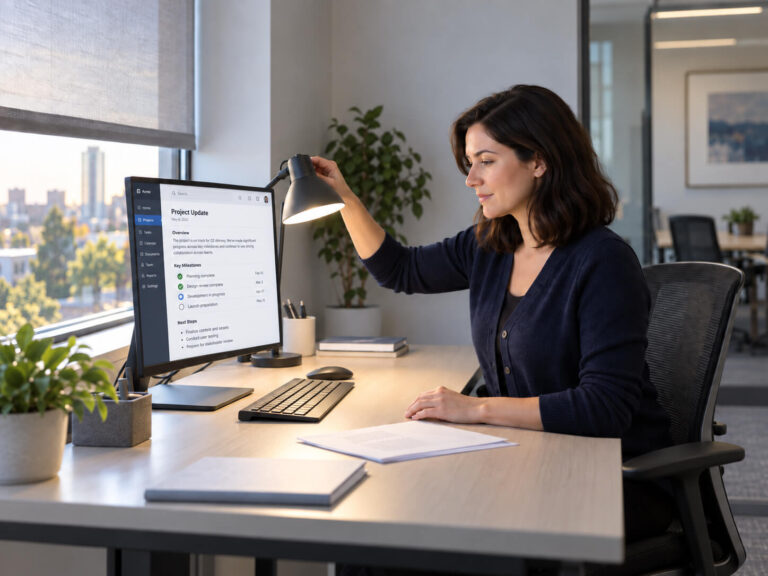
If you work in an office with overhead fluorescents, spend time in retail or institutional spaces with harsh lighting, or notice that indoor environments with cool-toned artificial light are your main trigger, the rose tint is designed with that situation in mind.
The rose tint is also the option to choose if you want prescription customization. Gloojo supports prescription lenses with the rose tint, which means you can get your corrective prescription built directly into the tinted lens rather than wearing a fit-over frame over your regular glasses.

If You Want Something Subtler for Work, Meetings, or Public Settings
The Gloojo gray tint is designed for people who want light-sensitivity support without the visible rose color. At about 38% transmittance, it’s darker than the rose tint, which means it reduces more light overall — but its more neutral appearance means it draws less attention.
If you’re in client-facing work, meetings, or social settings where you’d prefer that your lenses not look obviously tinted, the gray tint is the more discreet option. It still filters blue light and has a selective filtering pattern, but it does so without the recognizable rose appearance.
There’s a trade-off: the gray tint doesn’t support prescription customization in the same way the rose tint does. If you need your corrective prescription integrated into the lens, the rose tint is currently the better-supported option. The gray tint is available as a fit-over, which works well if you already wear prescription glasses and want a budget-friendly way to add light-sensitivity filtering.

How They Handle Screens and LED Lighting
Both tints filter blue light to some degree — the rose at about 68% absorption and the gray at about 63%. The difference isn’t huge on paper, but the experience may feel different because of how each tint changes what you see on screen.
The rose tint shifts screen colors toward warmer tones. Text and interfaces may look slightly pinkish or amber. Some people find this immediately comfortable; others find the color shift distracting, especially if they work with color-sensitive tasks like design or photo editing.
The gray tint keeps screen colors closer to their original appearance, though slightly darker and with a selective filtering effect. If accurate color perception on screens matters for your work, the gray tint may be less disruptive — though it filters less blue light than the rose tint (about 63% vs. 68% absorption) in environments with harsh LED lighting.
If You're Sensitive to Light Outdoors
Neither tint is designed as a primary outdoor solution. Both are positioned for indoor light-sensitivity comfort. If outdoor glare — reflected light off water, roads, or snow — is your main issue, polarized lenses are generally a more relevant tool than indoor tints.
That said, both the rose and gray tints do block 100% of UV light. If you do wear them outdoors occasionally, the choice depends on context. The gray tint’s neutral appearance may be more practical for social or casual outdoor settings where you’d prefer not to draw attention. The rose tint’s filtering profile may be more relevant if you’re dealing with harsh glare in bright environments — though neither replaces dedicated sunglasses for prolonged outdoor use.
Appearance and How Others See You
This matters to some people and not at all to others, so it’s worth being honest about.
The rose tint is visible. It’s a recognizable pinkish-rose color. People who know about migraine tints will recognize it; people who don’t may simply notice you’re wearing tinted lenses. The rose color is distinctive enough that some people find it draws questions or comments.
The gray tint looks more like a slightly dark pair of glasses. It’s lower-key and less likely to attract attention. If you’d rather not explain your lenses to colleagues or strangers, the gray tint is the quieter option.
Making the Decision
Rather than thinking about which tint is “better,” think about which one matches your daily reality:
Choose the Gloojo rose tint if: You spend most of your time under fluorescent or harsh indoor light, you want prescription customization, or you prefer a lighter lens with a classic light-sensitivity tint profile.
Choose the Gloojo gray tint if: You want a more neutral appearance for work or social settings, you don’t need prescription integration, or you want a slightly darker lens that keeps colors closer to natural.
If you’re unsure: Consider where your light sensitivity is worst. If it’s primarily indoor and fluorescent, start with rose. If it’s more general brightness across multiple environments and you value subtlety, start with gray.
Neither tint is a treatment for migraine. They’re designed to help manage light-related discomfort, and what works best is individual. If your light sensitivity is severe or getting worse, talking to a healthcare provider — ideally one familiar with migraine or neuro-ophthalmology — is always a good idea.
Disclaimer
This article provides general health information. It does not replace medical advice, diagnosis, or treatment from a qualified healthcare professional.