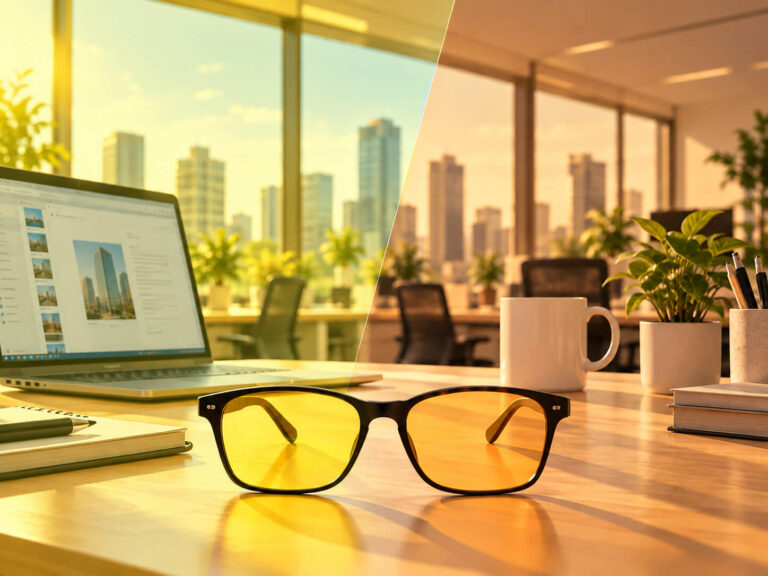

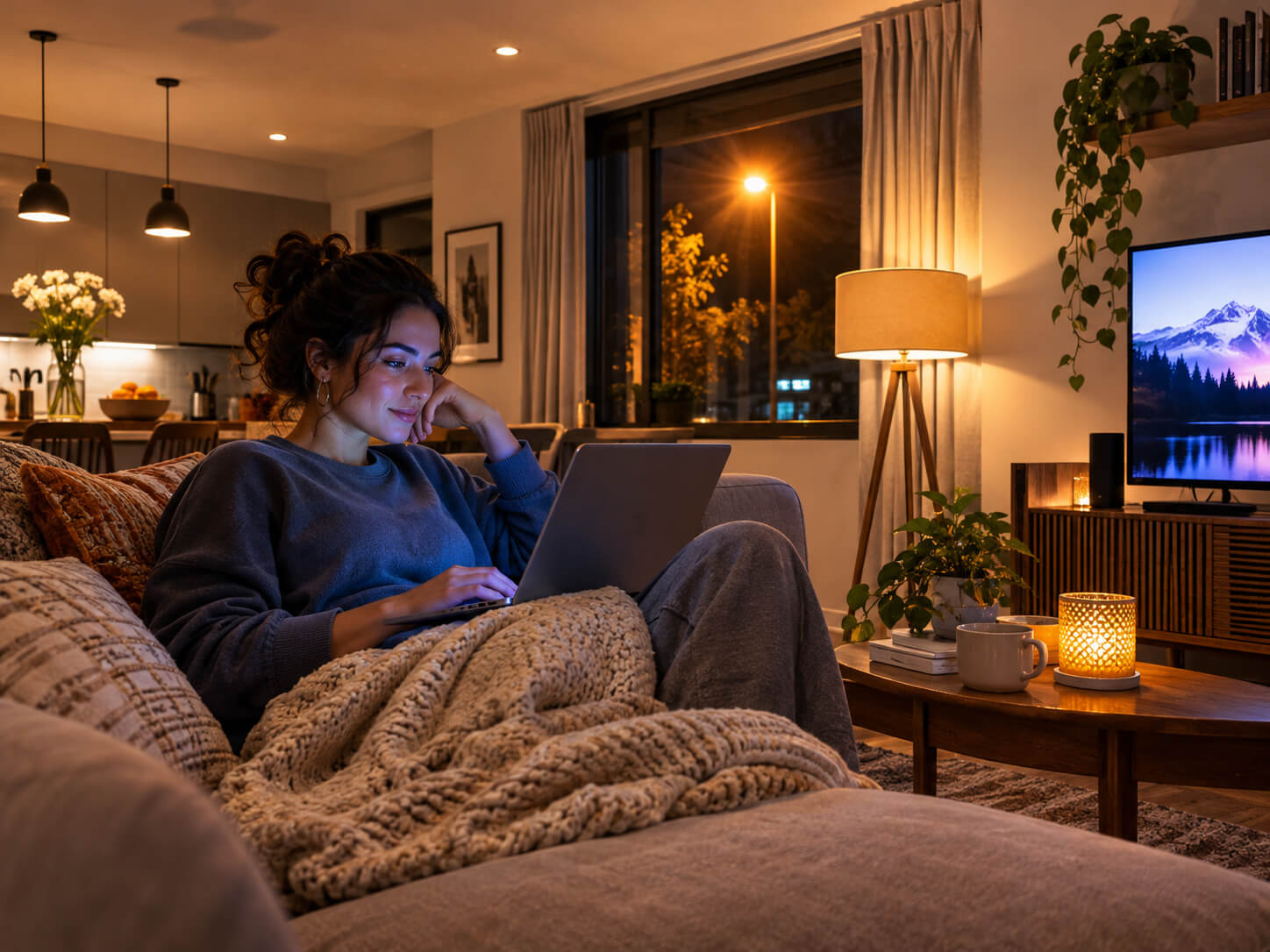
It’s 10:45 p.m. Your laptop is still open, the TV is on, and the lights in your living room are keeping the space bright.
When people think about blue light, they often think about phones and computer screens. But screens are only one part of the picture. Indoor LEDs, televisions, lamps, and outdoor lighting can all contribute to the light around you in the evening.
So, do blue light glasses work?
The more useful question is: What kind of light does a lens filter, how much does it filter, and when do you plan to wear it?
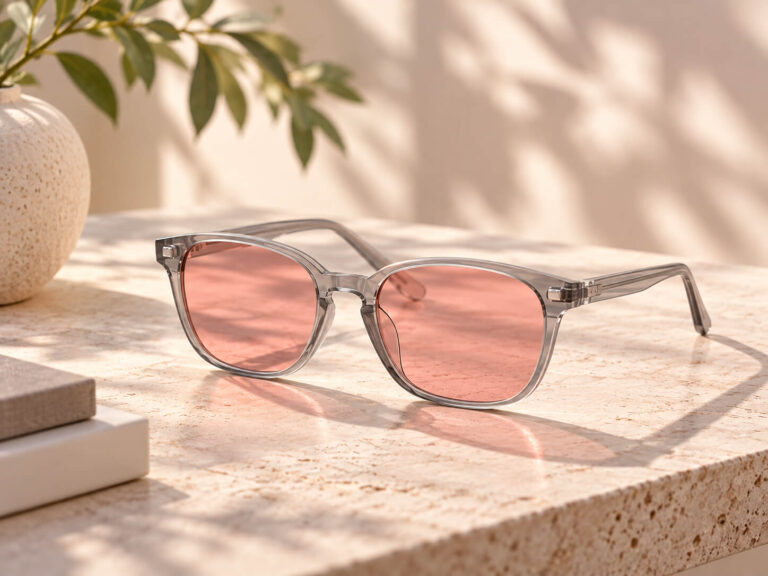
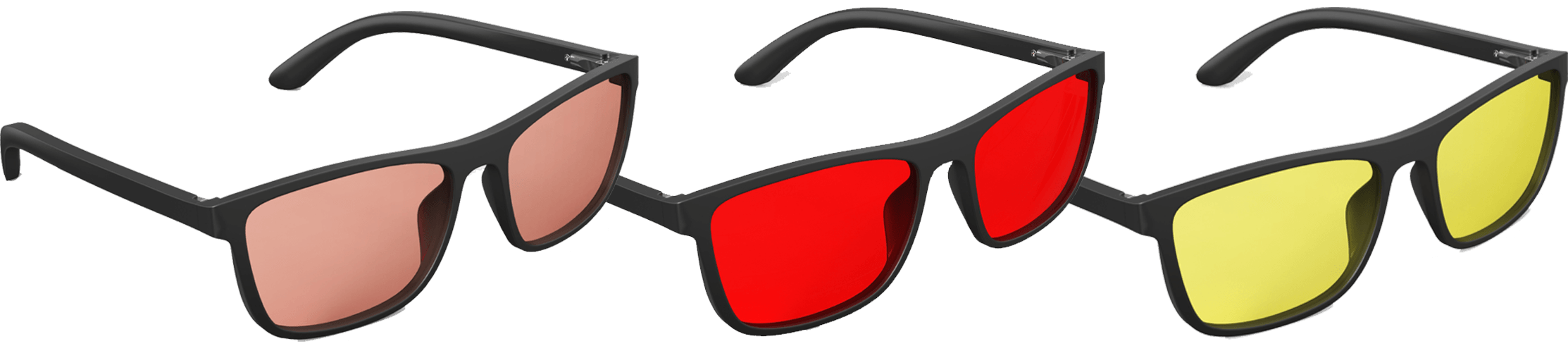
Not all blue-light glasses are designed for the same purpose. A nearly clear lens with a limited filter is very different from an orange or deep red lens designed to filter a broader range of short-wavelength light. Understanding the lens specifications can help you choose an option that fits your routine.
Blue Light Glasses: The Key Differences at a Glance
| Lens Type | Filtering Approach | What to Consider |
|---|---|---|
| Clear or lightly tinted lenses | Often filter a limited portion of short-wavelength light. | A subtle appearance does not tell you exactly how much or which wavelengths are filtered. Check the spectral specifications. |
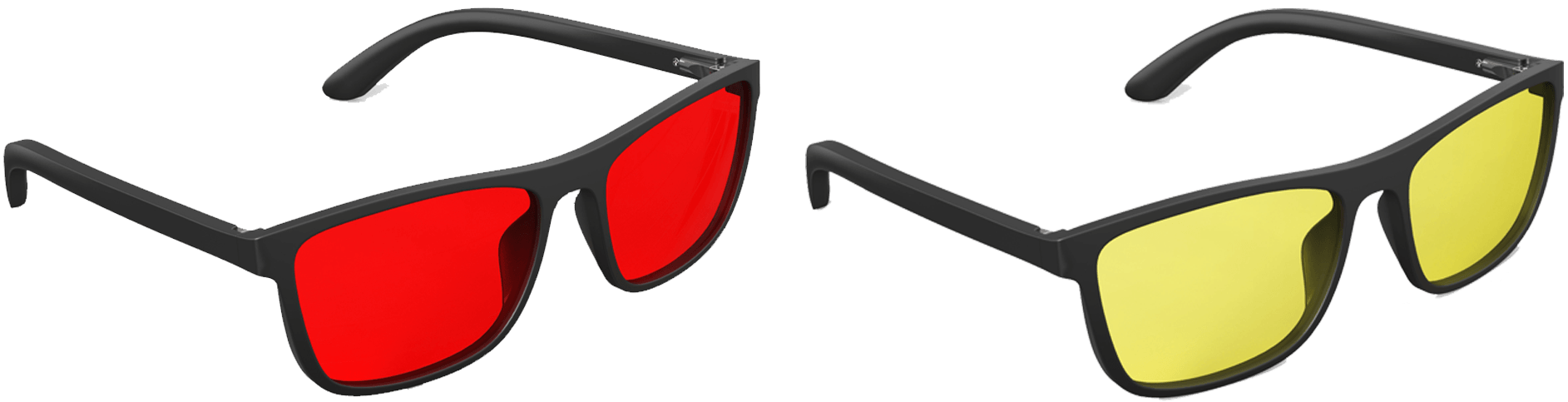
| Orange lenses | Typically create a more noticeable filter for shorter wavelengths. | A practical option when you want a visible tint without choosing the darkest lens. |
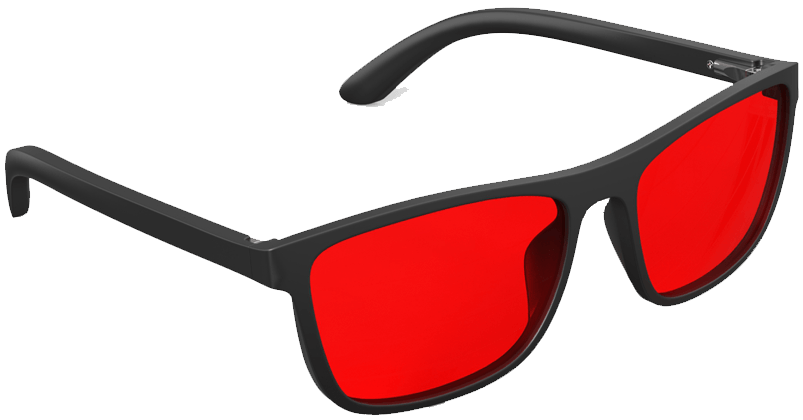
| Red lenses | Can filter a broader range of short-wavelength light, depending on the lens specification. | Check the wavelength range and blocking percentage rather than relying on color alone. |
| Dark red lenses | Can provide a stronger filter and transmit less visible light. | Consider the very dark appearance, reduced brightness, and color changes during use. |
The lens color gives you a visual clue, but it does not tell the whole story. Two lenses that look similar can have different spectral transmission profiles.
What Does “Blue Light Blocking” Actually Mean?
A useful way to compare blue-light glasses is to look beyond the lens color and understand three specifications: wavelength range, blocking percentage, and visible light transmission.
1. Wavelength Range: Which Light Is Filtered?
Light is made up of different wavelengths, commonly measured in nanometers (nm). Blue light occupies part of the visible spectrum, while green light sits at longer wavelengths.
A lens described as filtering light below 450 nm is not necessarily doing the same thing as a lens that filters light below 580 nm.
The second specification covers a broader range of the visible spectrum. This is one reason orange, red, and dark red lenses can look and feel very different from clear or lightly tinted lenses.
2. Blocking Percentage: How Much Is Filtered?
A blocking percentage describes how much light within a specified wavelength range is filtered by the lens.
For example, a claim of 100% blocking should always be read alongside its wavelength range. It does not automatically mean that the lens blocks 100% of all visible light or every wavelength that might be described as blue light.
When comparing products, look for a spectral transmission chart or test data showing how the lens performs across the relevant wavelength range.
3. Visible Light Transmission (VLT): How Much Light Passes Through?
Visible Light Transmission, or VLT, describes the percentage of visible light that passes through a lens.
- Higher VLT: More visible light passes through, so the lens generally looks lighter.
- Lower VLT: Less visible light passes through, so the lens generally looks darker.
VLT is different from a blue-light blocking percentage. A lens can have a specific filtering profile and also have a low overall VLT.
For example, a lens with approximately 3% VLT allows very little visible light through. This creates a much darker view and can noticeably affect color perception and visibility in dim environments.
What Does the Research Say?
Research on blue-light filtering glasses does not support treating every lens as the same product. Studies have examined different lens designs and different outcomes, so it is important to understand what each finding actually tells us.
What the Cochrane Review Found
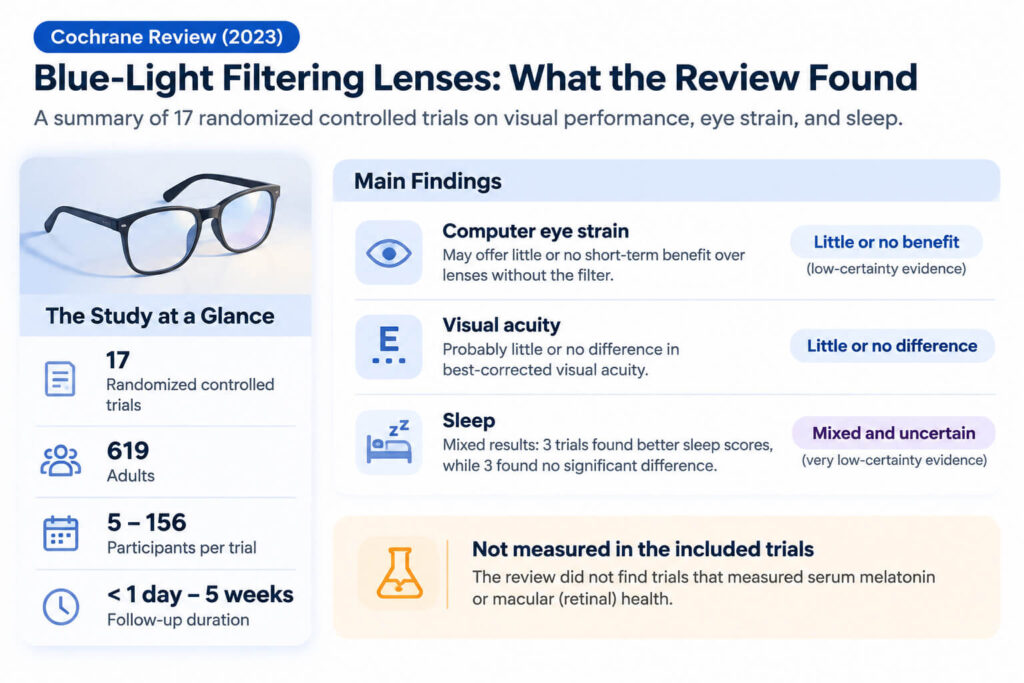
The 2023 Cochrane review included 17 randomized trials involving 619 adults.
For computer-related eye strain, the review found that blue-light filtering lenses may provide little or no short-term benefit compared with lenses without the filter. The evidence was rated low certainty.
Sleep findings were mixed. Six trials involving 148 people reported different results: three found better sleep scores, while three found no significant difference. Cochrane rated this evidence very uncertain.
The review did not identify trials measuring serum melatonin or macular health. This means those questions were not answered by the included trials.
One important detail: the Cochrane search ended on March 22, 2022. It evaluated blue-light filtering spectacle lenses as a broad category; it should not be read as a direct test of every lens with a different wavelength range or filtering strength.
What a Small Evening-Light Study Found
A 2026 controlled crossover study examined a stronger filtering approach under laboratory conditions.
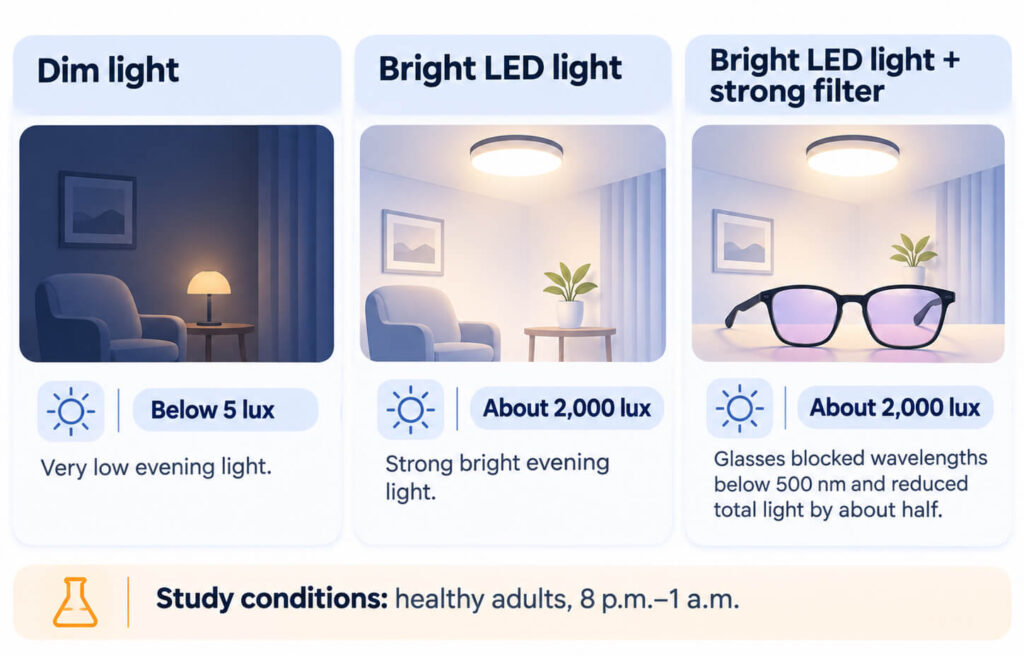
Seven healthy adults experienced three lighting conditions between 8 p.m. and 1 a.m.:
- Dim light below 5 lux.
- Bright LED light at approximately 2,000 lux.
- The same bright light while wearing glasses that blocked wavelengths below 500 nm and reduced total light by about half.
One participant did not complete the bright-light condition, so the main analysis included six people. Average melatonin suppression was 87.3% under bright light and 19.2% when participants wore the glasses.
Under those specific laboratory conditions, the tested filter reduced light-induced melatonin suppression.
This is a useful example of why filtering strength matters. However, the study was small and measured saliva melatonin, not sleep duration or sleep quality. It also tested a specific TOKAI lens, not Gloojo Night Ease™. Its results cannot be transferred directly to another product without matching the lens spectrum and test conditions.
The practical point is not that one lens guarantees better sleep. It is that lens specifications matter: a stronger filter changes the light reaching the eyes in a different way from a lightly tinted lens.
Why Your Evening Light Environment Matters
Blue light is not simply “bad.” Natural daylight helps the body recognize daytime and supports normal alertness. The timing, intensity, and spectrum of light all contribute to the environment around you.
In the evening, light can come from more than one source:
Computer monitors and laptop screens.
Phones and tablets.
TVs and gaming displays.
Ceiling LEDs and desk lamps.
Streetlights and outdoor lighting entering through windows.
Reducing screen brightness can help manage one source, but it does not change the light coming from the rest of the room.
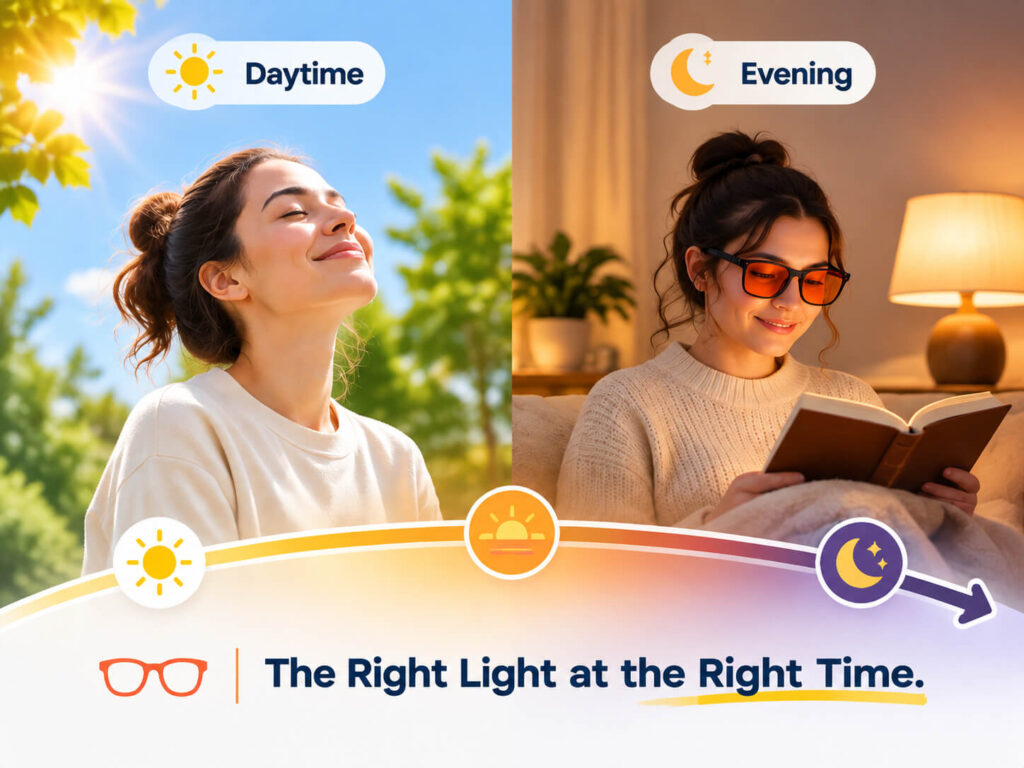
A more complete evening routine considers the overall lighting environment, not just the screen in front of you.
How to Choose the Right Lens Filtering Strength
The right lens is not necessarily the darkest one. It is the one whose filtering range, tint, and visible light transmission make sense for when and how you plan to use it.
Consider these questions before choosing:
When will you wear the glasses? Earlier evening activities may call for a different tint from the final part of your nighttime routine.
How much filtering are you looking for? Compare the wavelength range and blocking percentage rather than relying on the lens color alone.
How dark can the lens be for your activities? A lower VLT means less visible light passes through.
Do you need accurate color recognition? Strong orange and red tints change how colors appear and are not suitable for color-critical tasks.
Where will you wear them? Very dark lenses are best reserved for safe indoor environments where reduced brightness will not create a visibility problem.
Find Your Evening Tint with Gloojo Night Ease™
Gloojo Night Ease™ Sleep Glasses are designed around different levels of evening light filtering. Instead of treating every blue-light lens as interchangeable, Night Ease™ offers distinct tint options with different filtering ranges.
Compare the Night Ease™ Lens Options
| Night Ease™ Tint | Lens Filtering Specification | Suggested Routine |
|---|---|---|
| Orange | Filters 100% of blue light at wavelengths up to 450 nm. | Earlier evening activities such as reading, watching TV, and household routines. |
| Red | Filters 100% of blue light and approximately 99% of green light up to 580 nm. | Evening use when a deeper tint is preferred. |
| Dark Red | Filters 100% of blue light and 100% of green light up to 580 nm. VLT is approximately 3%. | The later part of the evening when you prefer the strongest filtering option and a very dark view. |
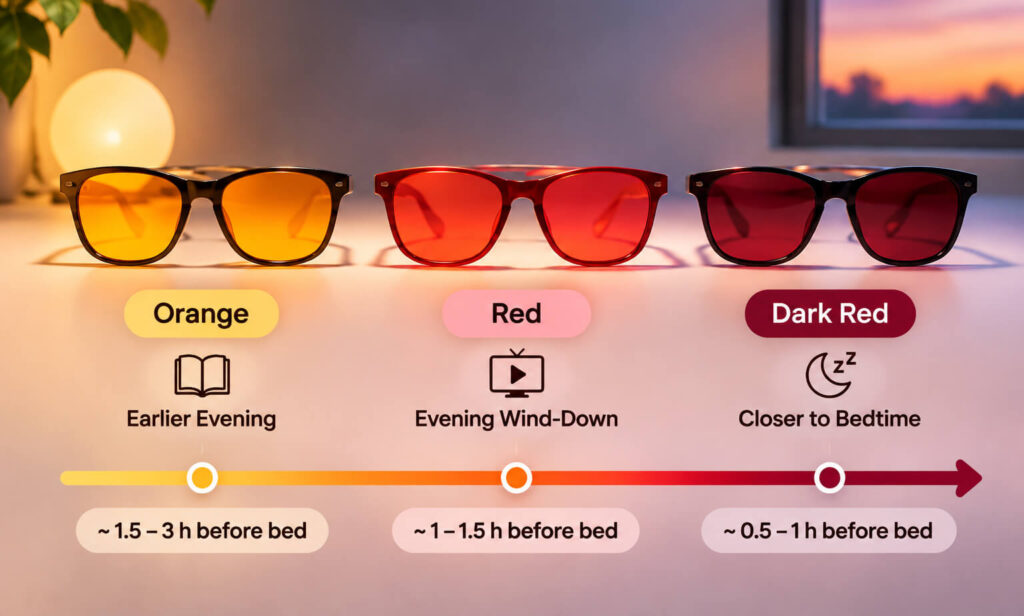
What is the difference?
- Orange focuses on shorter-wavelength blue light and offers a lighter visual experience than the red options.
- Red extends the filtering range further into green wavelengths.
- Dark Red offers the strongest filtering specification in the range, together with very low visible light transmission.
The choice is about matching the lens to your preferred filtering level and evening activities—not assuming that the darkest lens is automatically the best choice for everyone.
Strong tints change how colors appear. Dark Red, with approximately 3% VLT, creates a very dark view and may make it harder to navigate dimly lit spaces. Night Ease™ lenses are not suitable for driving or tasks that require accurate color recognition. Use them indoors in a safe environment.
Night Ease™ is a light-management product. The research discussed in this article does not establish that Night Ease™ improves sleep quality, changes melatonin levels, or treats any sleep-related condition.
Make Your Evening Lighting Work Better for You
Glasses are only one part of an evening light routine. A few adjustments to your surroundings can also make a difference to the amount and type of light you experience.
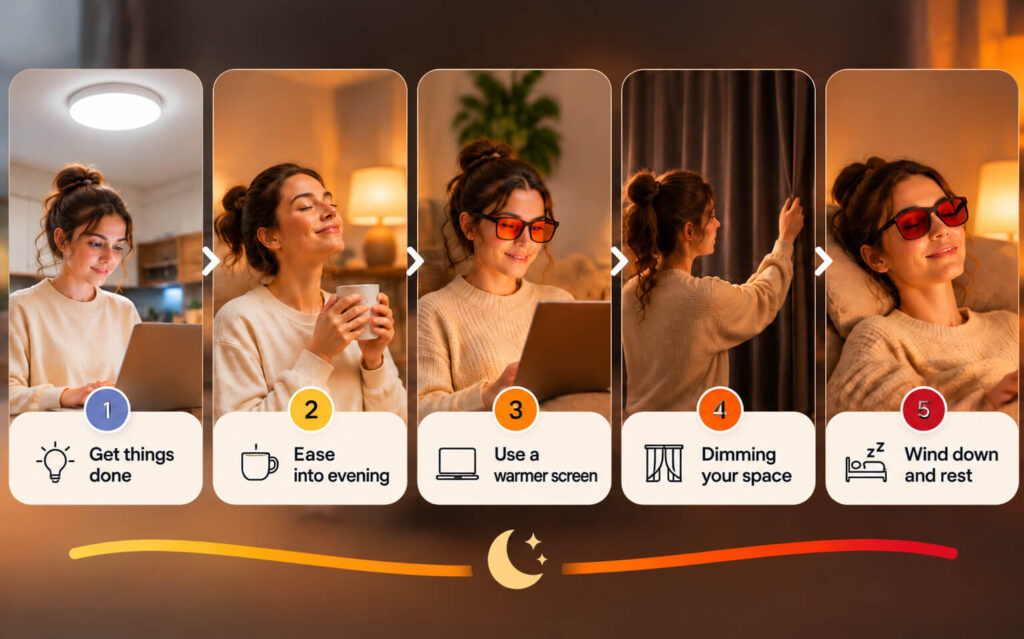
Try these practical steps:
- Get natural light during the morning and daytime.
- After sunset, reduce unnecessary overhead lighting and use softer lamps where practical.
- Choose warmer, dimmer lighting during the later part of the evening.
- Lower screen brightness and use available night settings.
- Reduce unwanted bedroom light with curtains, covered device LEDs, or an eye mask.
If your home remains bright because of screens, indoor lighting, or streetlights, evening glasses can be another layer in your light-management routine.
The Bottom Line: Look at the Lens, Not Just the Label
“Blue-light glasses” is a broad category. The label alone does not tell you which wavelengths a lens filters, how much light it blocks, or how dark the view will be.
When comparing lenses, look at:
- Wavelength range: Which part of the spectrum is filtered?
- Blocking percentage: How much light is filtered within that range?
- VLT: How much visible light passes through?
- Intended use: Does the tint fit your evening activities and visual needs?
Gloojo Night Ease™ offers Orange, Red, and Dark Red options with different filtering specifications, so you can compare the lens characteristics and choose the level that fits your routine.
**Optimized for the Light You Live In.
Disclaimer
Gloojo tinted prescription glasses are light-management products. They do not diagnose, treat, cure, or prevent migraine, eye disease, digital eye strain, or sleep disorders.