Use the promo code to enjoy a 10% discount storewide.
The Migraine–Sleep Connection: How Sleep Problems and Migraine Feed Each Other

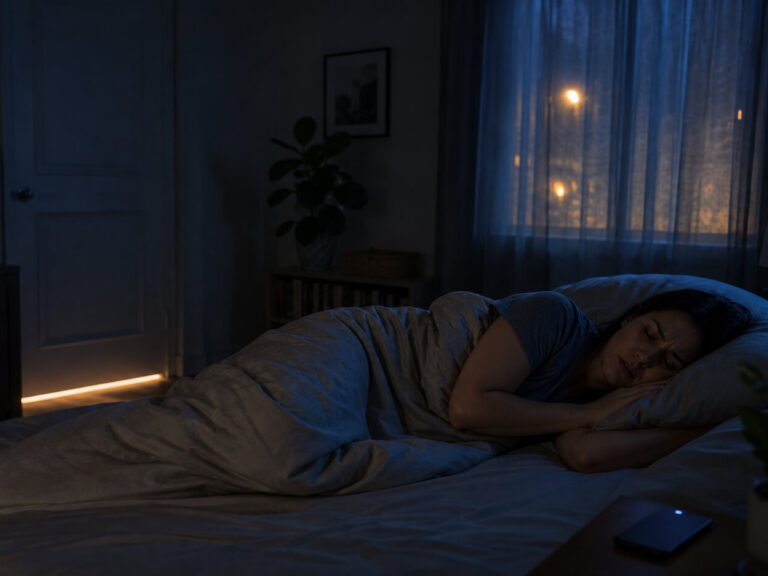
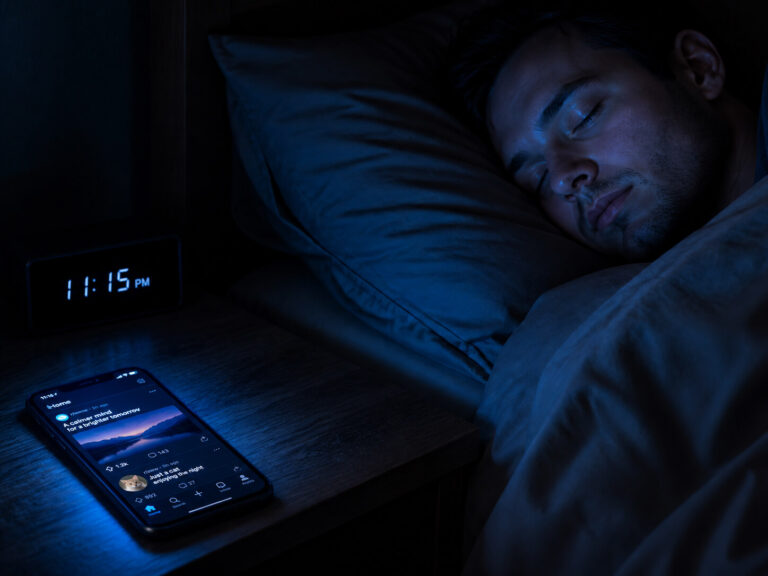
If you’ve ever woken up with a migraine after a restless night — or found yourself staring at the ceiling at 3 a.m. because your head is throbbing — you’ve experienced something researchers have been documenting for years. Migraine and sleep problems are deeply connected, and the relationship runs in both directions.
Poor sleep can trigger a migraine attack. A migraine attack can wreck your sleep. And for many people, these two problems feed each other in a cycle that’s hard to break.
This isn’t about willpower or bedtime routines alone. The connection between migraine and sleep is rooted in shared brain biology, and understanding it can help you make sense of patterns that might otherwise feel random.
The Two-Way Street
The link between migraine and sleep is what researchers call bidirectional — each condition can make the other worse. Even between attacks, people with migraine tend to report more sleep disturbance than people without it, and sleep disruption is a commonly recognized migraine trigger.
This means the relationship isn’t simply “bad sleep causes migraine” or “migraine causes bad sleep.” Both statements are true, and together they create a feedback loop.
Here’s how that loop typically works: research suggests that a poor night’s sleep may lower your pain threshold and increase your brain’s sensitivity to migraine triggers. If an attack follows, the pain — along with nausea, light sensitivity, and the general distress of a migraine — disrupts your sleep again. The next day, you’re starting from a deficit, more vulnerable to another attack.
The biology behind this overlap involves shared brain chemistry. The hypothalamus, a brain region that acts as your internal clock and sleep regulator, is also active during migraine attacks. Neurotransmitters and hormones involved in both conditions include serotonin, melatonin, orexin, dopamine, and adenosine. When your sleep is disrupted, you’re directly affecting the same systems that play a role in migraine — and vice versa.

A 2021 review of the migraine–sleep relationship noted that the association between migraine and sleep has been confirmed by many epidemiological studies, and that approximately 75% of migraine pain episodes occur during sleep or immediately after waking.
Four Patterns You Might Recognize
The migraine–sleep connection doesn’t look the same for everyone. But there are several recognizable patterns that come up again and again in research and clinical experience.
1. The Bad-Night Trigger
You sleep badly — maybe you stayed up too late, couldn’t fall asleep, or woke up repeatedly — and the next morning, a migraine arrives. This is one of the most common patterns. Research suggests sleep deprivation may lower your brain’s pain threshold, making you more susceptible to an attack.
It doesn’t take a dramatic amount of lost sleep. Even one rough night can be enough for some people, and longer or more severe sleep disruption may increase the likelihood further.
2. The Nighttime Attack
A migraine starts while you’re asleep and wakes you up. The pain, nausea, or aura symptoms pull you out of sleep, and getting back to sleep becomes difficult or impossible.
This pattern is distinct from a rare condition called hypnic headache, which only occurs during sleep and has its own diagnostic features and treatment paths. If you’re regularly waking from sleep with head pain, a neurologist can help determine which condition you’re experiencing — the distinction matters.
3. The Morning Migraine
You wake up and a migraine is already underway. Migraine attacks most frequently occur between 6 a.m. and noon, and many people find that the majority of their attacks begin right around waking.

This timing may be related to overnight changes in melatonin and other circadian-rhythm chemicals. Your brain’s internal clock regulates not just when you feel sleepy but also the ebb and flow of substances involved in pain processing. The transition from sleep to wakefulness appears to be a vulnerable window.
4. The Post-Attack Exhaustion
A migraine attack ends, but instead of feeling restored, you’re wiped out. You might sleep excessively to recover — and that oversleeping can itself become a trigger for the next attack. Research identifies both sleep deprivation and excessive sleep as migraine triggers, which makes the recovery period a tricky one to manage.
This pattern can be particularly frustrating because the thing that feels most natural — sleeping off the migraine — may contribute to the next cycle.
Regularity Matters More Than You Think
When researchers look at what aspects of sleep are most closely linked to migraine, consistency keeps coming up. It’s not just about how many hours you get — it’s about whether your sleep schedule is predictable.
Both too little sleep and too much sleep can trigger migraine attacks. But so can irregularity: going to bed and waking up at different times, sleeping in on weekends after a week of short nights, or having a schedule that shifts because of work or travel. Changes in sleep patterns — both insufficient and excessive — have been identified as migraine triggers, and jet lag and shift work can increase attack risk.
This doesn’t mean you need to track every minute. It means that if you’re trying to understand your migraine patterns, the regularity of your sleep schedule is worth paying attention to alongside how long you sleep. A consistent seven hours may be more protective than an unpredictable eight or nine.
What to Track
If you suspect your sleep and migraine are connected, a simple tracking practice can help you identify your own patterns. You don’t need a fancy app — a basic daily note works.
Consider recording:
When you went to bed and when you woke up. Not just total hours, but the timing.
How you’d rate your sleep quality. Did you fall asleep easily? Wake up during the night? Feel rested in the morning?
Whether you had a migraine that day, and when it started. Morning onset, midday, or nighttime tells a different story.
Any obvious sleep disruptors. Late caffeine, screen time, stress, a disrupted schedule.
Over a few weeks, patterns often emerge that aren’t visible day to day. You might notice that morning attacks cluster after late nights, or that nighttime attacks follow days of oversleeping. These patterns can help you — and your doctor — understand your specific version of the migraine–sleep connection.
This Isn't About Blame
It’s worth saying clearly: having migraine doesn’t mean you’re doing something wrong with your sleep. Migraine is a neurological condition influenced by genetics, hormones, environment, and brain biology. Sleep is one factor among many, and some migraine triggers — like weather changes or hormonal shifts — are outside your control entirely.
The value of understanding the migraine–sleep connection isn’t about assigning blame. It’s about recognizing a real, biologically grounded relationship so you can make informed decisions. If your sleep is consistently disrupted or you suspect a sleep disorder like insomnia or sleep apnea, bringing that up with your doctor is a reasonable step — not because better sleep will “cure” migraine, but because addressing a contributing factor may help reduce attack frequency or severity.

And if you’re regularly waking up with migraine attacks or finding that your sleep is significantly disrupted by nighttime attacks, that’s worth a medical conversation. A neurologist can help sort out whether what you’re experiencing is migraine, a sleep disorder, or both — and tailor a plan that addresses your specific situation.
The migraine–sleep connection isn’t a puzzle you have to solve alone. But understanding that the connection exists, and that it works in both directions, is a meaningful first step toward making sense of your experience.
Disclaimer
This article is for educational purposes only and is not medical advice. Gloojo Glasses are not intended to diagnose, treat, cure, or prevent insomnia, sleep disorders, circadian rhythm disorders, or any medical condition. If you have chronic sleep problems, take medication, are pregnant or nursing, or are considering sleep supplements, please speak with a qualified healthcare professional.