
Use the promo code to enjoy a 10% discount storewide.
Migraine prodrome: early warning signs and what to do before the headache starts

Maybe you have noticed the same odd sequence more than once: you are unusually tired, irritable, hungry for a specific food, or struggling to focus. Your neck feels tight. You yawn all afternoon. Then a migraine arrives.
Those experiences do not prove that a migraine is on the way. But when they recur in a recognizable sequence, they may be pre-migraine symptoms, part of a phase called the migraine prodrome. Learning to notice that pattern can replace some of the “it came out of nowhere” feeling with a practical question: What would make the next few hours easier?
What is migraine prodrome?
Migraine prodrome, also called the premonitory phase, is a group of possible changes that can appear before migraine pain begins. It may start hours before the headache and, for some people, can extend into the day or two beforehand. It is one part of a migraine attack, not a guarantee that a headache will follow.
Migraine is more than head pain. The American Migraine Foundation’s overview of migraine phases describes a variable timeline that can include prodrome, aura, headache, and postdrome. Some people notice prodrome often; others do not notice it at all, or only recognize it after looking back at several attacks.
That variation matters. Feeling tired, craving chocolate, or having a stiff neck is common in everyday life, too. One symptom on one day cannot tell you what is happening. A repeated cluster that shows up before your usual migraine pattern is the more useful thing to notice.
What are common prodrome symptoms?
Prodrome symptoms can be easy to dismiss because many are ordinary human experiences. They may include:
Energy and mood changes: fatigue before migraine, low energy, irritability, a low mood, or feeling unusually restless.
Body and appetite changes: yawning before migraine, food cravings, thirst, nausea, or neck stiffness and discomfort.
Thinking changes: trouble concentrating, feeling slowed down, or finding routine decisions harder than usual.
Sensory changes: becoming more bothered by light or sound before the headache begins.
The point is not to turn this list into a self-check quiz. It is to give language to signs a migraine is coming that may be worth recording when they occur in your own familiar sequence.
If you develop a new, abrupt, unusual, prolonged, or motor neurological symptom, do not assume it is prodrome. The International Headache Society’s aura criteria make clear that neurological symptoms need careful clinical context. Seek prompt medical evaluation for symptoms that are new or concerning, especially weakness, trouble speaking, or a sudden change from your usual pattern.
How is prodrome different from aura?
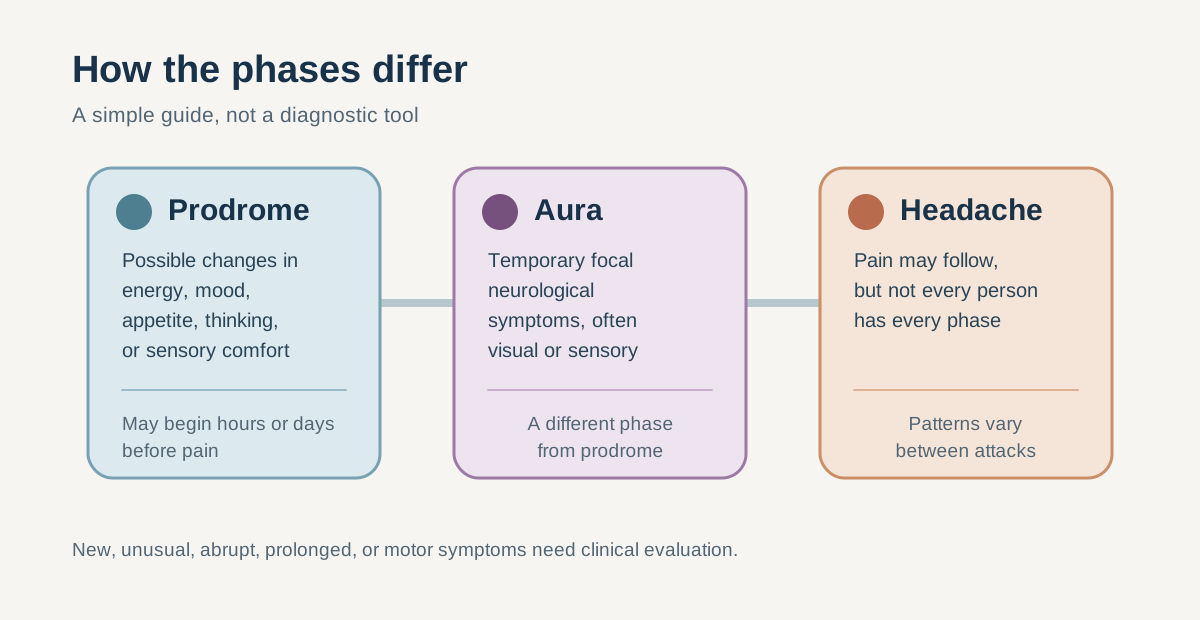
Prodrome and aura are different phases. Prodrome is a set of often subtle whole-body, mood, cognitive, or sensory changes before an attack; aura involves temporary focal neurological symptoms, often visual or sensory, that develop gradually.
An aura might involve visual changes, tingling, or language symptoms. Prodrome might look more like a run of yawning, fatigue, food cravings, or difficulty concentrating. Not every person with migraine has aura, and not every person notices prodrome. They can also occur in different combinations, which is another reason a clinician, not a checklist, is the right person to assess a new neurological pattern.
Why you can feel different before the pain starts
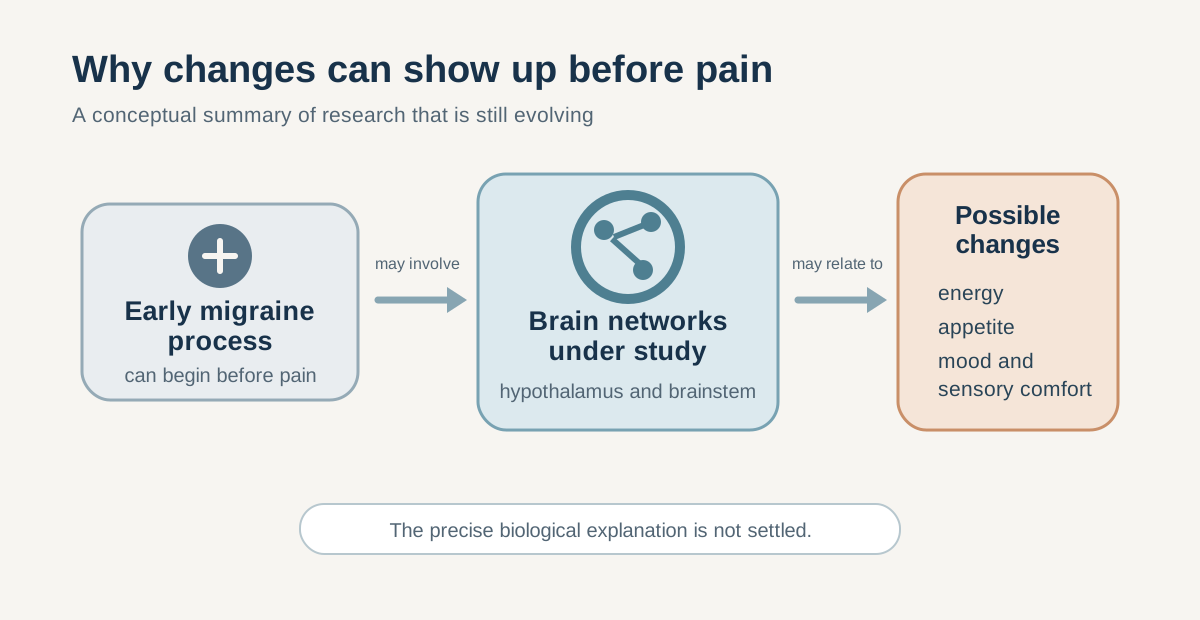
The simplest answer is that the migraine process can begin before pain does. A review of premonitory-phase brain research suggests that networks involving the hypothalamus and brainstem may be active during the prodrome phase, which could help explain changes in energy, appetite, mood, and sensory comfort. The precise mechanism is still being studied, so it is more accurate to think of prodrome as an early part of a complex neurological process than as one single switch being flipped.
This also helps explain why a craving, a stressful afternoon, or a bright room can be hard to interpret in the moment. Sometimes an experience may be a trigger; sometimes it may be an early symptom; sometimes it may be neither. The useful first move is observation, not blame.
What you can do during the prodrome window
There is no guaranteed way to stop a migraine once you notice early warning signs. The prodrome window can still be useful for comfort and preparedness: reduce demands where possible, use the plan you have already made with your clinician, and record what is changing.
Try choosing a few low-pressure options that fit your day:
Make the environment gentler. Step away from a noisy or visually demanding setting if you can. Lower screen brightness, choose a quieter room, close blinds, or take a brief break from harsh light. If light is part of your pattern, a Gloojo rose tint is one optional comfort tool that may help reduce light-related discomfort alongside those environmental changes.
Cover the basics without overpromising. Have water, eat if you have missed a meal, and give yourself a short rest when possible. These steps may support comfort and make the next hours more manageable; they are not a way to prevent an attack.
Follow your existing care plan. If a clinician has prescribed medication or given you directions about what to do when symptoms begin, follow that individualized guidance. If you do not have a plan and attacks are disruptive, this is a useful topic to raise at an appointment rather than experimenting with prescription timing on your own.
Reduce friction. Postpone a nonessential errand, prepare a quiet place to rest, or let someone know you may need a little flexibility. Preparedness is a worthwhile outcome even when the attack’s course is uncertain.
How to track migraine prodrome symptoms
Keep a small pre-attack log for several migraine episodes. Record what changed, when it began, what happened next, and what helped you feel more comfortable without assuming that the last thing you ate, did, or saw caused the attack.
Use a note on your phone or a paper calendar. Each time you suspect migraine warning signs before headache, jot down:
the date and approximate time;
changes in energy, mood, appetite, neck comfort, focus, yawning, light, or sound sensitivity;
whether aura or headache followed, and roughly when;
what you did during the window and whether it made the time more manageable.
After a few entries, look for patterns rather than a perfect prediction rule. The American Migraine Foundation’s guidance on tracking migraine patterns notes that early symptoms can be mistaken for triggers. A concise log gives you something more concrete to discuss with a clinician, especially if your pattern is changing or attacks are interfering with daily life.
Start with the symptoms that happen before your usual migraine
You do not need to diagnose every tired day or treat every yawn as an alarm. Start smaller: the next time you notice a few unusual changes together, write them down and see what follows. Over time, tracking migraine prodrome symptoms can help you recognize your own early pattern and make a calmer, more prepared response when it appears.
Disclaimer
This article is for educational purposes only and is not medical advice. Gloojo Glasses are not intended to diagnose, treat, cure, or prevent migraine, chronic headaches, neurological disorders, or any medical condition. Individual responses to tinted lenses may vary. If you experience frequent, severe, or worsening headaches, visual disturbances, or other concerning symptoms, please speak with a qualified healthcare professional.