
Use the promo code to enjoy a 10% discount storewide.
Do Sleep Glasses Really Work?
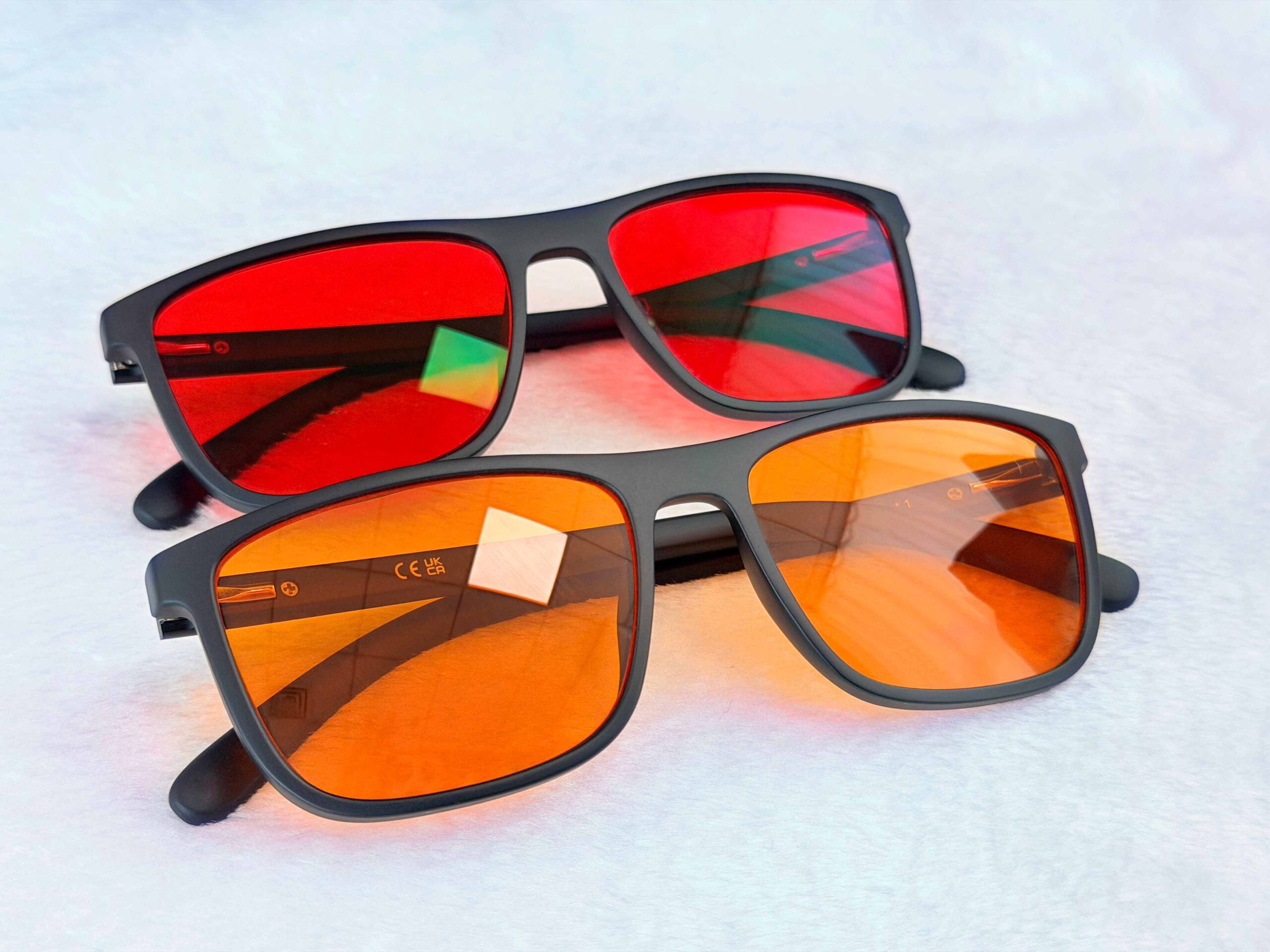
A Spectral Transmittance Test of Gloojo Night Ease™ Red & Orange Lenses
Editor’s Note: At Gloojo, we don’t believe in magic; we believe in measurement. As our first blog post, we didn’t want to just give you marketing slogans. So, we fired up our professional spectral analyzer right here in our office to show you exactly what happens when the lights go out. No stock photos, just real data from our own desk to yours.
You’re tired.
You turn off the lights.
But your brain doesn’t get the message.
Most of us know that screens can interfere with sleep. That’s why sleep glasses and “blue light blocking” products have become so popular. But with so many options on the market, a fair question remains:
Do sleep glasses actually work — or is it just marketing?
As a brand focused on night-time eye protection and circadian health, we believe the answer shouldn’t rely on claims alone.
So instead of telling you that Night Ease™ works, we decided to test our own lenses using a professional spectral transmittance analyzer and share the data openly — so you can decide for yourself.
Why We Tested Our Own Lenses
Not all “blue light glasses” are created equal.
Many products labeled as blue light blocking:
- rely on clear lenses with coatings
- block only a small portion of short-wavelength light
- do very little for melatonin regulation at night
From a sleep and chronobiology perspective, the real issue isn’t just “blue light” in general — but specific wavelengths that tell your brain whether it’s daytime or nighttime.
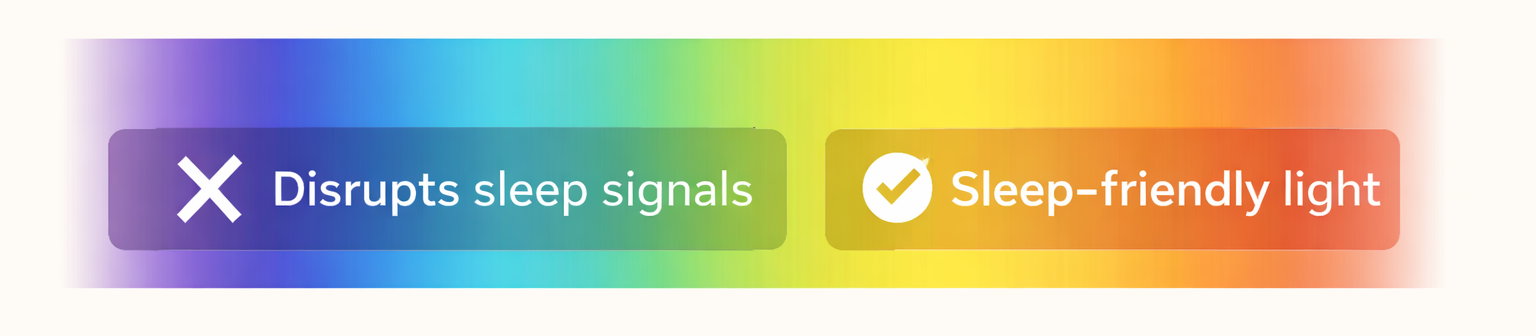
— green wavelengths can still signal “daytime” to the brain at night.
That’s why we designed the Night Ease™ series with two functional tints:
- Orange tint for balance and everyday usability
- Red tint for maximum circadian protection
To verify their effectiveness, we conducted instrument-based spectral testing, rather than subjective impressions or marketing charts.
What most people really want to know is simple:
Will wearing these glasses at night actually help me feel sleepby faster and sleep better – or not?
That’s exactly what this test is meant to answer.
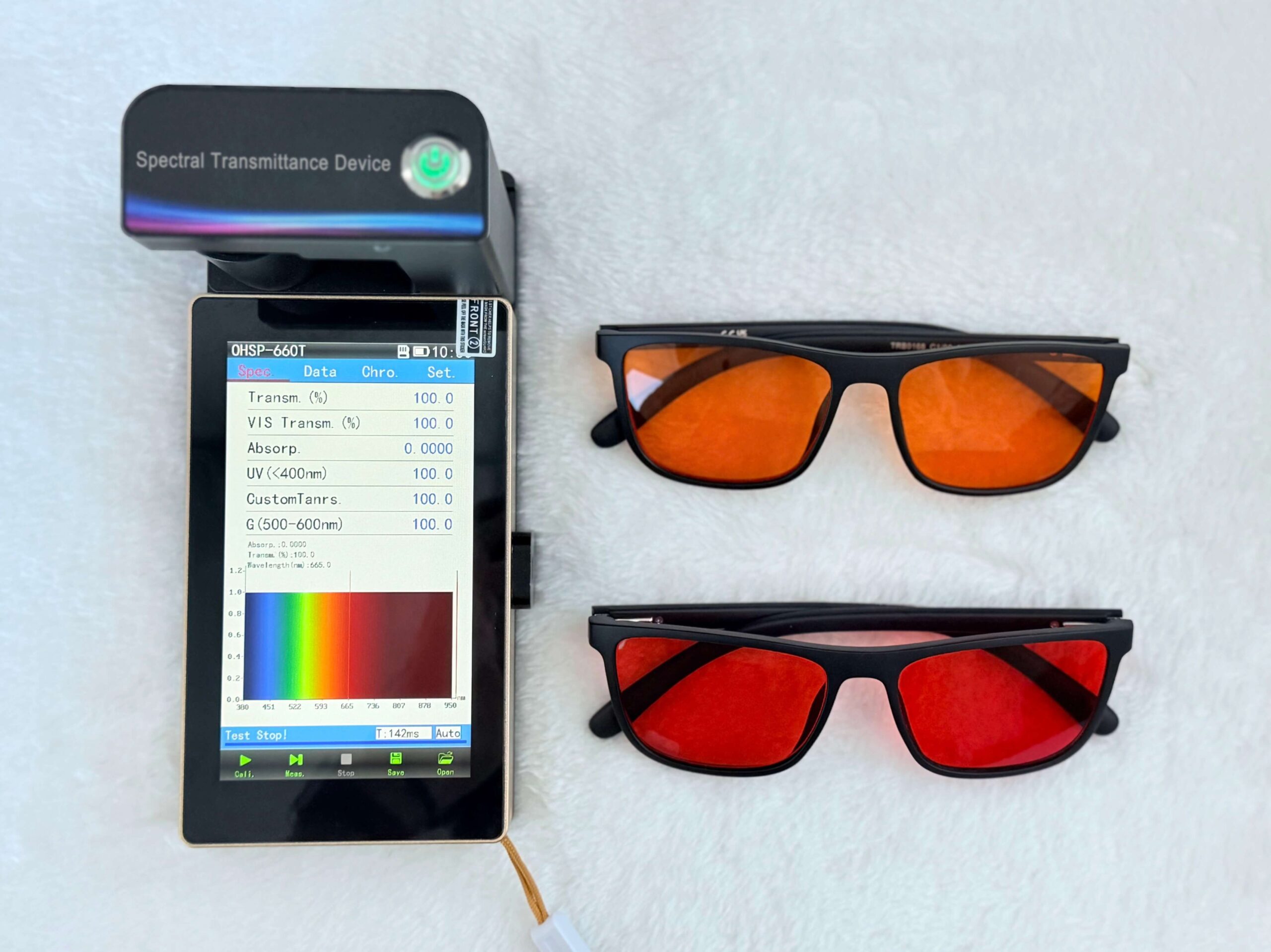
How the Test Was Conducted
Testing Equipment
We used a full-spectrum spectral transmittance analyzer, the same type of instrument commonly used in optical labs and certification testing.
This device measures how much light actually passes through a lens across the entire visible spectrum (approximately 280–780 nm) — not just one highlighted color.
To ensure real-world relevance, the lenses were placed directly over the sensor opening, simulating how light reaches your eyes during normal screen use.
Test Environment
- Testing method: Full-spectrum, on-site spectral transmittance measurement
- Measurement: light passing through the lenses into the analyzer
- Lenses tested:
- Night Ease™ Orange Tint Lenses
- Night Ease™ Red Tint Lenses
Wavelength Ranges Analyzed
For sleep relevance, we focused on three key bands:
- Violet: 380–435 nm
- Blue: 435–495 nm
- Green: 495–570 nm
These are the wavelengths most closely associated with circadian rhythm regulation and melatonin suppression.
In simple terms: these are the parts of light that can keep your brain alert at night — even when your body feels tired.
Test Results: What the Data Shows
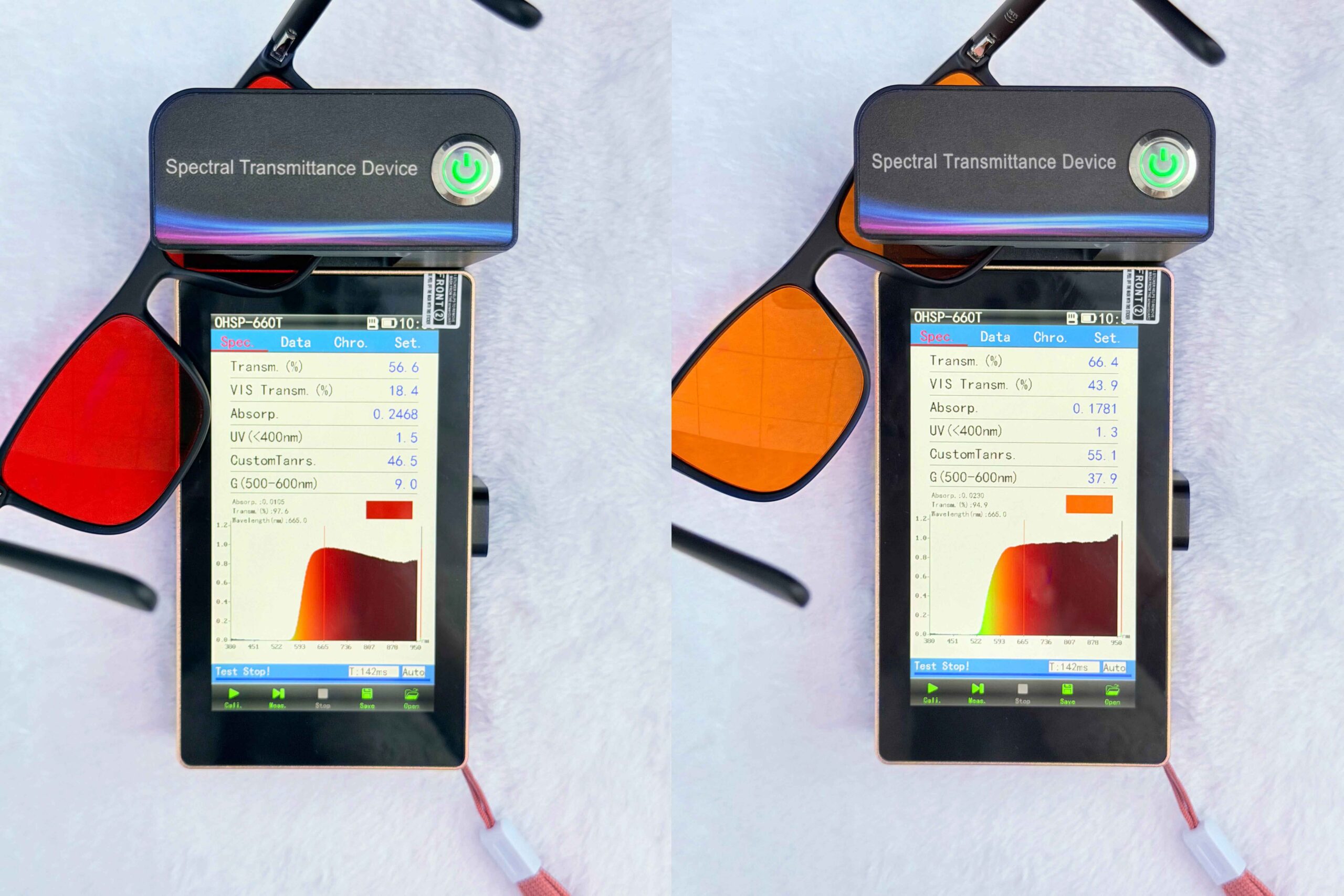
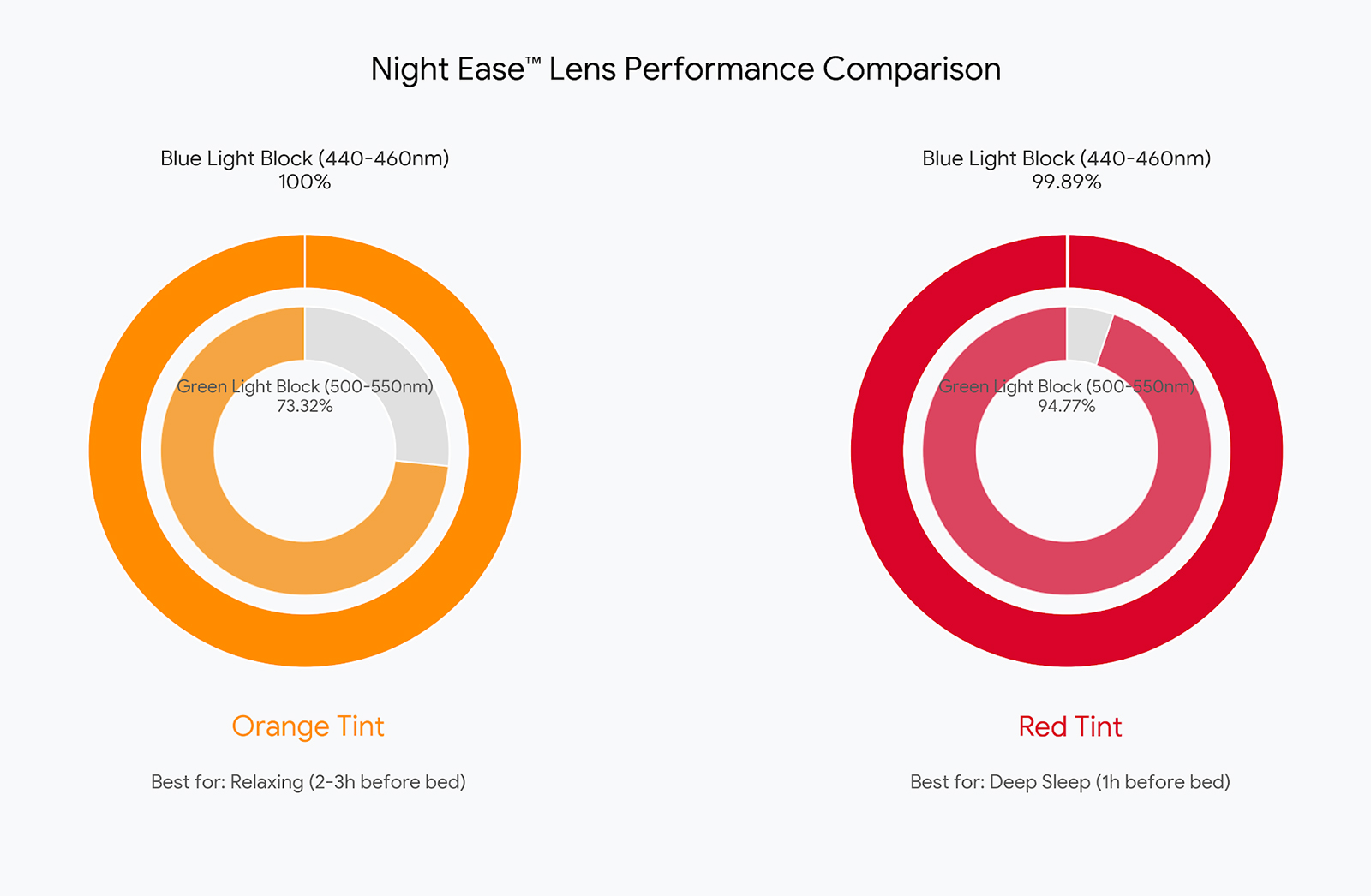
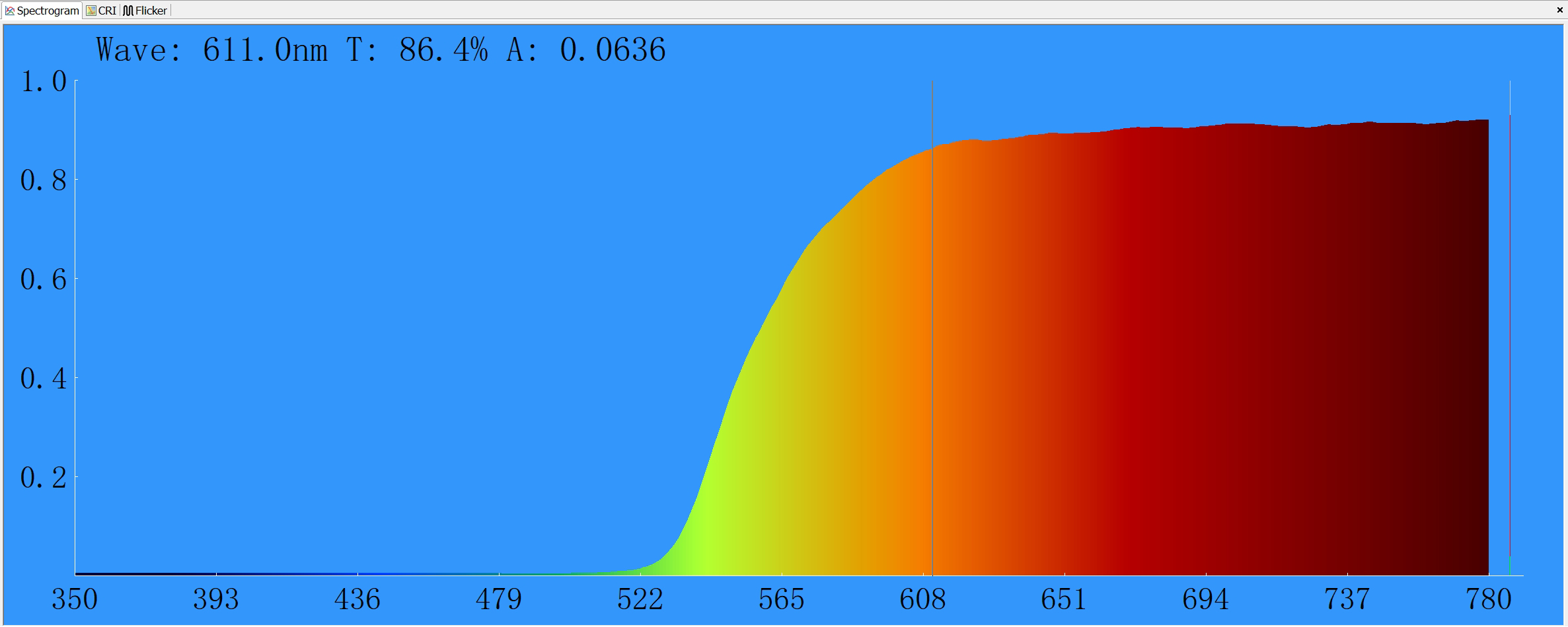
Orange Tint (Night Ease™ Orange Lenses)
Laboratory testing shows that the orange lens:
- Blocks 100% of blue light in the 440–460 nm range
- Filters ~73% of green light (500–550 nm)
- Maintains higher overall visibility and color recognition
This balance makes the orange tint especially suitable for:
- Evening screen use
- Reading or watching TV
- Light movement around the house before bed
It offers meaningful circadian protection without overly distorting vision, which many users find more comfortable for longer wear.
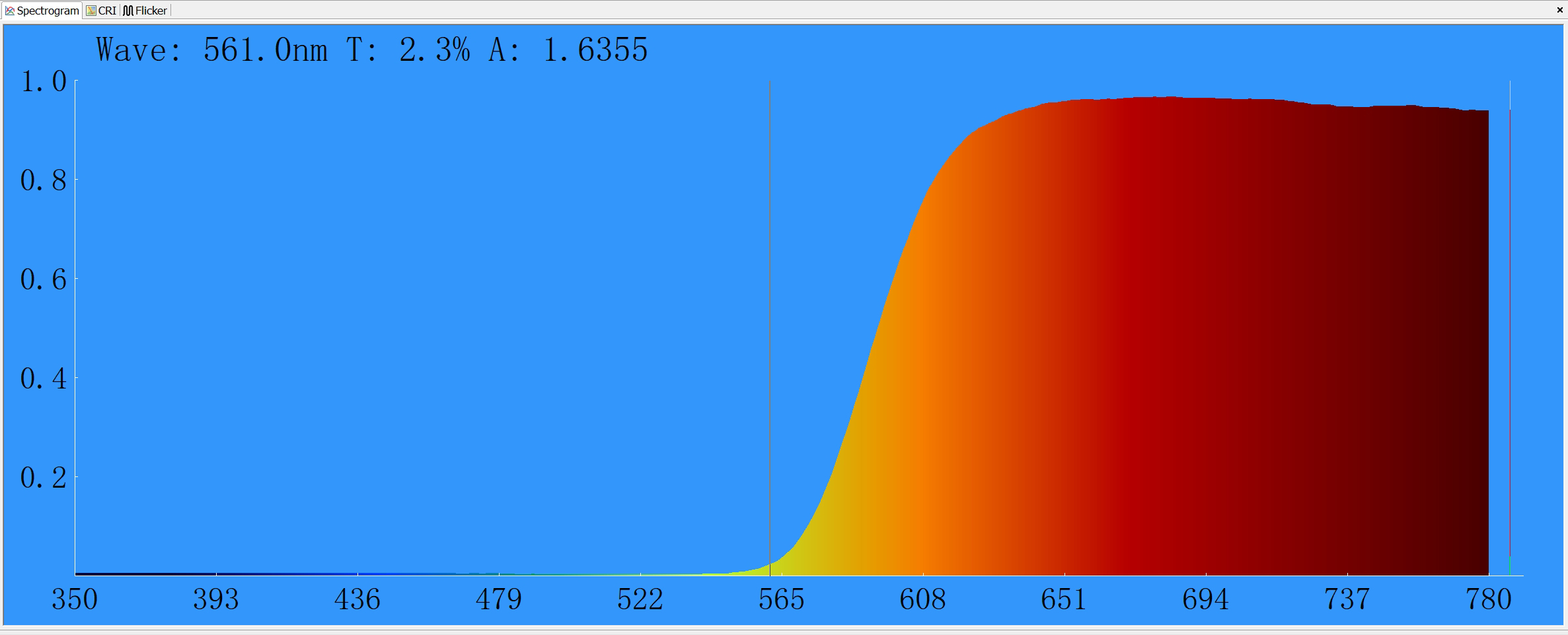
Red Tint (Night Ease™ Red Lenses)
The red lens takes protection one step further.
Test data shows:
- 99.89–100% blue light blockage
- ~93–95% green light reduction
- Significantly lower overall light transmission (high lux reduction)
From a biological perspective, this means:
- Minimal stimulation of melanopsin-containing retinal cells
- Strong reduction of artificial “daytime” signals to the brain
The red tint is best suited for:
- 60–90 minutes before sleep
- People with serious sleep onset difficulties
- Jet lag recovery or night-shift adjustment
Why Blocking Green Light Matters — Not Just Blue
Many people are surprised to learn that blocking blue light alone is often not enough.
Research in chronobiology has shown:
- High-energy blue light (~430–480 nm) is the strongest melatonin suppressor
- But green light (500–550 nm) also plays a role in circadian signaling, especially at night
Even moderate green light exposure can:
- Delay melatonin release
- Reduce sleepiness
- Fragment sleep quality
That’s why Night Ease™ lenses are designed to filter both blue and interfering green wavelengths, rather than relying on coatings that only affect a narrow range.
Tinted Lenses vs. Blue Light Coatings
You may have noticed that many prescription lenses offer “blue light blocking coatings.” While convenient, these coatings typically:
- Filter 10–20% of blue light at best
- Leave the critical 440–460 nm range largely untouched
- Have minimal impact on melatonin production
In contrast, tinted lenses physically filter light at the material level, allowing for far more precise wavelength control — which is essential for night-time use.
This is why Night Ease™ lenses are not recommended for daytime wear, but specifically designed to support your natural night routine.
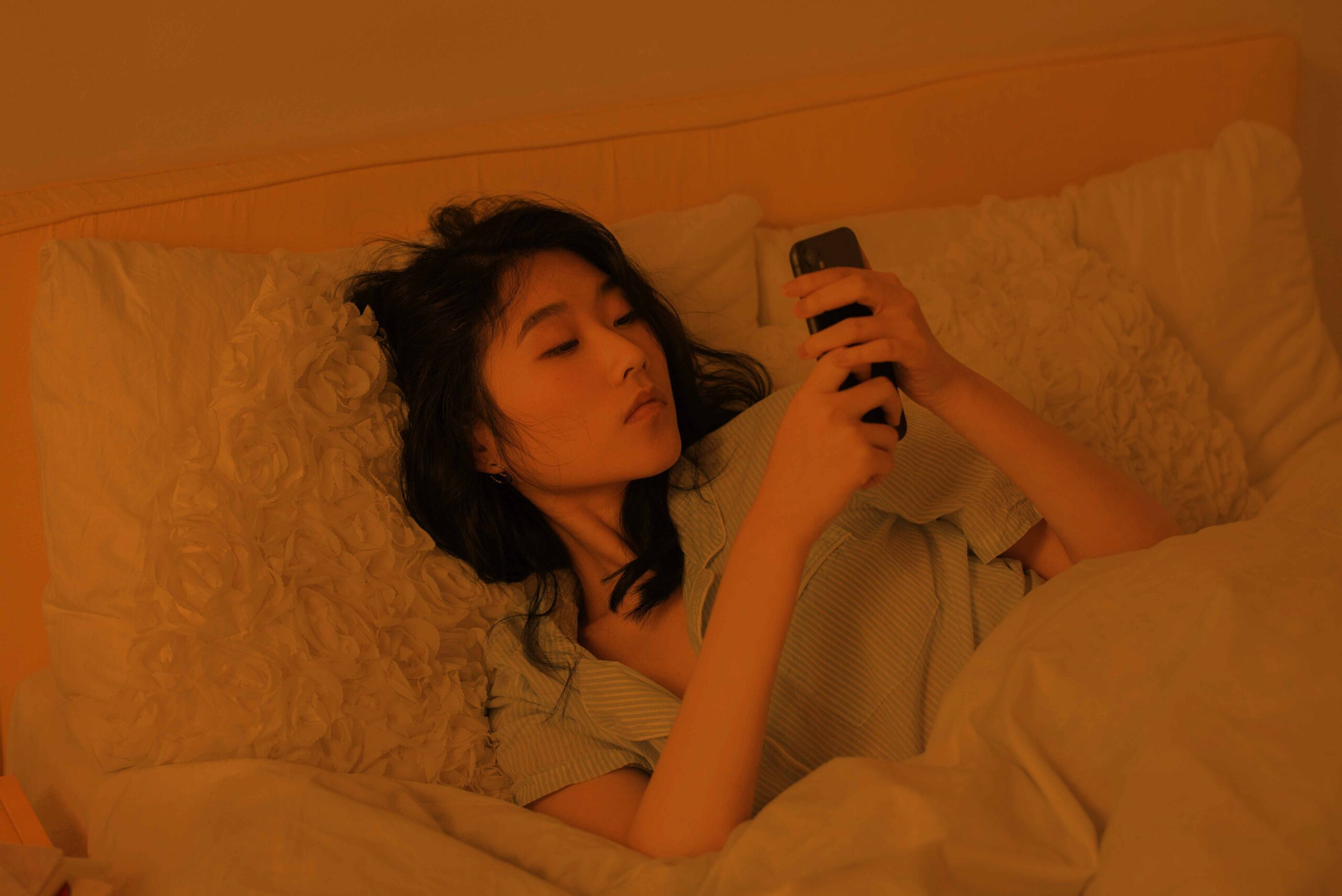
When (and How) to Use Night Ease™ Glasses
We recommend wearing Night Ease™ glasses:
- 1–2 hours before bedtime
- During screen use or under artificial indoor lighting
- Consistently, as part of a nightly wind-down routine
Which tint should you choose?
Best if you want:
- Better visual clarity
- Easier movement and reading
- A gentler transition into sleep
Best if you want:
- Maximum melatonin protection
- Faster sleep onset
- Strong circadian signaling
Both are effective — the difference lies in how much light reduction you need.
We conducted these tests for one simple reason:
Good sleep products should stand up to measurement.
The spectral data confirms that:
- Night Ease™ lenses deliver real, measurable wavelength filtering
- The red and orange tints serve different — but complementary — needs
- Effectiveness is based on physics and biology, not marketing language
Better sleep doesn’t require willpower or avoidance of modern life — sometimes it just requires the right light at the right time.
View Scientific Sources
Brainard, G. C., et al. (2001). Action spectrum for melatonin regulation in humans: Evidence for a novel circadian photoreceptor. Retrieved from Journal of Neuroscience:
https://www.jneurosci.org/content/21/16/6405
Gooley, J. J., et al. (2011). Spectral responses of the human circadian system depend on the irradiance and duration of exposure. Retrieved from Science Translational Medicine:
https://www.science.org/doi/10.1126/scitranslmed.3000741
Chang, A. M., et al. (2015). Evening use of light-emitting eReaders negatively affects sleep, circadian timing, and next-morning alertness. Retrieved from Proceedings of the National Academy of Sciences (PNAS):
https://www.pnas.org/doi/10.1073/pnas.1418490112
Chellappa, S. L., et al. (2011). Non-visual effects of light on melatonin, alertness and cognitive performance. Retrieved from Progress in Brain Research:
https://www.sciencedirect.com/science/article/pii/B9780444534030000079
Harvard Medical School – Division of Sleep Medicine. (n.d.). Blue light has a dark side. Retrieved from Harvard Health Publishing:
https://www.health.harvard.edu/staying-healthy/blue-light-has-a-dark-side
Rahman, S. A., et al. (2013). Effects of filtering visual short wavelengths during nocturnal shiftwork on sleep and performance. Retrieved from NCBI:
https://www.ncbi.nlm.nih.gov/pmc/articles/PMC3786545/